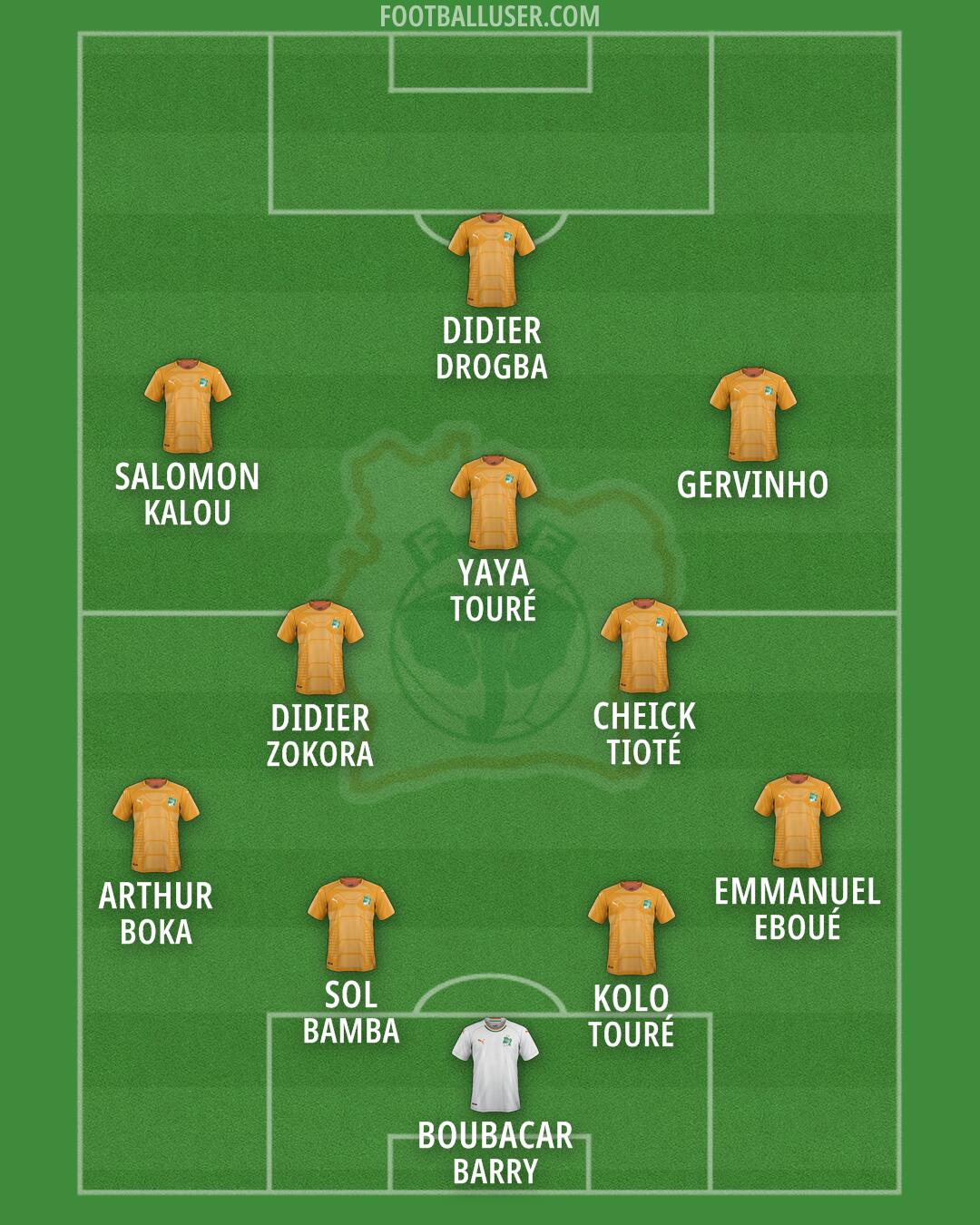

Ivory Coast National Football Team Formation
 January 18, 2026
 lucaosantos85


Starting Lineup
DIDIER (DROGBA) · SALOMON (KALOU) · GERVINHO · EMMANUEL (EBOUÉ) · KOLO (TOURÉ) · SOL (BAMBA) · BOUBACAR (BARRY) · ARTHUR (BOKA) · DIDIER (ZOKORA) · CHEICK (TIOTÉ) · YAYA (TOURÉ)A high press and quick transition style defines Ivory Coast in this 4-5-1 formation. The team works to squeeze opponents in their own half and use vertical passes to catch defenses off guard. This lineup relies on intense running to win the ball back quickly and create chances through sudden bursts of speed.
BOUBACAR guards the goal while the back four maintains a compact block. EMMANUEL acts as the right back, ready to push up and support the flanks, while ARTHUR covers the left side. KOLO and SOL occupy the center of the defense, where they focus on aerial strength and marking. The back line must step up together to keep the distance between the defenders and the midfield small.
The midfield works through a combination of central control and wide coverage. DIDIER and CHEICK sit in front of the defense to shield the back four and intercept passes. YAYA operates in the middle to connect the lines, driving the ball forward to break the line of the opposition. On the flanks, SALOMON and GERVINHO occupy the wide areas to provide service and track back when the team loses possession.
In the attacking phase, the team focuses on a lone striker, DIDIER, who must hold up the ball to allow others to join the attack. SALOMON and GERVINHO act as wide attacking midfielders who cut inside to create space for others. This setup allows the forwards to press high and force mistakes near the opponent's goal. The movement of the wide players creates constant pressure on the opposing full backs.
Ivory Coast gains a tactical advantage by creating numerical superiority in the central midfield areas. The presence of DIDIER and CHEICK allows the other midfielders to push higher up the pitch. This formation also allows the team to isolate wide players in one on one situations through quick switches of play. The ability to shift between a compact defensive block and a rapid counter attack makes them difficult to read.
This 4-5-1 formation provides the Ivory Coast with a reliable way to control the tempo through central density. It is best suited for matches against possession based teams where the ability to sit deep and strike on the break is vital.