Arsenal Football Formation
 January 20, 2026


Starting Lineup
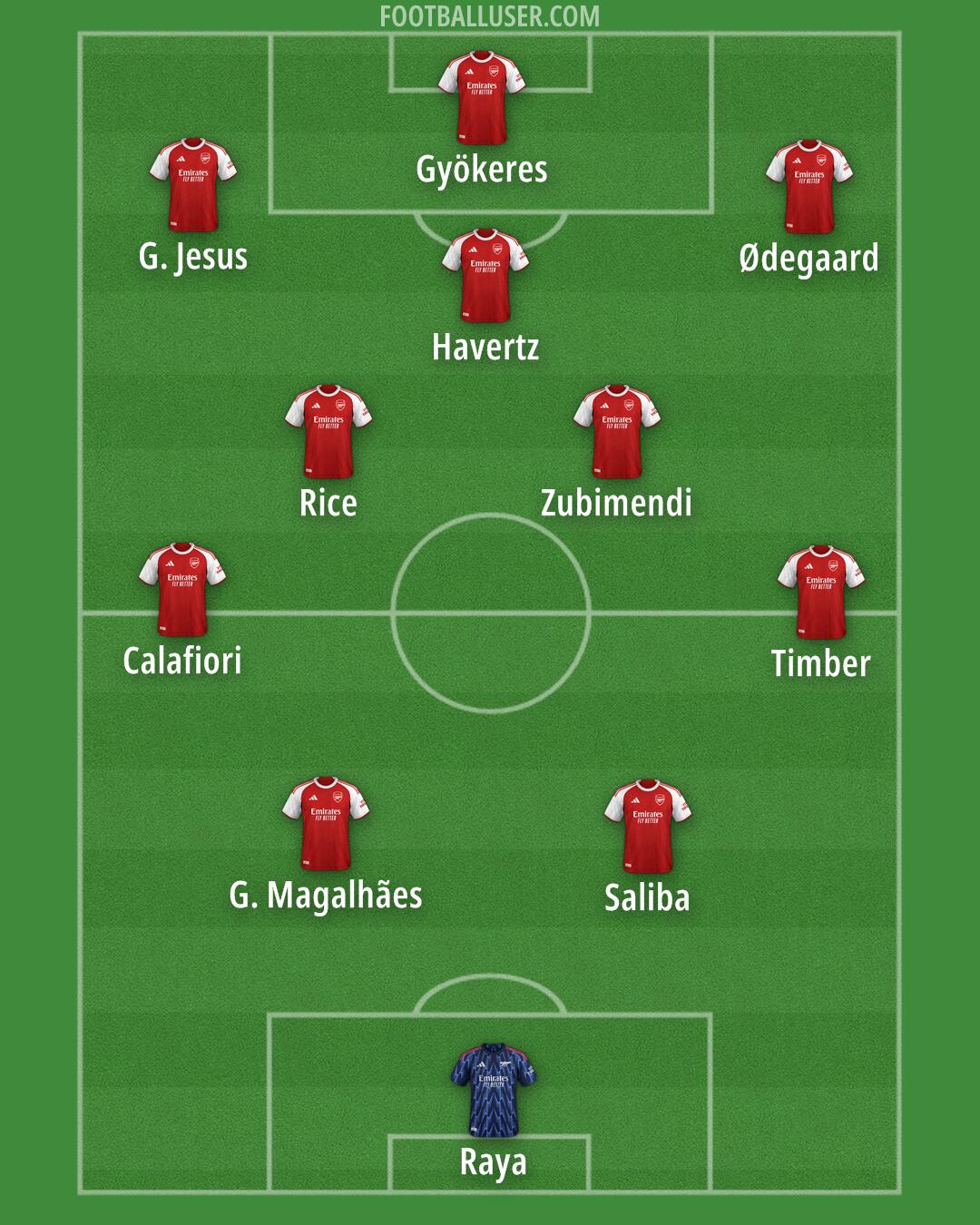
Gyökeres · G. Jesus · Ødegaard · Havertz · Rice · Zubimendi · Calafiori · Timber · G. Magalhães · Saliba · RayaControl and heavy pressing define the identity of Arsenal in this 2-5-3 formation. This lineup builds from the back to dominate territory through a high line and aggressive ball recovery. By pushing numbers forward, the team aims to suffocate opponents in their own half and create constant pressure in the final third.
Raya acts as the lone goalkeeper, playing a key role in starting attacks with his distribution. Behind the midfield, a back two consisting of Saliba and G. Magalhães must stay high and wide to cover the vast spaces left by the advancing midfielders. Saliba provides immense physical presence and recovery speed, while G. Magalhães offers strength in the air and aggressive tackling. This pair must step up to intercept long balls and block passing lanes before the opposition can exploit the space behind them.
The midfield unit is the engine of the Arsenal lineup, functioning as a dense block of five players. Timber and Calafiori sit in the deep positions to hold the middle and cover the channels. Zubimendi provides a calm presence to break the line with his passing range, while Rice drives forward to win second balls and link play. Havertz operates in the pocket as the attacking midfielder, looking to turn and find space between the opposition lines. This cluster of players ensures the team maintains central control and can quickly switch play to the wings.
An aggressive front three leads the attacking phase. Gyökeres plays as the central striker, using his strength to hold up the ball and pin the defenders. On the flanks, Ødegaard cuts inside from the right to create chances with his vision and passing, while G. Jesus operates on the left to pull defenders out of position. These attackers press high in coordinated waves, forcing mistakes and creating short distances for the midfield to exploit.
This formation offers significant advantages through numerical superiority in the central zones. By crowding the middle, the team can easily intercept passes and launch quick transitions. Another strength is the ability to create wide overloads when the wingers and midfielders push into the same spaces. This forces the opposition to collapse centrally, leaving gaps for the runners to exploit.
This high-risk, high-reward setup prioritizes dominance and suffocating pressure over defensive safety. It is best suited for games against teams that sit deep and struggle to bypass a concentrated midfield block.