
Espanyol Football Formation
 January 21, 2026
 lucaosantos85


Starting Lineup
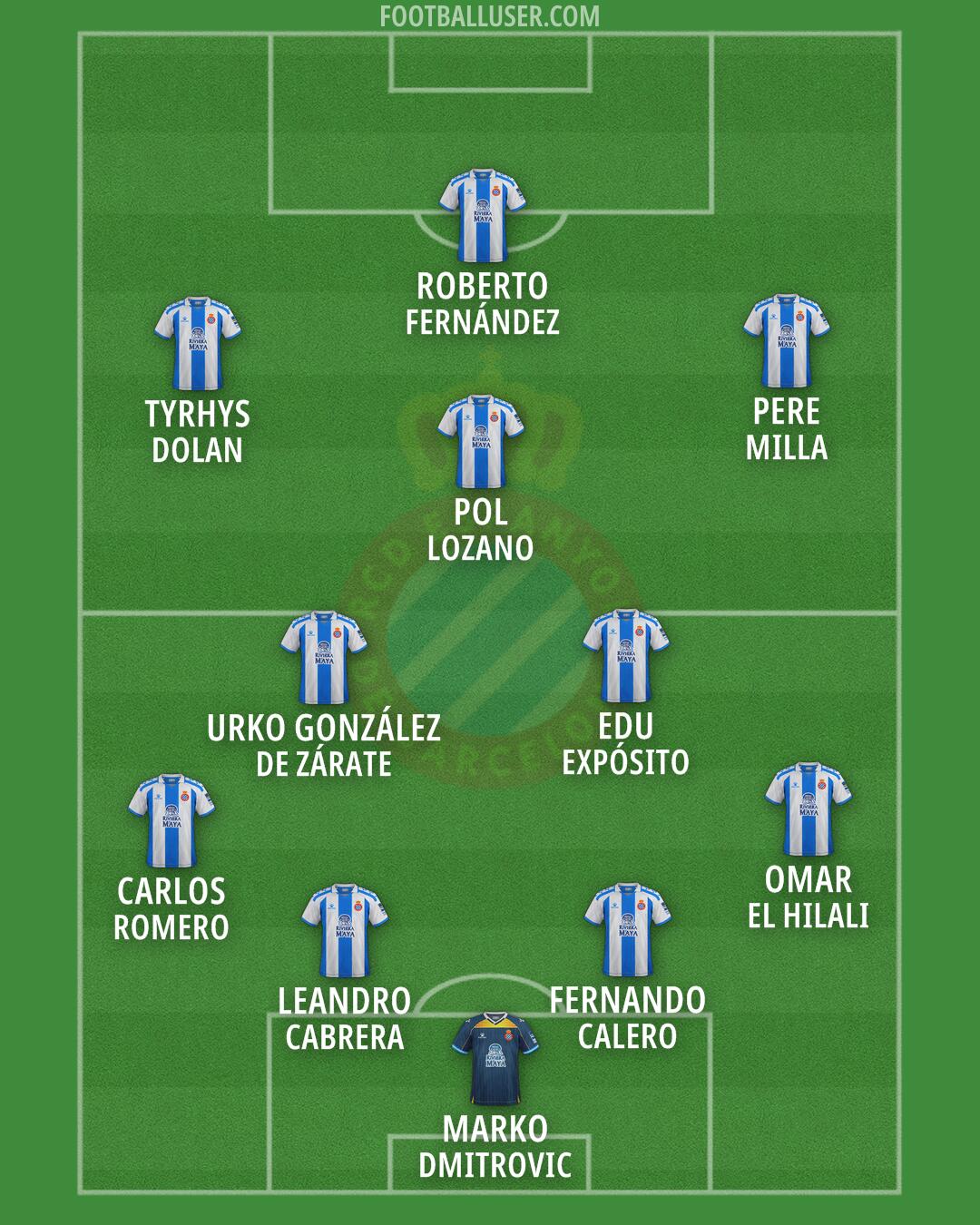
MARKO (DMITROVIC) · OMAR (EL HILALI) · FERNANDO (CALERO) · LEANDRO (CABRERA) · CARLOS (ROMERO) · URKO GONZÁLEZ (DE ZÁRATE) · POL (LOZANO) · EDU (EXPÓSITO) · PERE (MILLA) · TYRHYS (DOLAN) · ROBERTO (FERNÁNDEZ)High pressing and quick transitions define the tactical identity of Espanyol in a 4-3-3. This formation focuses on winning the ball high up the pitch and moving it forward rapidly to catch the opposition out of position. The team looks to control the tempo through vertical passing once the initial press succeeds in the final third.
In goal, Marko acts as the first line of defense. The back four consists of Omar at right back and Carlos at left back, both of whom are tasked to push up and provide width. In the center, Fernando and Leandro form the defensive pairing. Leandro and Fernando must maintain a high line to squeeze the space between the defense and the midfield, while Omar and Carlos provide cover when the team loses possession.
The midfield works to control the central areas through a combination of roles. Edu and Urko González operate in the central engine room to shield the defense and break up opposition play. Pol occupies the attacking midfield role, acting as the link that connects the holding players to the forward line. Pol looks to find pockets of space between the lines to drive the ball forward or play killer passes into the final third.
The attacking front line is built around the movement of three players. Roberto leads the line as a lone striker, tasked to hold up the ball and bring others into play. On the flanks, Tyrhys and Pere operate as wide attackers. Tyrhys looks to cut inside from the left to create goalscoring chances, while Pere provides width and delivery from the right side. This front three works together to press the opposition backline immediately upon losing the ball.
Several tactical advantages emerge from this Espanyol lineup. The team can create wide overloads when Carlos and Tyrhys push forward together on the left. Additionally, the ability of Pol to operate behind the striker allows the team to create numerical superiority in the central attacking zone. This setup also enables the team to press in coordinated waves, making it difficult for opponents to build play from the back.
This 4-3-3 formation relies on high intensity and quick ball movement to disrupt the opponent. It is best suited for matches against teams that struggle to play under pressure or teams that sit in a deep block.