
Dinamo Football Formation
 January 22, 2026


Starting Lineup
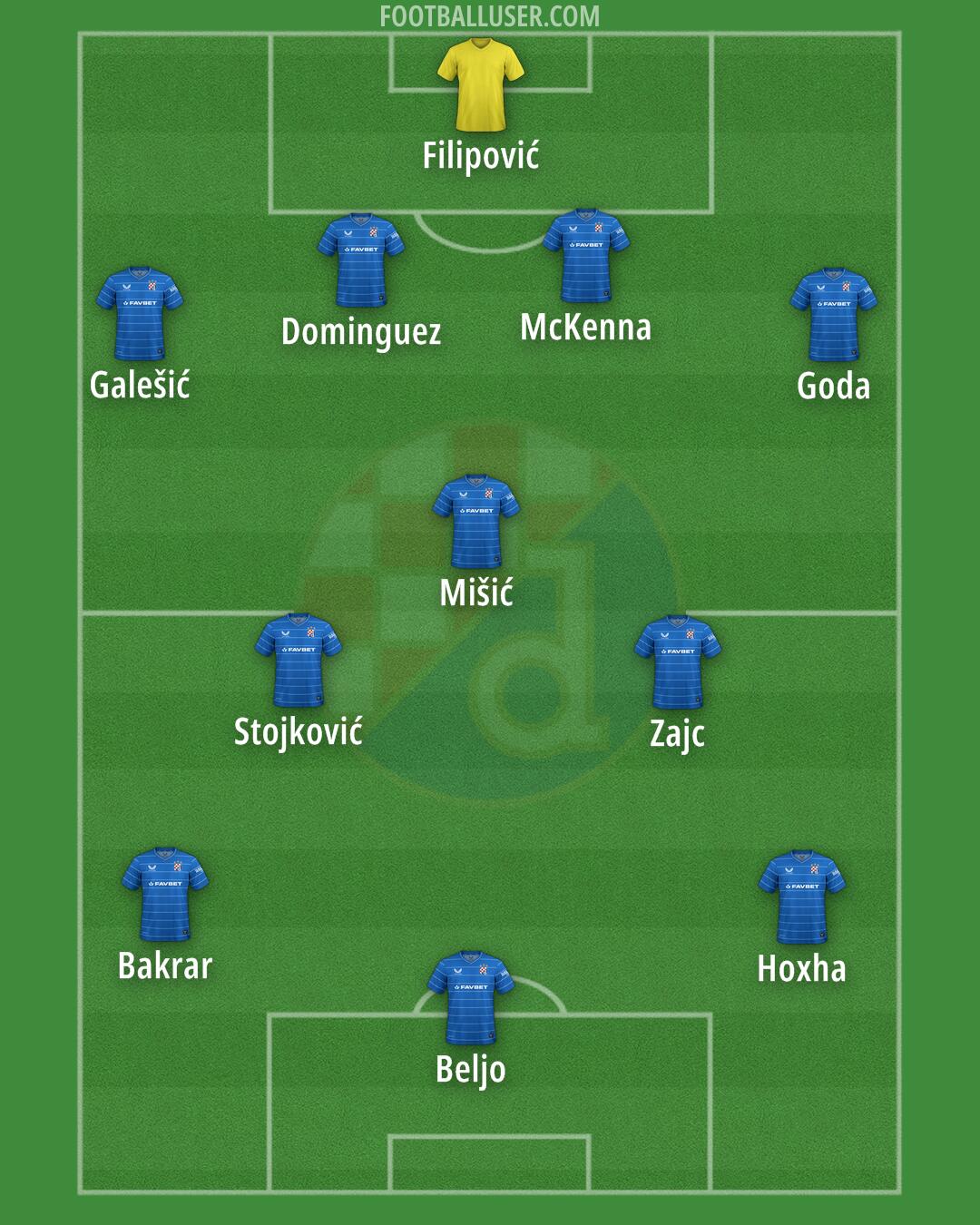
Filipović · Galešić · Dominguez · McKenna · Goda · Stojković · Mišić · Zajc · Bakrar · Beljo · HoxhaHigh pressing and rapid transitions define the tactical identity of Dinamo in this 4-3-3. This formation is built to control the center of the pitch while maintaining enough verticality to punish opponents on the break. By pushing the lines high, the team seeks to force turnovers in the opposition half to create immediate scoring opportunities.
Filipović starts the buildup from the back as the goalkeeper. Ahead of him, a flat back four provides the foundation for the defense. Goda operates as the left back, while Galešić covers the right side. In the center, McKenna and Dominguez act as the primary defenders, with McKenna and Dominguez focusing on winning aerial duels and covering ground to intercept passes. The defensive unit works to stay compact, forcing attackers into wide areas where they can be trapped.
The midfield works as a single pivot system to control the tempo of the game. Mišić sits in front of the defense to shield the back line and break up play. To his left and right, Stojković and Zajc operate as two central midfielders who connect the defense to the attack. Stojković and Zajc look to drive forward and break the line with forward passes, while Mišić remains disciplined to prevent counter attacks. This trio ensures Dinamo remains hard to play through in the middle.
A front three provides the main goal threat through a combination of wide play and central presence. Beljo operates as a lone striker, tasked to hold up the ball and lead the press from the front. On the wings, Hoxha and Bakrar act as inverted wingers, looking to cut inside into central spaces to create shooting lanes. This movement pulls defenders out of position and creates gaps for the advancing midfielders to exploit.
Dinamo possesses several clear tactical advantages with this lineup. The midfield trio provides stability, allowing the team to maintain control during sustained periods of possession. Wide overloads are common when the wingers cut inside, leaving space for the full backs to overlap. Furthermore, the coordination between the forwards and the midfield allows for a high press that can suffocate opponents in their own third.
This 4-3-3 formation relies on intense pressing and quick verticality to dominate matches. It is best suited for games against teams that struggle to play out from the back or those that leave large gaps between their midfield and defensive lines.