
Real Madrid Football Formation
 January 23, 2026


Starting Lineup
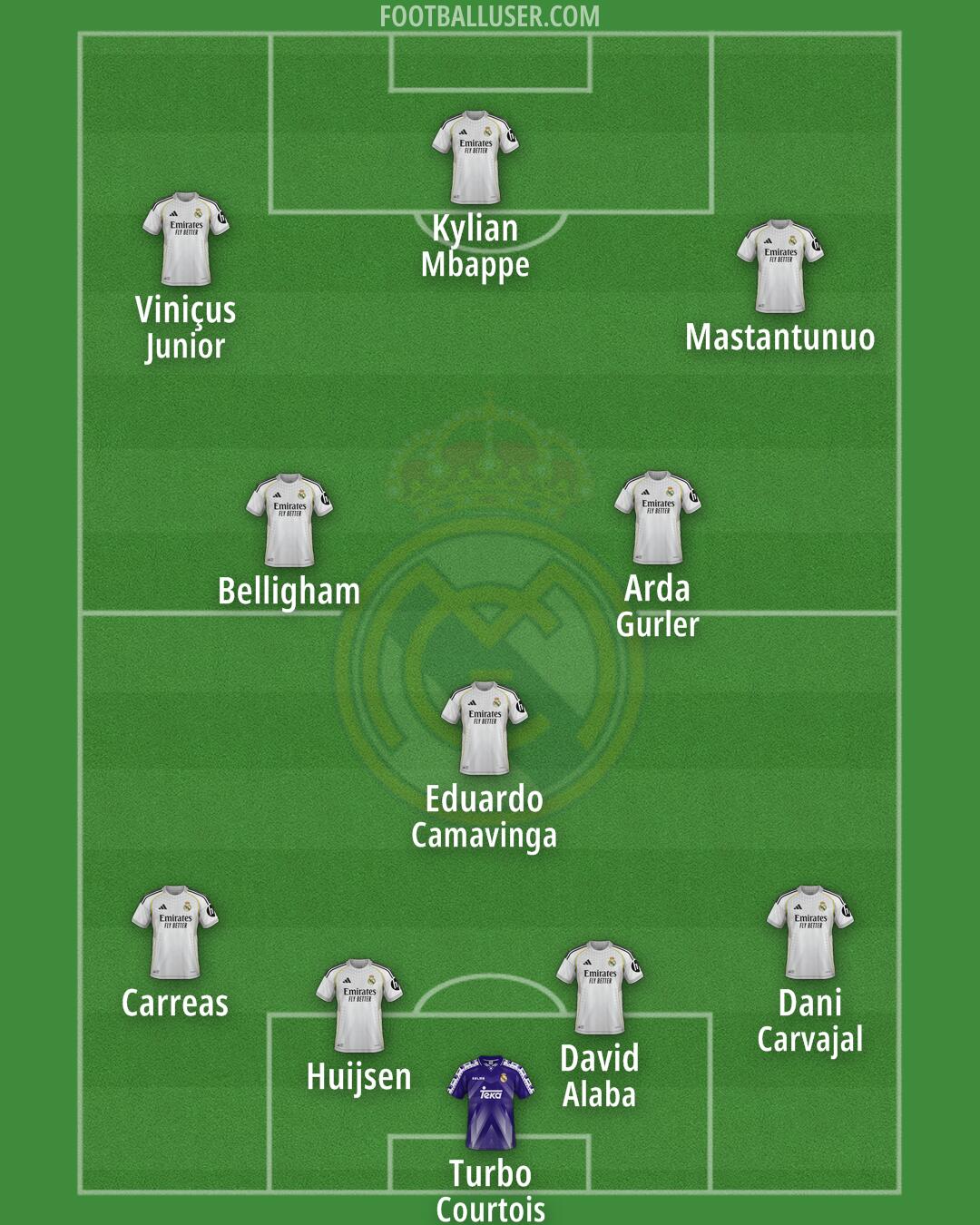
Turbo (Courtois) · David (Alaba) · Huijsen · Carreas · Dani (Carvajal) · Eduardo (Camavinga) · Belligham · Arda (Gurler) · Mastantunuo · Kylian (Mbappe) · Viniçus (Junior)Prioritizing rapid transitions and high pressing defines the identity of Real Madrid as they deploy a 5-2-3. This formation allows the team to control large areas of the pitch by utilizing extreme width and verticality. The lineup is built to catch opponents out of position through quick breaks and sudden surges into the final third.
Turbo stays between the posts to manage the defensive unit from the back. A back five forms the base of the defense with Eduardo acting as the central anchor. Huijsen covers the left side of the central defense while David holds the right side to provide stability. Carreas and Dani operate as wing backs, pushing high up the pitch to provide width or dropping back to form a deep block when the team loses the ball.
The midfield functions as a double pivot to connect the defensive line with the attackers. Belligham operates in the left central role, using his engine to cover ground, press opponents, and drive the ball forward. Arda sits in the right central position to help link play and distribute the ball. This duo must work hard to intercept passes and prevent the opposition from playing through the center.
An aggressive front three drives the attack with Kylian leading the line as a lone striker. Kylian looks to run behind the defense and hold up the ball to bring others into play. Viniçus occupies the left wing and frequently cuts inside to create goal scoring chances with his dribbling. Mastantunuo stays on the right to provide additional creativity and width before moving into central spaces.
Real Madrid gains a significant advantage through the overlapping runs of Carreas and Dani, which creates wide overloads. The ability of Belligham to break the line with forward runs adds an extra layer of pressure in the attacking third. Furthermore, the back five offers great compactness when the team sits deep to defend a lead.
This 5-2-3 formation creates a heavy presence in both wide and central areas to disrupt the opposition. It is particularly effective against teams that play a high line and leave space behind their defenders.