
Juventus Football Formation
 January 27, 2026
 oiarbidexabi


Starting Lineup
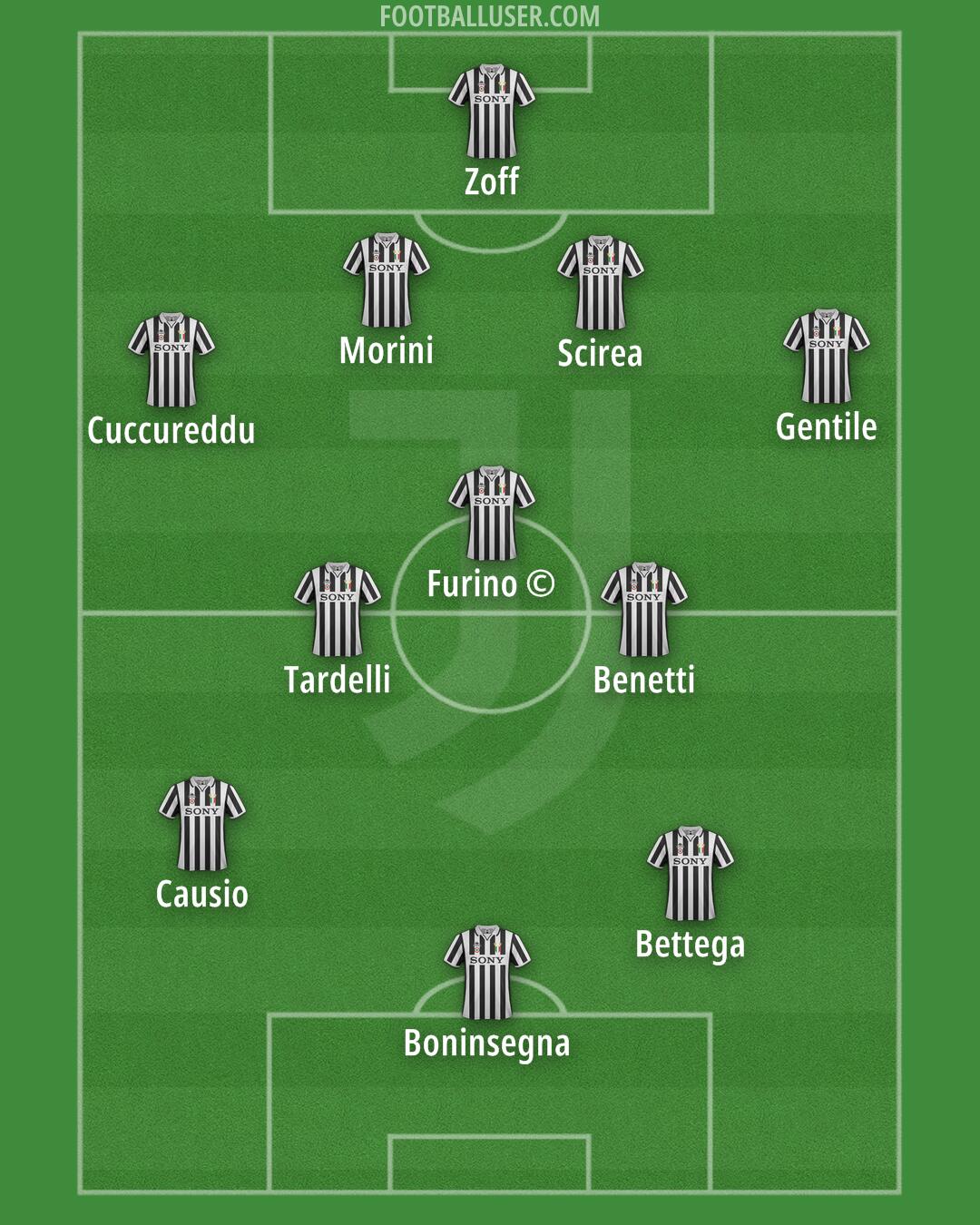
Zoff · Morini · Scirea · Cuccureddu · Gentile · Furino © · Tardelli · Benetti · Causio · Bettega · BoninsegnaA heavy emphasis on defensive solidity and verticality defines Juventus and their 4-3-3 formation. This lineup is built to absorb pressure and strike quickly when the opponent leaves space behind. The team looks to control the tempo through a disciplined block before launching direct attacks to exploit the forward line.
Zoff stays between the posts to command the area and organize the back four. A flat back four provides the foundation, with Scirea acting as a ball playing defender who can read the game to intercept passes. Morini sits beside him to provide cover and strength in the middle. On the flanks, Gentile and Cuccureddu maintain a compact line, with Gentile often stepping up to mark wide players and Cuccureddu providing stability on the right. The defensive unit works as a single block to deny space between the lines.
The midfield functions as a single pivot system with Furino (C) sitting deep to shield the defense and break up play. As captain, Furino holds his position to ensure the back line is never exposed. Beside him, Benetti and Tardelli operate as two central midfielders who connect the play. Benetti works to intercept and recycle possession, while Tardelli uses his energy to drive forward and press the opposition. This midfield trio makes it difficult for opponents to pass through the center of the pitch.
In the attacking phase, the front three of Causio, Bettega, and Boninsegna look to stretch the opposition. Boninsegna acts as the lone striker, tasked to hold up the ball and pin the central defenders. Bettega and Causio operate as wide attackers, with Bettega looking to cut inside from the left to create goalscoring chances. The wingers press the opposing full backs to force turnovers high up the pitch, allowing the team to transition into attack immediately.
One major strength of this Juventus lineup is the ability to press in coordinated waves when the ball enters the final third. The midfield and attack work together to close down passing lanes, forcing the opponent into errors. Another advantage is the compactness when defending deep, which makes it nearly impossible for teams to find gaps. The team also creates wide overloads when the midfielders shift to support the wingers during a transition.
This 4-3-3 formation relies on a disciplined defensive unit and efficient vertical transitions. It is best suited for matches against possession heavy teams that can be caught out on the break.