
Dinamo Football Formation
 January 29, 2026


Starting Lineup
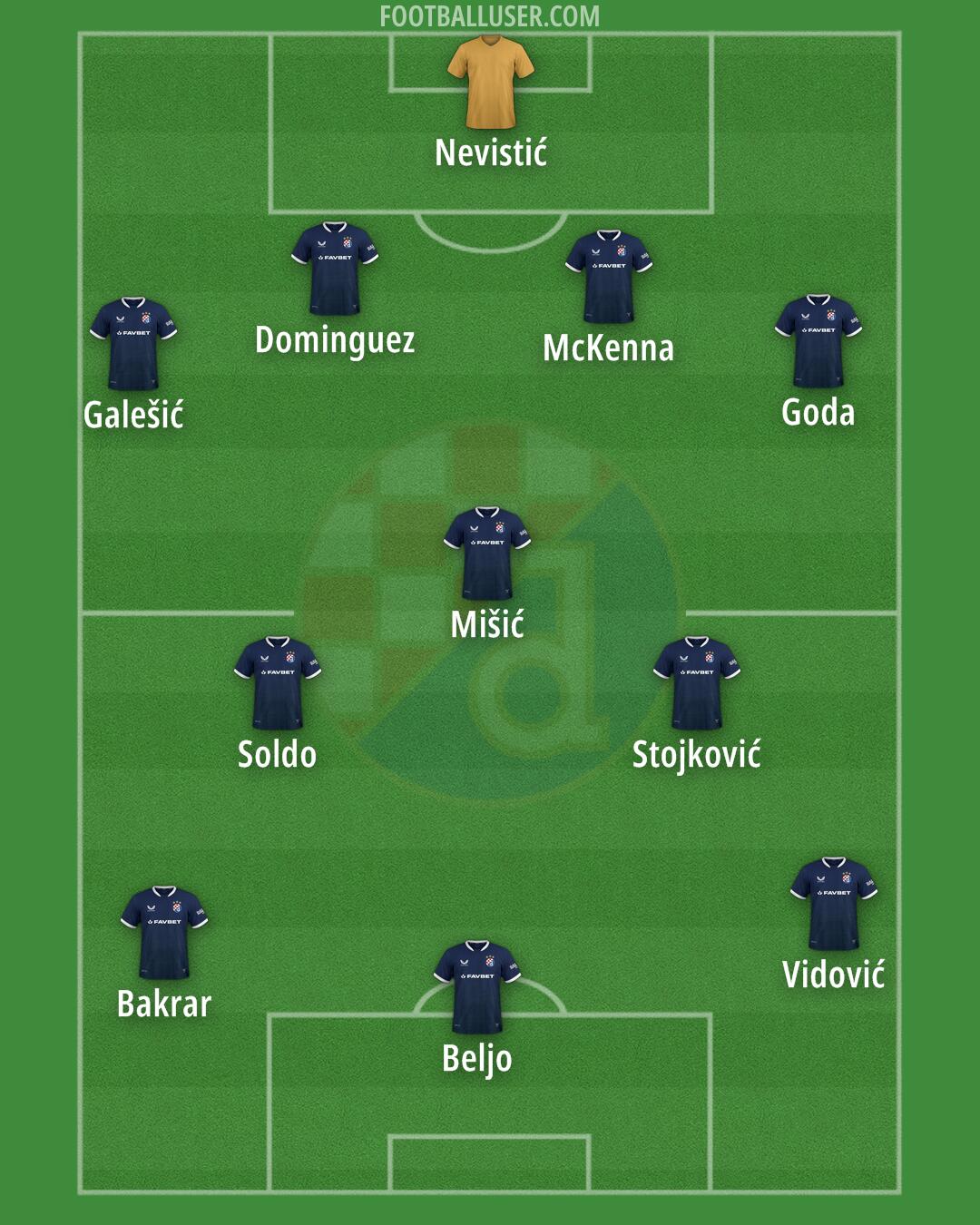
Nevistić · Galešić · Dominguez · McKenna · Goda · Mišić · Soldo · Stojković · Bakrar · Beljo · VidovićA commitment to high pressing and verticality defines this Dinamo lineup in a 4-3-3. The team aims to win the ball high up the pitch and move quickly toward the goal to catch the opponent out of position. This formation is built to play a direct style of football that forces mistakes in the opposition half.
Nevistić sits between the posts to organize the defensive unit from the back. A flat back four provides the foundation for the defense, with Galešić and Goda acting as the full backs to provide width. Galešić looks to overlap and support the attack, while Goda can tuck in to help the central defenders. Dominguez and McKenna occupy the center of the defense, focusing on winning headers and covering space when the team pushes up. The unit must stay compact to prevent long balls from breaking the line.
In the middle of the pitch, a single pivot system manages the transition from defense to attack. Mišić sits in front of the back four to shield the defense and intercept passes. To his sides, Soldo and Stojković work to connect the lines by moving the ball forward. Soldo drives the play through the center, while Stojković looks to find pockets of space to create chances. This midfield trio must press in coordination to prevent the opponent from playing through the middle.
The attacking front line relies on three players to stretch the opposition defense. Beljo leads the line as a lone striker, tasked to hold up the ball and bring others into play. On the flanks, Vidović and Bakrar operate as wide attackers to provide width and penetration. Vidović looks to cut inside from the left, while Bakrar stretches the play on the right. These three work together to press the opposition full backs and create central openings.
Dinamo gains several tactical advantages through this specific formation. The midfield three can create numerical superiority in the center to dominate possession and control the tempo. Wide overloads are often created when Galešić and Goda push up to support Vidović and Bakrar. This allows the team to isolate wide players in one on one situations to beat their markers.
This 4-3-3 formation relies on high energy to disrupt the opponent through constant pressure. It is best suited for matches against teams that struggle to play out from the back under duress.