
FC Rapid Football Formation
 January 30, 2026


Starting Lineup
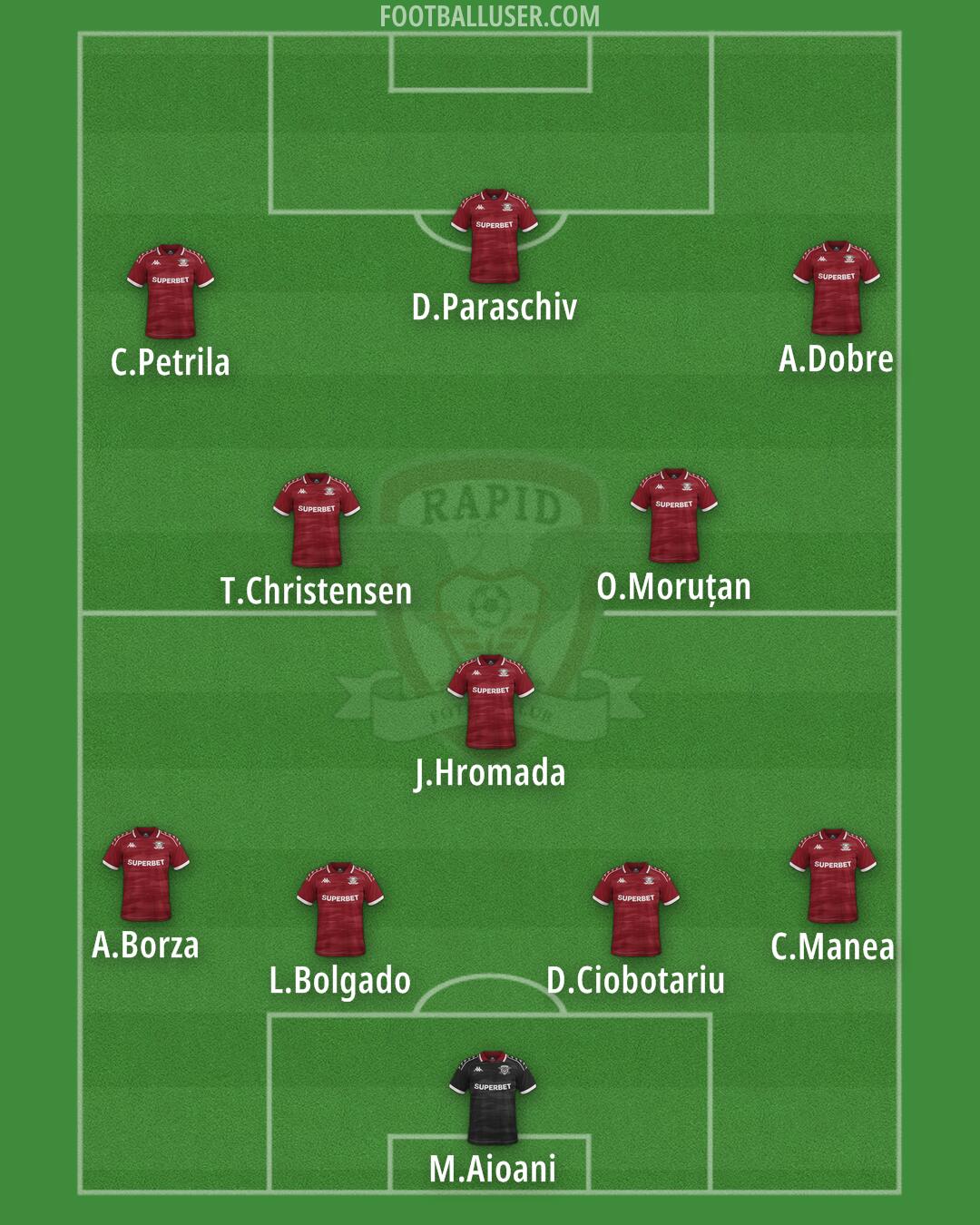
A.Dobre · D.Paraschiv · C.Petrila · O.Moruțan · J.Hromada · T.Christensen · L.Bolgado · D.Ciobotariu · C.Manea · A.Borza · M.AioaniHeavy emphasis on defensive solidity and quick transitions defines the 5-2-3 formation employed by FC Rapid. This lineup aims to absorb pressure through a compact block before catching opponents on the break with direct verticality. The team seeks to dominate space in the middle thirds while keeping the pitch narrow to force opposition play into predictable areas.
M.Aioani operates between the posts to command the penalty area. A back three provides the central spine, with J.Hromada and D.Ciobotariu working to block passing lanes and win aerial duels. L.Bolgado plays as the left center back to provide cover when the wing backs push forward. On the flanks, A.Borza and C.Manea act as wing backs, tasked with providing width and tracking back to support the defense. The defensive unit shifts together to maintain a compact block, ensuring there are no gaps between the lines.
The midfield relies on a double pivot to control the center of the pitch. T.Christensen and O.Moruțan occupy the central roles, working to shield the back three and break the line with vertical passes. Christensen helps to intercept play and recycle possession, while Moruțan drives forward to connect the defensive unit with the attack. This pair must stay disciplined to prevent the opposition from playing through the middle, forcing the ball wide where it can be contained.
An aggressive front line provides the outlet for the attacking transitions. D.Paraschiv leads the line as the lone striker, using his movement to hold up the ball and bring others into play. C.Petrila and A.Dobre occupy the wide channels as wingers, ready to cut inside or stretch the defense. These three forwards press high when the ball is lost, attempting to win it back quickly and launch immediate attacks.
FC Rapid finds strength in the wide overloads created when A.Borza and C.Manea overlap their respective wingers. The formation also offers significant compactness when defending, making it very difficult for opponents to find space between the lines. This allows the team to protect the central zone and transition with high speed once they regain possession.
This 5-2-3 formation provides a reliable defensive foundation while maintaining a dangerous presence on the counter attack. It is best suited for matches against teams that control possession and require a disciplined side to exploit the space behind their high defensive line.