
Real Madrid Football Formation
 February 4, 2026


Starting Lineup
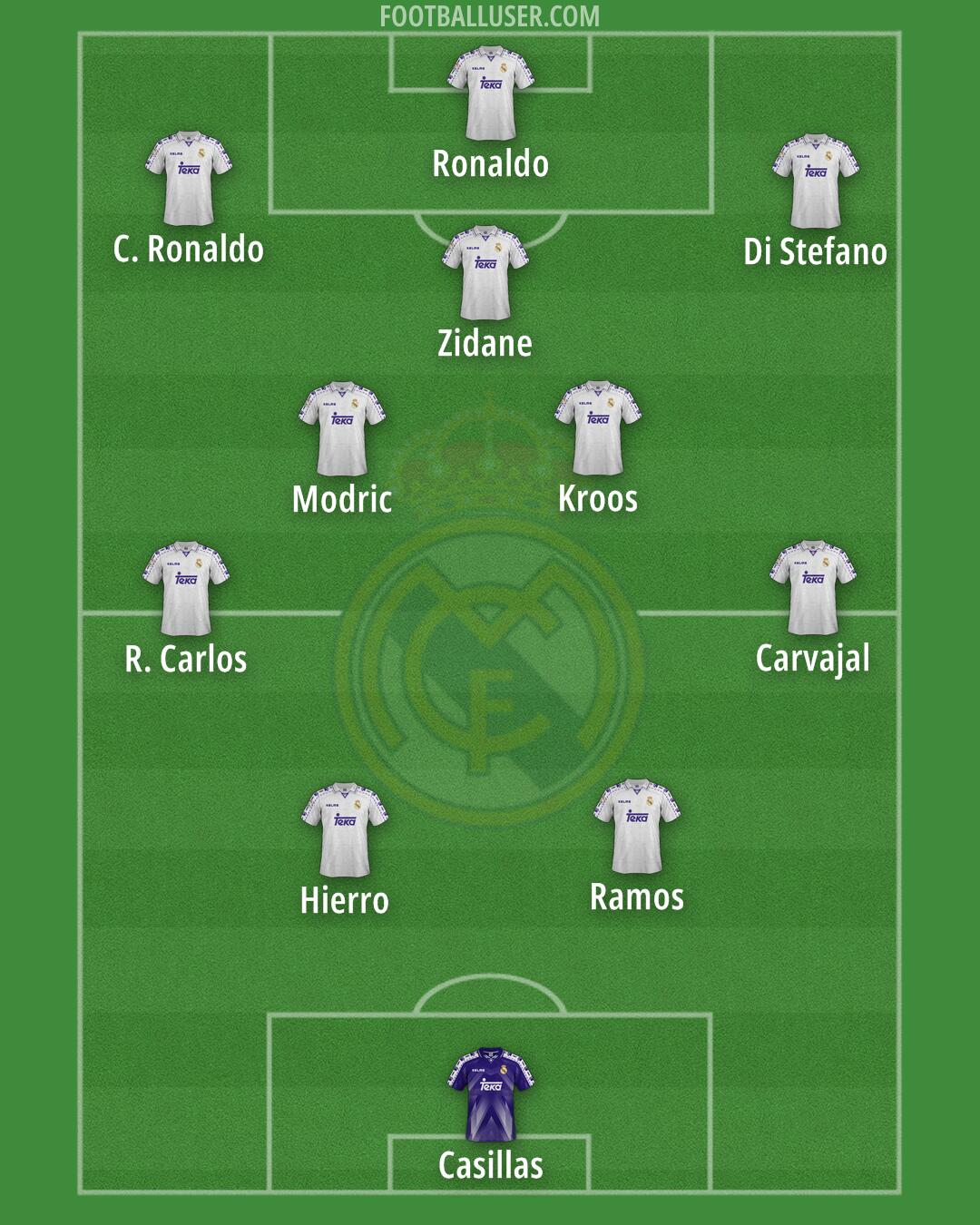
Ronaldo · C. Ronaldo · Zidane · Di Stefano · Modric · Kroos · R. Carlos · Ramos · Hierro · Carvajal · CasillasA heavy emphasis on dominance in the center and overwhelming attacking power defines Real Madrid in this 2-5-3 formation. This lineup aims to control the game through a massive midfield presence and highly aggressive forward movements. By committing so many players into the final third, the team seeks to suffocate the opponent and force turnovers in high areas.
Casillas stands between the posts to anchor the defense from the back. The defensive line consists of just two central defenders, Hierro and Ramos, who must remain alert to any long balls sent over the top. Ramos is known for his aerial strength and aggressive tackling, while Hierro provides composure when building play from the back. Because there are no full backs in a traditional sense, these two must cover vast amounts of space to prevent being caught out during transitions.
The midfield functions as the engine room of the lineup, utilizing a five man block to dominate the center of the pitch. Zidane operates as the attacking midfielder, looking to break the line with his vision and ball control. Next to him, Modric and Kroos control the tempo, with Kroos using his immense passing range to switch play across the pitch. R. Carlos and Carvajal act as wide midfielders who must track back to help the defense, though they often push up to provide width. This heavy concentration of talent allows Real Madrid to keep the ball and dictate the rhythm of the match.
Attacking the goal is the main objective with a front three consisting of wide threats and a central focal point. C. Ronaldo occupies the left wing where he loves to cut inside on his stronger foot, while Di Stefano operates on the right to create chances. Ronaldo leads the line as the striker, using his pace and finishing to exploit gaps. The movement between these three creates constant chaos, forcing the opposition defense to shift and pull apart.
One clear advantage of this formation is the numerical superiority in the middle of the park, making it very difficult for opponents to retain possession. Another strength is the ability to press high in coordinated waves, using the midfield and attack to trap the ball near the opponent's goal. When the team wins the ball, the speed of transition is lethal because the players are already positioned to move forward immediately.
This aggressive formation is built to dominate possession and break down stubborn low blocks. It is most effective when the team faces opponents that struggle to handle high pressure and central overload.