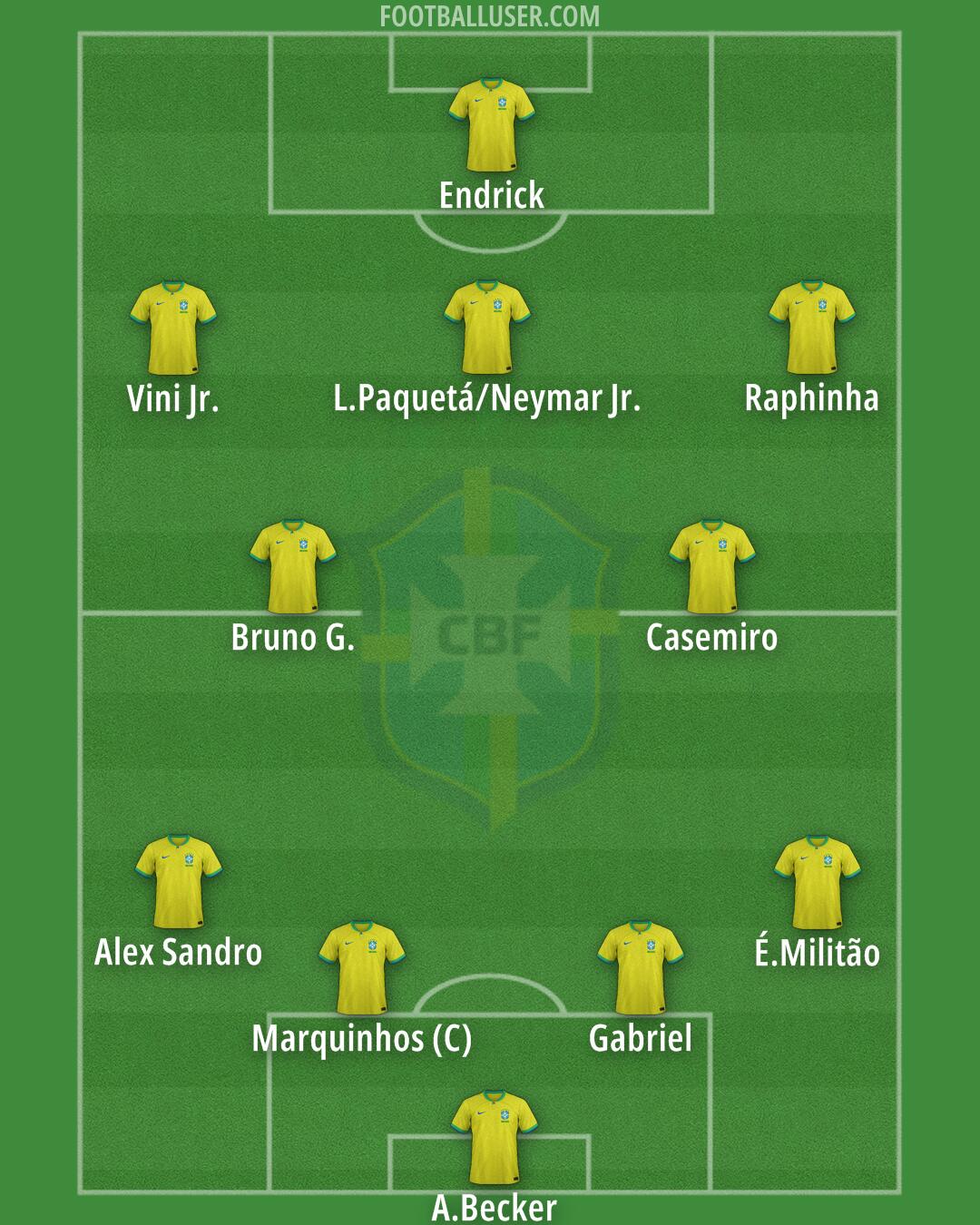

Brazil National Football Team Formation
 February 14, 2026


Starting Lineup
A.Becker · Gabriel · Marquinhos (C) · Alex Sandro · É.Militão · Bruno G. · Casemiro · L.Paquetá/Neymar Jr. · Vini Jr. · Raphinha · EndrickHigh intensity pressing and rapid vertical transitions define the tactical identity of Brazil in this 4-2-4 formation. The lineup seeks to overwhelm opponents by pushing numbers forward into the final third as quickly as possible. This system relies on high energy to regain the ball and immediate directness to catch the opposition out of position.
Alisson Becker acts as the last line of defense, sweeping behind a flat back four. Marquinhos (C) leads the central defense, using his positional sense to cover space and intercept through balls. Beside him, Gabriel provides physical presence in the air and strength in one on one duels. The wide defenders, Éder Militão and Alex Sandro, are tasked with managing the flanks, with Militão often stepping up to support the midfield while Alex Sandro provides width. This unit must stay compact to prevent being caught by long balls behind them.
A double pivot occupies the middle of the park to provide a shield for the back line. Casemiro sits deep to break up play with his tackling and ability to intercept, while Bruno Guimarães acts as the link, driving the ball forward and breaking lines with his passing range. This pair must cover vast amounts of ground to prevent the midfield from being overrun. Their main job is to win the ball and quickly find the front four to start the attack.
The attacking front line consists of four players designed to stretch the opposition defense. Vini Jr. and Raphinha occupy the wide channels, with Vini Jr. using his dribbling style to cut inside and create threats. In the center, L.Paquetá/Neymar Jr. and Endrick operate as two forwards, with one often dropping deeper to connect the lines while the other pushes into the box. These attackers are expected to press high, forcing mistakes from the opponent's defenders.
Brazil gains a significant advantage through wide overloads and the ability to isolate players in one on one situations. By pushing the wingers high, the team forces the opposition full backs to sit deep, creating more space for the central attackers. The speed of transition is another strength, as the quick connection between the double pivot and the front four allows for rapid counter attacks. This formation can also create numerical superiority in the final third during sustained periods of pressure.
This 4-2-4 formation is built for an aggressive, attacking game that prioritizes speed and pressure. It is best suited for matches where the team needs to break down a low block or exploit a disorganized defense through sheer offensive volume.