AFC Wimbledon Football Formation
 February 19, 2026


Starting Lineup
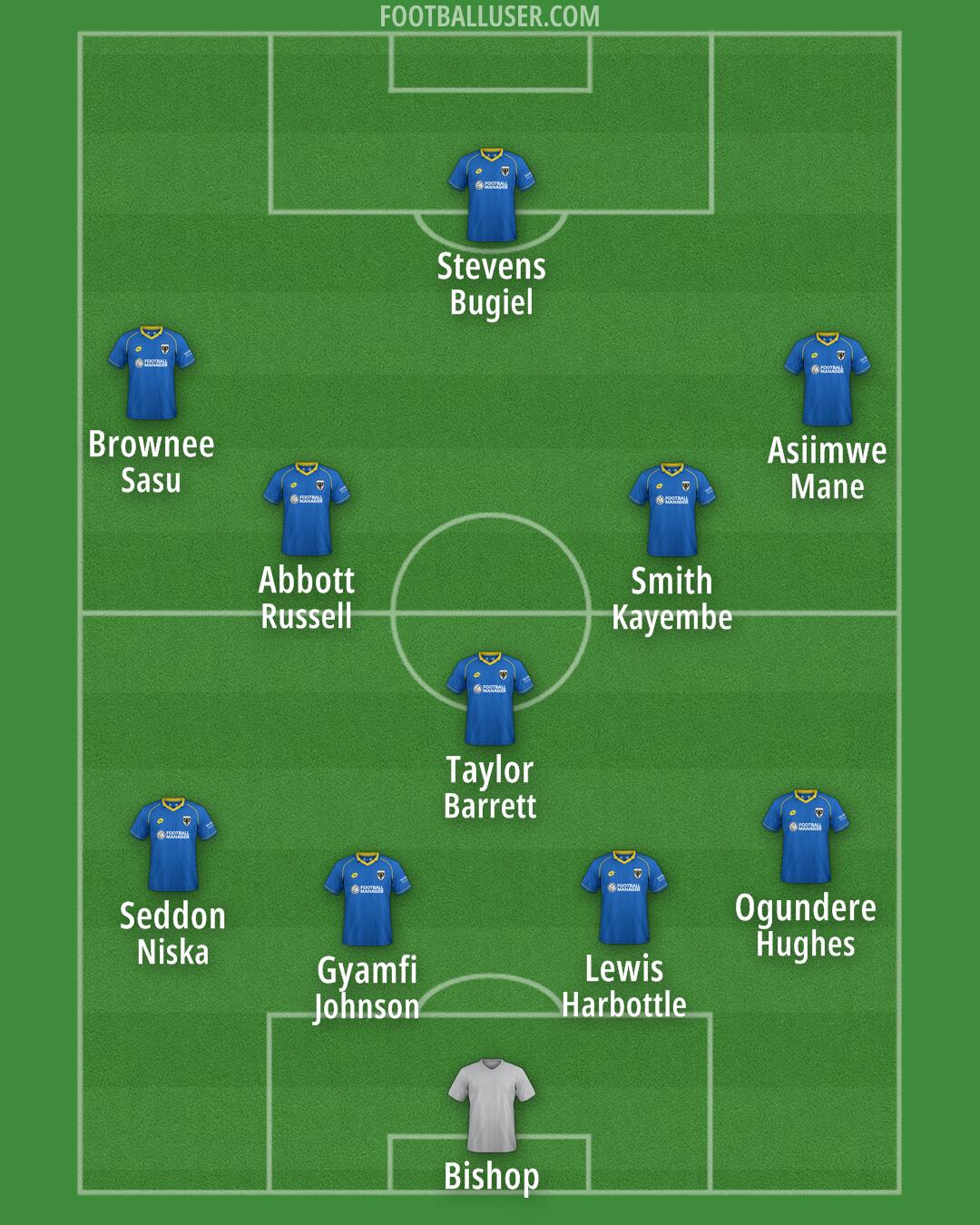
Bishop · Ogundere (Hughes) · Lewis (Harbottle) · Gyamfi (Johnson) · Seddon (Niska) · Abbott (Russell) · Smith (Kayembe) · Brownee (Sasu) · Asiimwe (Mane) · Stevens (Bugiel) · Taylor (Barrett)A heavy emphasis on defensive solidity defines AFC Wimbledon and their 5-4-1 formation. This lineup seeks to sit deep and absorb pressure before hitting teams on the break. The team looks to stay compact, making it difficult for opponents to find space between the lines. By crowding the central areas, AFC Wimbledon creates a difficult environment for any side attempting to control the game through possession.
Bishop stands between the posts to command the area and organize the backline. The defensive unit rests on a three man central core consisting of Taylor, Lewis, and Gyamfi. Taylor acts as the central anchor while Lewis and Gyamfi cover the channels to provide security. On the flanks, Seddon and Ogundere operate as wing backs, tasked with tracking back to form a five man wall while also providing width when the team wins the ball. This unit must stay disciplined to prevent gaps from opening up.
The midfield works in a flat four to congest the central zone and deny passing lanes. Abbott and Smith occupy the central roles, where they look to break the line with vertical passes or intercept play to stop transitions. Smith and Abbott must shield the back three by tracking runners and closing down space. On the edges, Brownee and Asiimwe occupy the wide areas to link the defense to the attack, ensuring the team can transition quickly once the ball is recovered.
Stevens leads the line as a lone striker, tasked with holding up the ball to allow the midfield to push forward. The attacking plan relies on Stevens to pressure defenders and win aerial duels to bring others into play. Brownee and Asiimwe provide the width needed to stretch the opposition, while Stevens works to pin the central defenders back. This setup creates opportunities for Stevens to run into space behind the defensive line as the midfield looks to feed him through direct balls.
One primary advantage of this formation is the ability to maintain high levels of compactness when defending in a low block. The narrowness of the midfield makes it hard for teams to play through the center, forcing them into less dangerous wide areas. Another strength is the threat of rapid transitions, as the wing backs Seddon and Ogundere can push forward quickly to support Stevens. This allows the team to turn defensive stability into offensive pressure in a matter of seconds.
This 5-4-1 formation serves as a robust defensive platform designed to frustrate dominant sides. It is best suited for matches where the team needs to absorb constant pressure and exploit the space left by an advancing opponent.