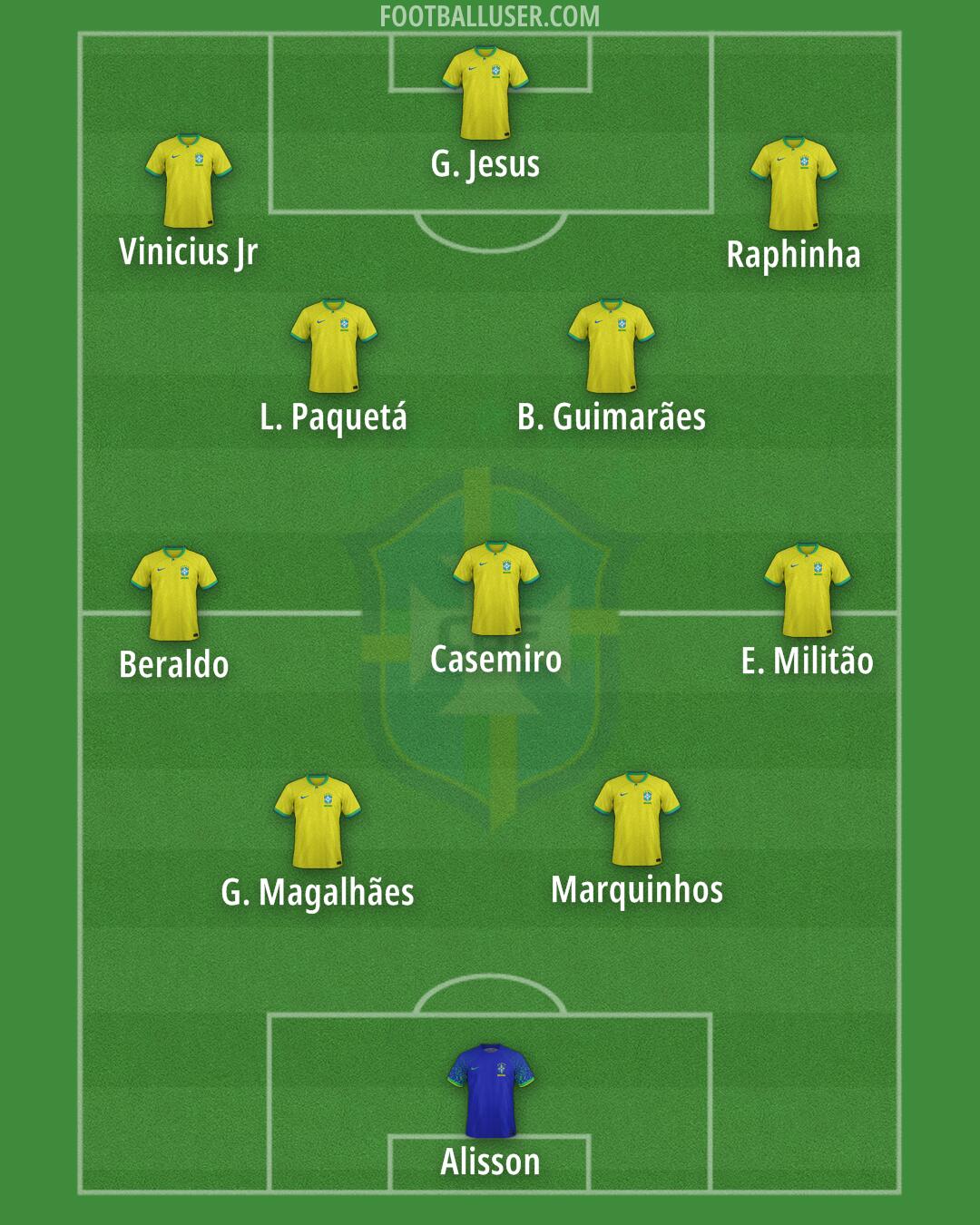

Brazil National Football Team Formation
 February 26, 2026


Starting Lineup
Beraldo · G. Jesus · Vinicius Jr · Raphinha · Casemiro · L. Paquetá · B. Guimarães · E. Militão · G. Magalhães · Marquinhos · AlissonA high pressing and vertical style defines the Brazil lineup, which operates in a 5-2-3 formation. This system focuses on quick transitions and intense pressure to win the ball high up the pitch. By utilizing wide attackers and aggressive wing backs, the Selecao aim to stretch the opposition and create direct paths to the goal.
Alisson guards the net, providing a reliable presence behind a back five. The central defense consists of G. Magalhães, Marquinhos, and Casemiro. Marquinhos acts as a leader in the line with his ability to read the game and intercept passes, while Casemiro provides aerial strength and grit. Beraldo and E. Militão function as wing backs who must cover the entire flank, pushing high to support the attack and tracking back to maintain a solid defensive block when the ball is lost.
In the middle of the pitch, a double pivot holds the central zone. L. Paquetá and B. Guimarães work to control the tempo and connect the defense to the forward line. L. Paquetá uses his passing range to break lines, while B. Guimarães works to shield the back five and recover possession. This duo must be disciplined to ensure they do not leave the central defenders exposed during attacking phases.
The attacking front line relies on three players to pressure the opponent. Vinicius Jr and Raphinha act as wide wingers who frequently cut inside to threaten the box. Vinicius Jr uses his explosive dribbling style to beat full backs, creating space for others. G. Jesus leads the line as a lone striker, tasked to hold up the ball and make runs into the channels to pull defenders out of position.
Brazil possesses several tactical advantages through this formation. The width provided by E. Militão and Beraldo creates wide overloads that force opposition wingers to track back deep. This setup also allows the team to press high in coordinated waves, using the front three to trap opponents near their own goal. When the ball is won, the directness of the wingers enables rapid speed of transition.
This formation creates a powerful platform for teams that want to dominate through aggression and wide play. It is best suited for matches where Brazil needs to break down a low block or exploit gaps through quick, vertical movements.