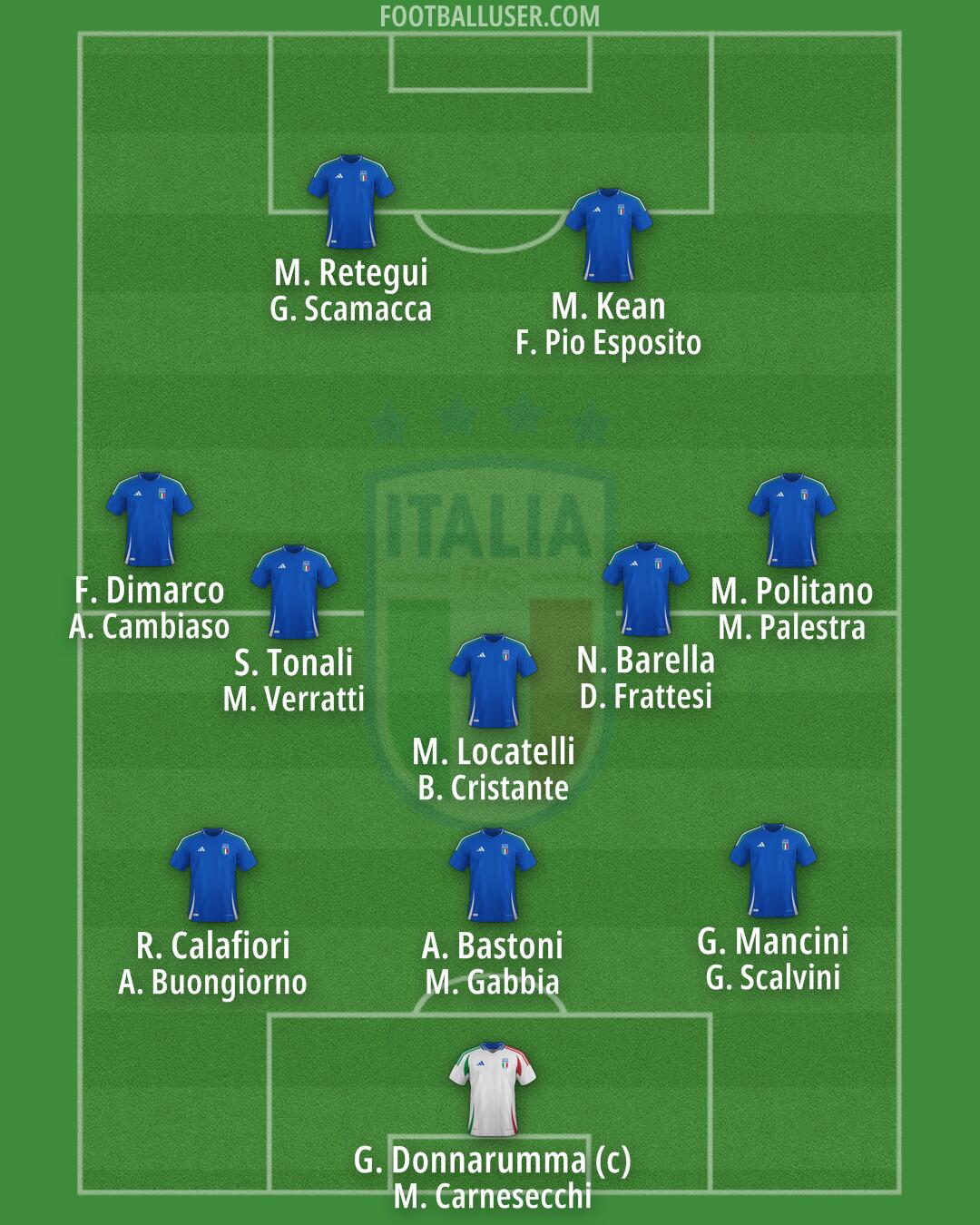

Italy National Football Team Formation
 February 27, 2026
 Spugn
Spugn


Starting Lineup
G. Donnarumma (c) (M. Carnesecchi) · R. Calafiori (A. Buongiorno) · G. Mancini (G. Scalvini) · A. Bastoni (M. Gabbia) · F. Dimarco (A. Cambiaso) · S. Tonali (M. Verratti) · M. Locatelli (B. Cristante) · M. Politano (M. Palestra) · M. Retegui (G. Scamacca) · M. Kean (F. Pio Esposito) · N. Barella (D. Frattesi)A high pressing and vertical style defines the tactical identity of Italy in a 3-5-2. This formation is built to dominate the middle of the pitch and quickly transition from a defensive block to a sharp attacking move. The Azzurri look to win the ball high up the pitch and use the width provided by the wing backs to stretch the opposition.
Gianluigi Donnarumma (c) commands the area from goal to provide a foundation for the back three. Alessandro Bastoni acts as a ball playing defender to start attacks from deep, while Giorgio Mancini provides aerial strength and physical presence to mark the opposition striker. Riccardo Calafiori sits on the left of the central trio to cover the space behind the advancing wing back. The defensive unit works together to sit deep when needed or step up to squeeze the space between the lines.
The midfield operates as a three man unit that controls the tempo and protects the back line. Manuel Locatelli sits as the single pivot to shield the defense and break up play. Nicolo Barella uses his high pressing intensity and energy to drive the team forward from the right central role, while Sandro Tonali connects the defense to the attack by switching play and finding gaps. This trio ensures the team remains compact when the opposition has possession.
In the attacking phase, Italy relies on two forwards to lead the line. Mateo Retegui and Moise Kean act as the two strikers to push the opposition defenders back. Federico Dimarco provides width on the left and can overlap to send crosses into the box, whereas Matteo Politano occupies the right side to cut inside and create chances. The forwards press in coordination to force turnovers in the final third.
One major advantage for Italy is the numerical superiority in the central midfield zone which allows them to dominate possession. The ability of Federico Dimarco to push high creates wide overloads that force the opposing full backs to drop deep. This movement creates space in the middle for Nicolo Barella and Sandro Tonali to make late runs into the penalty area.
This 3-5-2 formation relies on a strong central block and aggressive wing backs to control matches. It is most effective against teams that play a narrow formation and struggle to track runners in the half spaces.