Arsenal Football Formation
 February 28, 2026


Starting Lineup
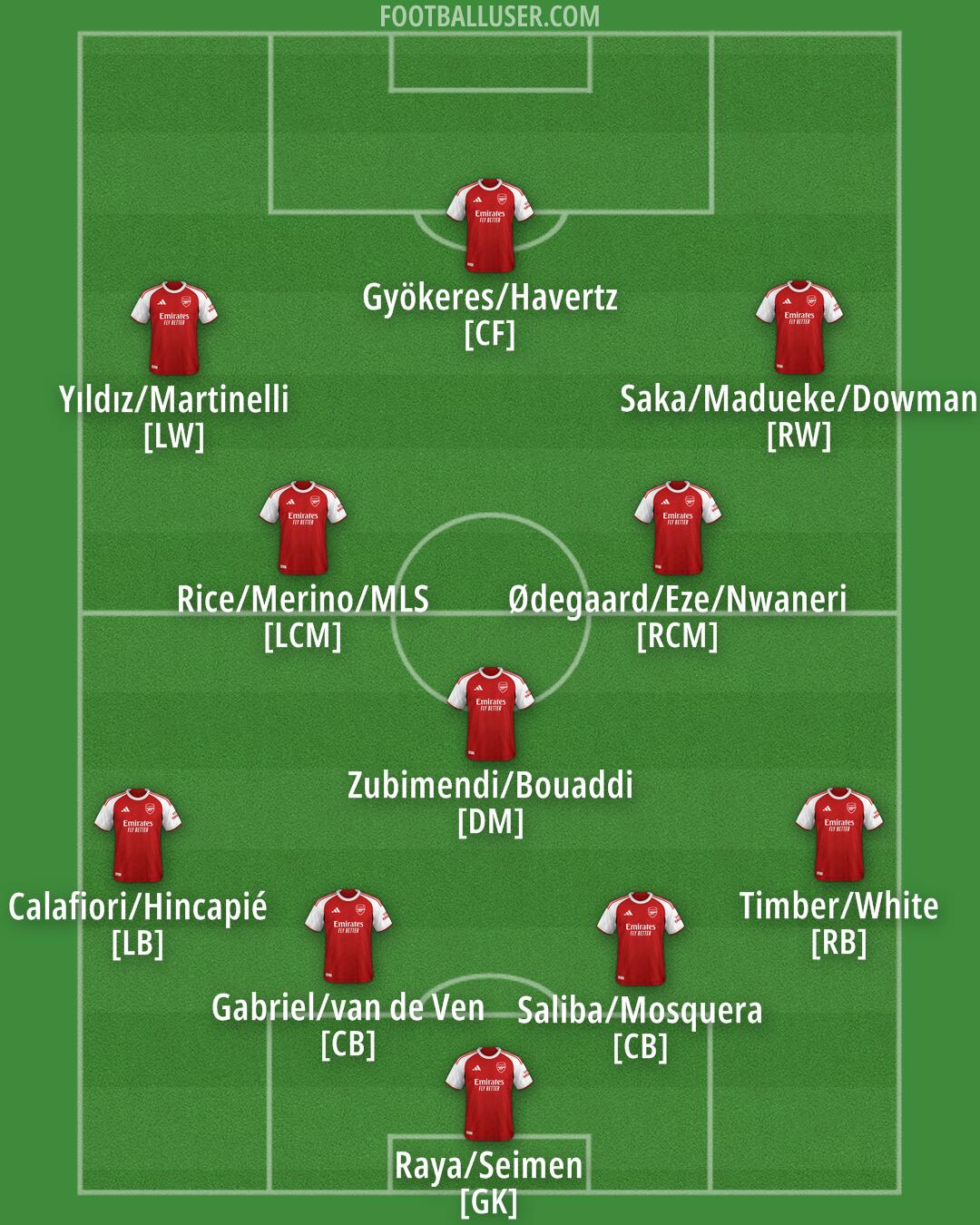
Raya/Seimen ([GK]) · Calafiori/Hincapié ([LB]) · Gabriel/van de Ven ([CB]) · Saliba/Mosquera ([CB]) · Timber/White ([RB]) · Zubimendi/Bouaddi ([DM]) · Rice/Merino/MLS ([LCM]) · Ødegaard/Eze/Nwaneri ([RCM]) · Yıldız/Martinelli ([LW]) · Saka/Madueke/Dowman ([RW]) · Gyökeres/Havertz ([CF])A high pressing identity defines Arsenal in this 5-2-3 formation. The team looks to win the ball back quickly in the final third and move the play forward with verticality. This lineup is built to control games through intense pressure and rapid transitions between the defensive and attacking lines.
David Raya acts as the goalkeeper to start the build up from the back. A back three provides the base for the defense with Zubimendi acting as the central man to sweep up and organize the unit. Saliba provides strength and recovery speed from the right side while Gabriel offers aerial strength and aggression from the left. Timber operates as the right wing back to push high up the pitch, whereas Calafiori takes the left wing back role to provide width and cover the flank.
The midfield operates as a double pivot to manage the center of the pitch. Rice sits deep to shield the defense and break up play with his high work rate and interception skills. Alongside him, Ødegaard acts as the primary creator to drive the team forward and find pockets of space. This pair connects the back three to the front three by recycling possession or playing breaking passes into the attacking third.
In the attacking phase, the team utilizes three forwards to stretch the opposition. Gyökeres operates as a lone striker to hold up the ball and engage the central defenders. Saka occupies the right wing to cut inside and create chances, while Yıldız provides width and directness on the left. This front line is tasked with pressing the opposition back line to force errors and high turnovers.
Arsenal gains specific advantages through this setup. The formation allows for wide overloads when Timber and Saka combine on the right flank. It also provides compactness when defending, as the wing backs drop back to form a five man line that is difficult to break down. The ability to press high in coordinated waves makes it hard for opponents to build from the back.
This 5-2-3 formation relies on intense physical output and rapid verticality. It is best suited for matches against teams that struggle to play out from a high press or those that leave large spaces behind their defensive line.