Arsenal Football Formation
 March 12, 2026


Starting Lineup
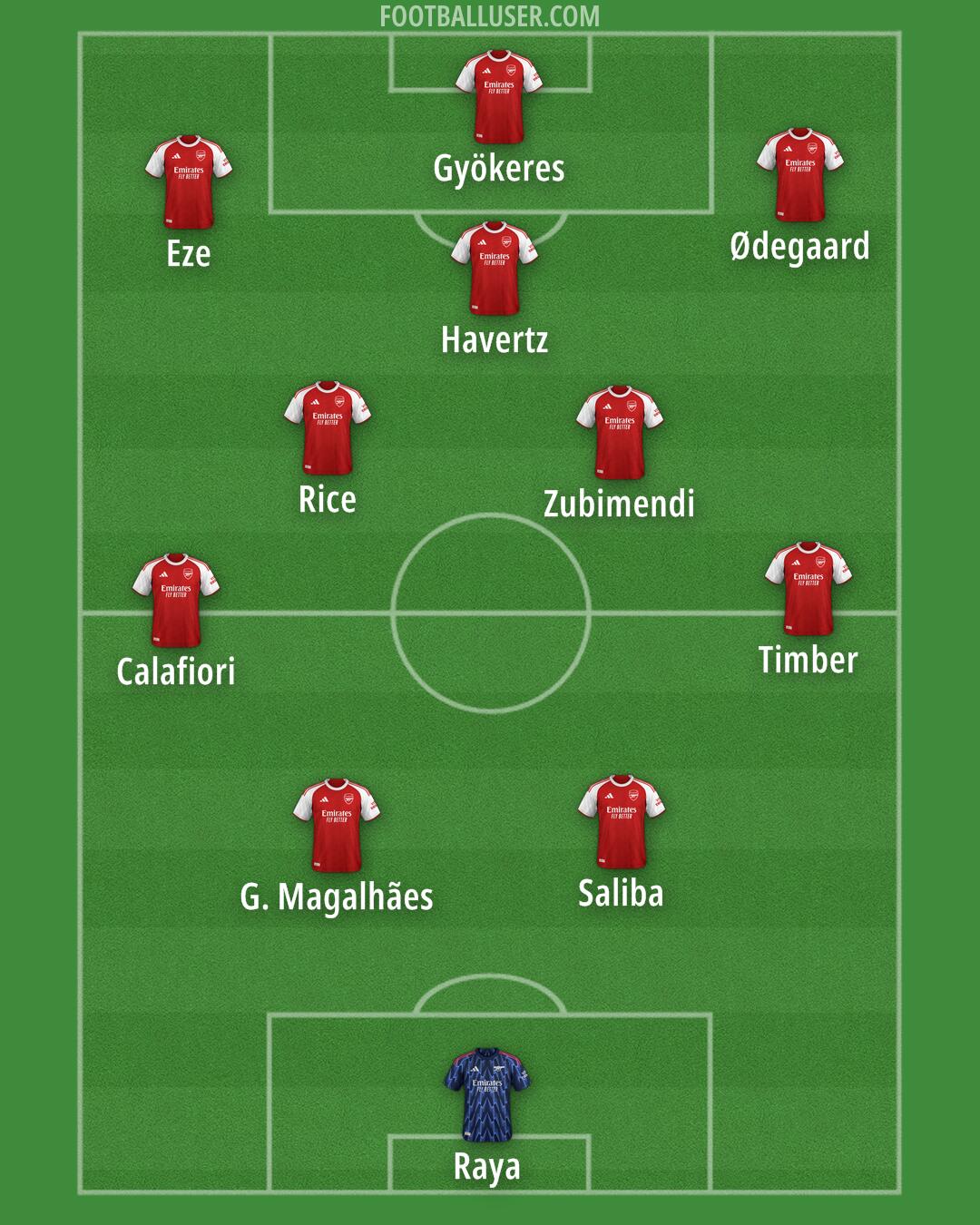
Ødegaard · Gyökeres · Havertz · Rice · Zubimendi · Eze · Calafiori · G. Magalhães · Saliba · Timber · RayaA high pressing, possession heavy identity defines Arsenal and their 2-5-3 formation. This lineup focuses on controlling the ball in the middle third and suffocating opponents through high intensity pressing. By packing the central areas, the Gunners aim to dominate every phase of play and keep the ball moving through short, quick passes to break down deep blocks.
David Raya acts as the foundation in goal, sweeping behind a high defensive line. Gabriel Magalhães and William Saliba form the central pair of defenders who must stay high to squeeze the pitch. While this looks like a back two, the defensive unit relies on the midfielders to drop and cover the space behind them. Gabriel Magalhães provides aerial strength to defend crosses, while Saliba uses his recovery speed to intercept long balls played behind the line.
The midfield contains the engine of this system with five players occupying the center. Calafiori sits in the left defensive midfield role to provide coverage, while Timber operates on the right side of the pivot. Martin Zubimendi works in the central area to connect the defense to the attack with his passing range. Declan Rice drives forward from the left to break the line, and Kai Havertz operates as the attacking midfielder to occupy the pockets of space between the opponent midfield and defense.
In the attacking phase, the team pushes forward with three players in the final third. Gyökeres leads the line as a lone striker, using his strength to hold up the ball for others. Eze provides width on the left wing and looks to cut inside to create chances, while Martin Ødegaard operates from the right wing to find pockets of space. This front three constantly presses the opposition defenders to force errors and win the ball back quickly.
One major advantage of this Arsenal formation is the massive numerical superiority in the middle of the pitch. Having five midfielders allows them to create overloads that force opponents to pull players out of position. The team also benefits from the ability to press high in coordinated waves, with the front three and Havertz squeezing the space. This compactness makes it very difficult for the opposition to play through the center of the pitch.
This 2-5-3 formation is built to dominate games through ball retention and central control. It is best suited for matches where the team faces a low block and needs to overwhelm the opposition in the middle third.