
Parma Football Formation
 March 12, 2026


Starting Lineup
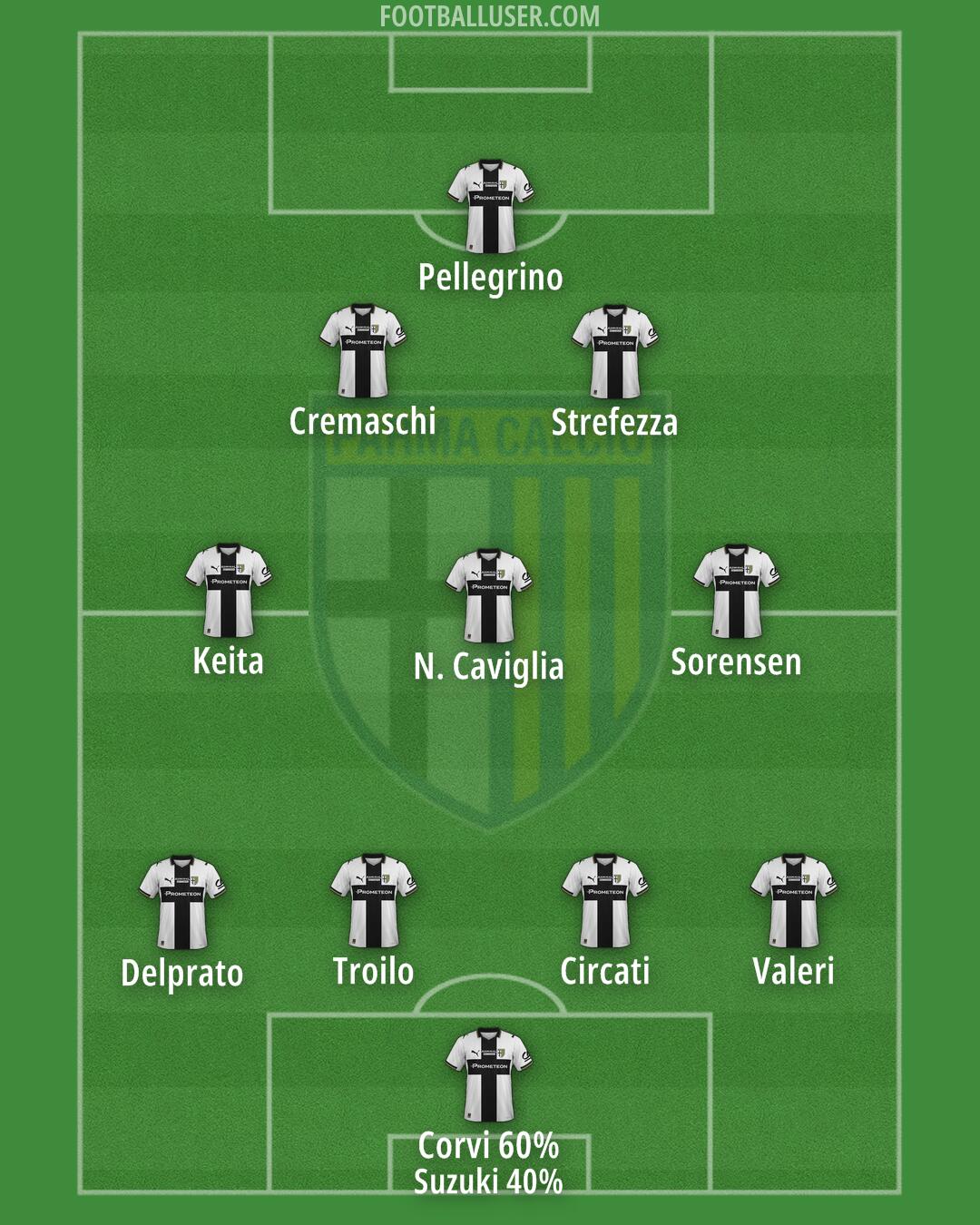
Corvi 60% (Suzuki 40%) · Delprato · Troilo · Circati · Valeri · Keita · N. Caviglia · Sorensen · Pellegrino · Cremaschi · StrefezzaA high pressing, vertical identity defines Parma and their 4-3-3 formation. This lineup focuses on winning the ball high up the pitch and moving it forward quickly to catch opponents out of position. By staying compact and aggressive, the team looks to control games through intense pressure rather than just slow build up.
Corvi acts as the last line of defense in goal. The defensive unit sits in a flat back four, where Troilo and Circati operate as the central defenders. Troilo and Circati must stay close together to cover space when the team pushes up. On the flanks, Valeri and Delprato provide width and are expected to overlap during the attack. This back line must communicate constantly to step up as a unit or drop back to cover long balls.
The midfield functions as a three man unit to control the center of the pitch. Sorensen, Keita, and N. Caviglia work to occupy the central zones. Keita and Sorensen act as the engines, looking to intercept passes and drive the ball forward into the attacking third. N. Caviglia connects the defense to the front three, helping to recycle possession and break lines with vertical passes. This trio must shift side to side to block passing lanes and protect the back four.
In the attacking phase, Parma utilizes three attackers to stretch the opposition. Pellegrino leads the line as a lone striker, tasked to hold up the ball and pin the central defenders. Cremaschi and Strefezza operate as wide attackers, looking to cut inside or drive toward the goal. These wingers must press the opposition full backs to prevent them from playing out from the back. The movement of Cremaschi and Strefezza creates space in the channels for the midfielders to run into.
One major advantage of this 4-3-3 is the ability to press high in coordinated waves, forcing errors in the opponent's half. The team also benefits from wide overloads when Valeri and Delprato push forward to support the wingers. This creates numerical superiority on the flanks, making it difficult for the opposition to track both the wide player and the overlapping defender.
This formation relies on high energy and quick transitions to disrupt the opponent. Parma is best suited for games against teams that struggle to play out from a high press or leave large gaps behind their defensive line.