Arsenal Football Formation
 March 13, 2026


Starting Lineup
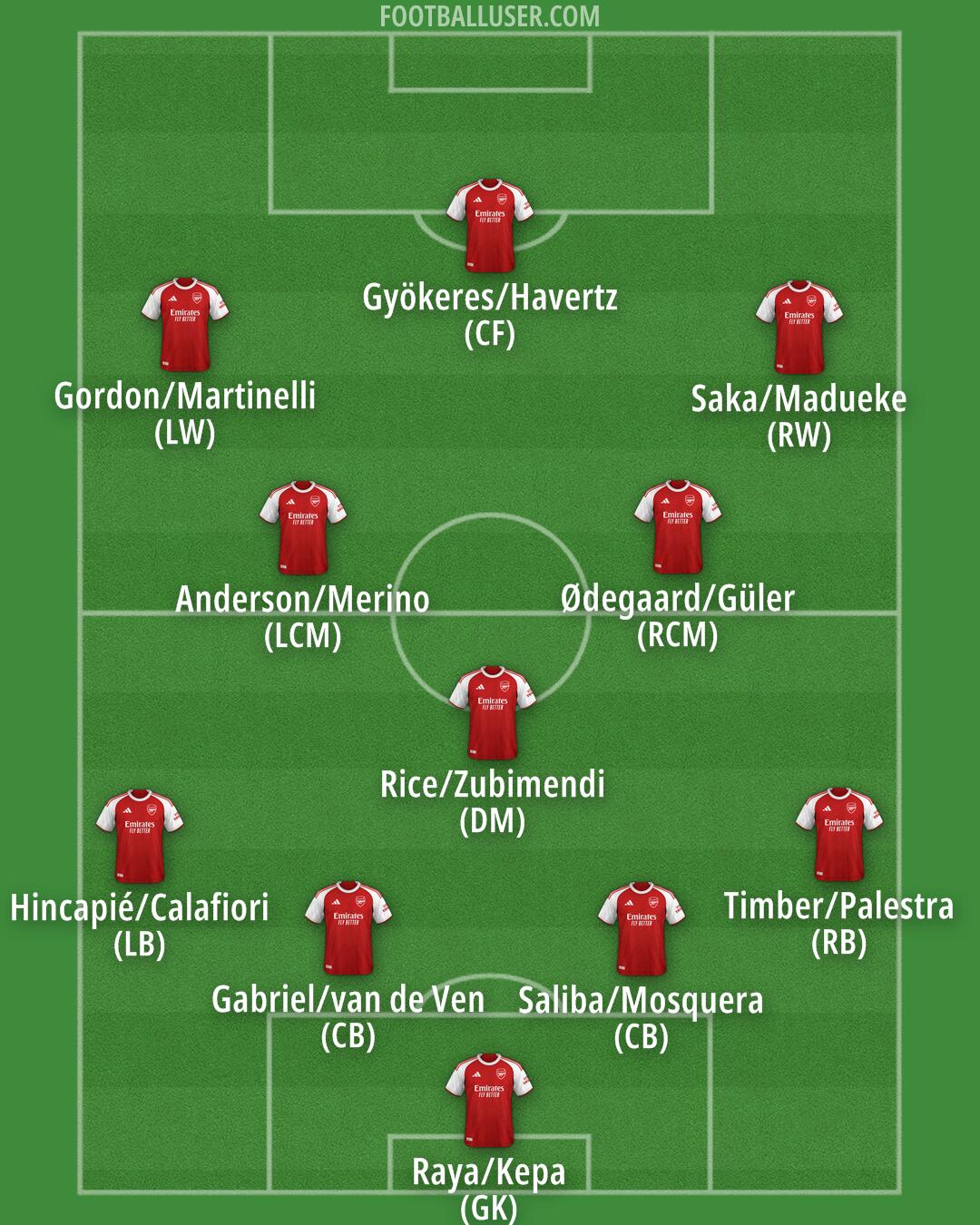
Raya/Kepa (GK) · Hincapié/Calafiori (LB) · Gabriel/van de Ven (CB) · Saliba/Mosquera (CB) · Timber/Palestra (RB) · Rice/Zubimendi (DM) · Anderson/Merino (LCM) · Ødegaard/Güler (RCM) · Gordon/Martinelli (LW) · Saka/Madueke (RW) · Gyökeres/Havertz (CF)A high pressing and direct identity defines this Arsenal lineup in a 5-2-3 formation. This system seeks to win the ball high up the pitch and quickly transition into attacking moves. The Gunners focus on controlling the game through verticality and intense pressure to disrupt the opponent.
David Raya acts as the goalkeeper, sweeping up behind a back five. Saliba and Gabriel form the central core of the defense, where Saliba provides recovery speed and Gabriel offers aerial strength. Rice sits in the middle of the defensive line to act as a ball playing defender who can step up into midfield. Timber operates as the right wing back to provide width, while Hincapié covers the left flank. This back five can drop deep to sit deep when defending or push up to compress the space.
The midfield contains a central pairing designed to connect the defense to the front three. Anderson works to cover ground and track back, while Ødegaard acts as the creative engine to break the line with through balls. This two man midfield must work hard to protect the space between the lines. They rely on the back three to provide a safety net when they push forward to support the attack.
Three attackers spearhead the offensive movements. Gyökeres leads the line as a lone striker who can hold up the ball and turn defenders. Saka operates on the right wing, frequently looking to cut inside and create chances, while Gordon provides pace and direct runs on the left. The front three are tasked with pressing high in coordinated waves to force mistakes from the opposition.
Arsenal gains a clear advantage through wide overloads when the wing backs push high. The presence of Timber and Hincapié allows Saka and Gordon to stay wider or move inside to find more space. This formation also creates numerical superiority in the defensive block, making it difficult for opponents to find gaps. The speed of transition between the heavy press and the counter attack is a major threat.
This 5-2-3 formation offers a robust way to defend while remaining dangerous on the break. It is particularly effective against teams that struggle to play out from the back under heavy pressure.