QPR Football Formation
 March 13, 2026


Starting Lineup
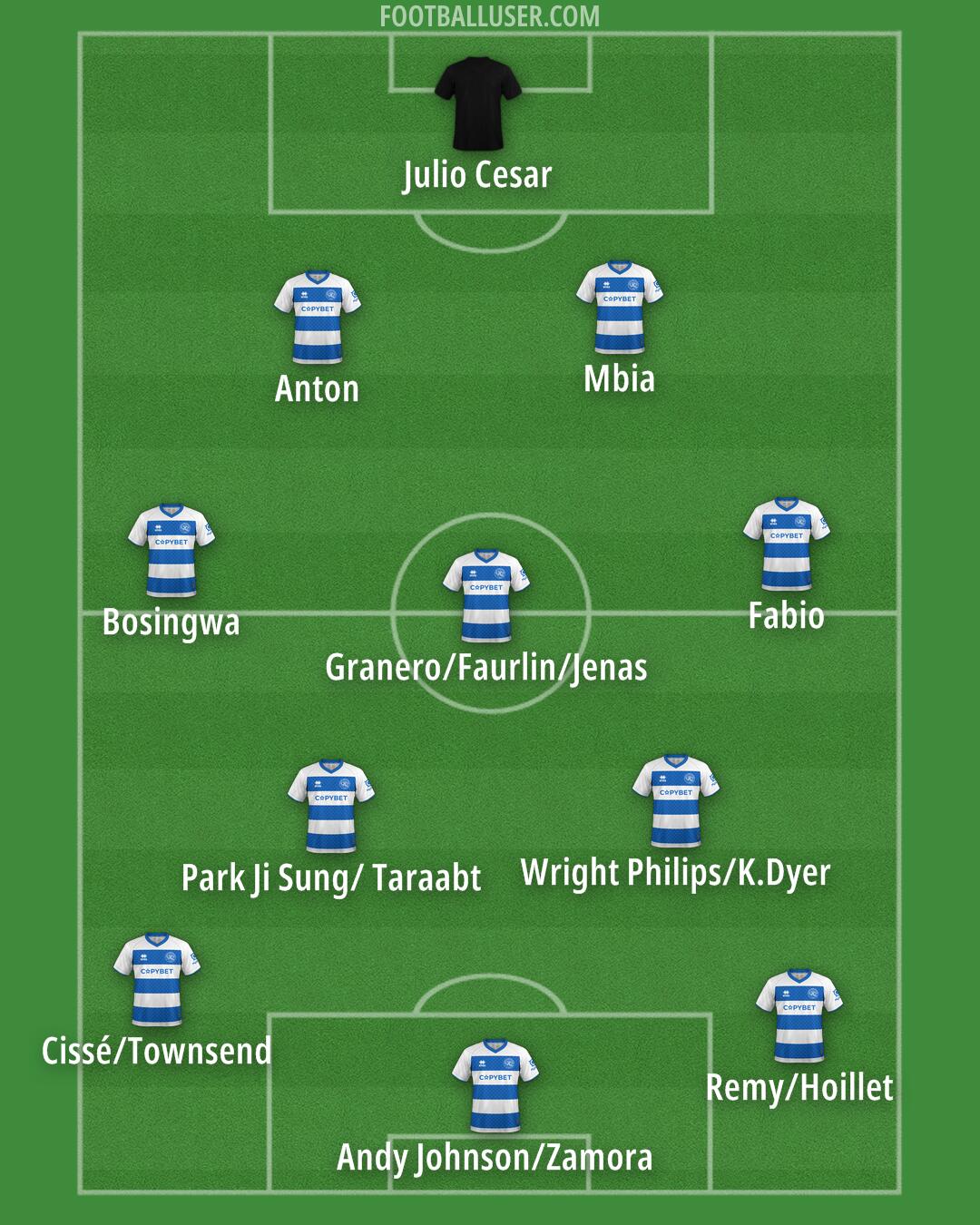
Julio Cesar · Anton · Mbia · Bosingwa · Fabio · Granero/Faurlin/Jenas · Cissé/Townsend · Andy Johnson/Zamora · Remy/Hoillet · Park Ji Sung/ Taraabt · Wright Philips/K.DyerAggressive attacking football defines the QPR lineup in this 2-5-3 formation. This system prioritizes immediate pressure and overwhelming the opponent in their own half to win the ball back quickly. It is a high-risk lineup designed for teams that want to control the tempo through constant forward movement and a heavy presence in the final third.
Julio Cesar guards the goal as the last line of defense. The back line consists of only two central defenders, Mbia and Anton, who must remain concentrated. They are required to play a high line to compress the pitch and must be capable of covering vast amounts of space when the team loses possession. Because there are no full backs, Mbia and Anton have to be dominant in the air and quick to intercept passes to prevent long balls from breaking their line.
A dense five-man midfield provides the engine for this QPR formation. Fabio and Bosingwa occupy the central midfield roles, with Bosingwa known for his defensive positioning. Granero, Faurlin, or Jenas act as the central pivot to connect the defense to the rest of the team. On the flanks, Wright Philips or K.Dyer provide width on the right, while Park Ji Sung or Taraabt work on the left. Park Ji Sung is renowned for his immense work rate and relentless pressing intensity, which helps the midfield shift and cover the gaps left by the two defenders.
The attack employs three forwards to pin the opposition back. Cissé or Townsend act as wide attackers on the right, while Remy or Hoillet occupy the left wing. Leading the line is Andy Johnson or Zamora as the lone striker. This front three is meant to stay high, stretching the defense to create room for the midfield to advance. Forwards must press hard to force errors, allowing the team to transition quickly into scoring opportunities.
Significant tactical advantages arise from this formation, particularly through numerical superiority in the middle of the pitch. The presence of five midfielders makes it very difficult for opponents to keep the ball through the center. Additionally, the team can create wide overloads when the wide midfielders like Wright Philips or Park Ji Sung push forward to support the wingers. Such movements allow the team to pin the opposition deep and constantly switch play to find openings.
Such a 2-5-3 formation serves as a bold attacking blueprint built for total dominance. It is best suited for games against opponents who struggle to play out from the back under intense pressure.