
Bolivia National Football Team Formation
 March 14, 2026


Starting Lineup
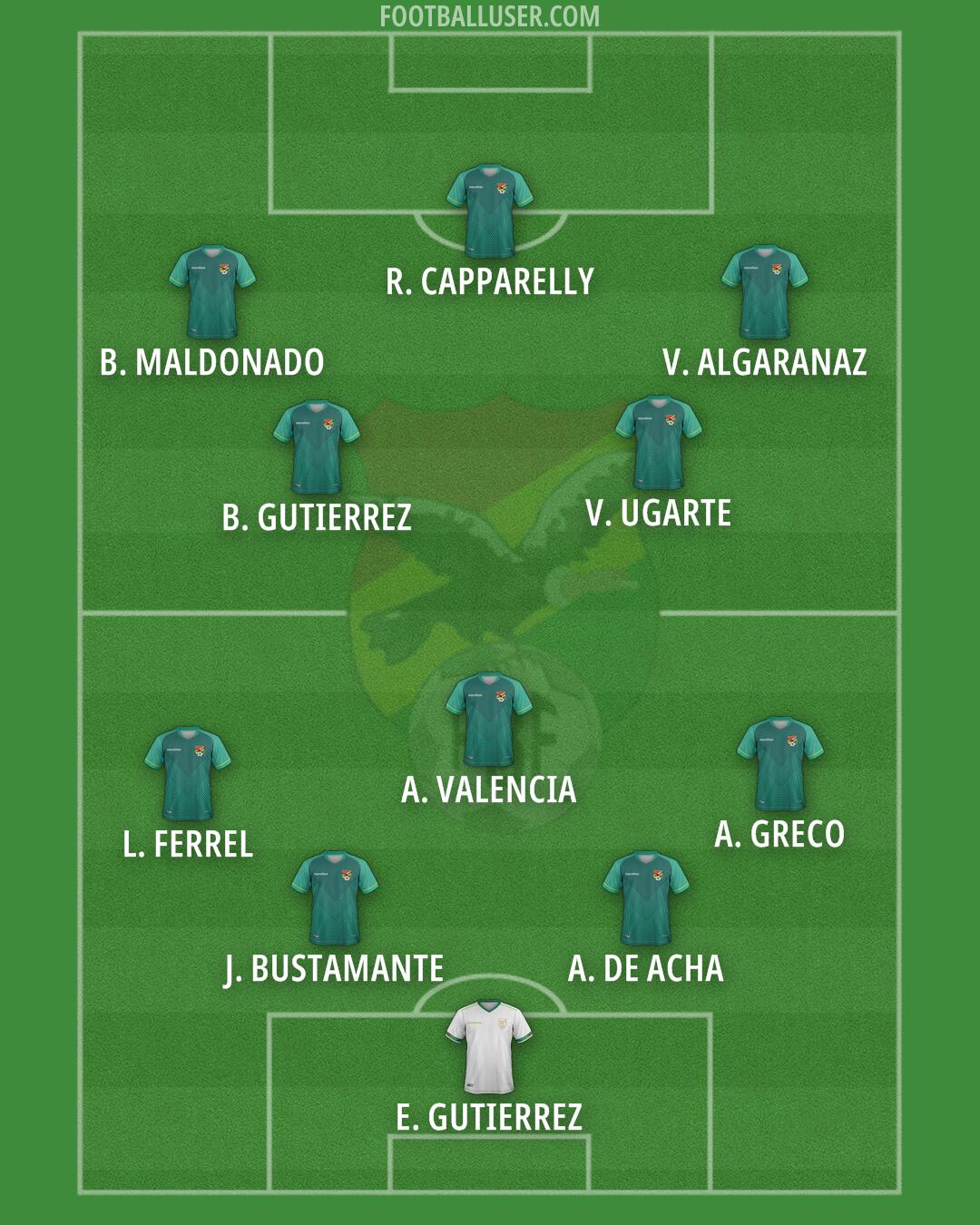
E. GUTIERREZ · J. BUSTAMANTE · A. DE ACHA · A. VALENCIA · L. FERREL · A. GRECO · B. GUTIERREZ · V. UGARTE · R. CAPPARELLY · B. MALDONADO · V. ALGARANAZPrioritizing a defensive block and quick transitions, Bolivia operates in a 5-2-3 formation. This lineup focuses on maintaining a solid base to absorb pressure before launching direct attacks. The team relies on a compact defensive unit to stay organized, allowing the attackers to find space when the ball is won back in the middle third.
E. GUTIERREZ guards the goal as the last line of defense. In front of him, a back five consists of A. VALENCIA acting as the central anchor, while J. BUSTAMANTE and A. DE ACHA occupy the left and right central defender slots. To provide width and defensive cover on the flanks, L. FERREL and A. GRECO play as wing backs. These wide players must track back deep to form a flat line when defending, but they are also expected to push up the pitch to support the buildup.
The midfield relies on a double pivot to control the center of the pitch. V. UGARTE and B. GUTIERREZ occupy the two central roles, working to shield the back five and intercept opposition passes. V. UGARTE provides the grit needed to break up play, while B. GUTIERREZ helps connect the defensive unit to the front line. This pair must work hard to cover the space between the lines and ensure the team is not overrun in the central zone.
Up front, the team utilizes three attackers to stretch the opposition. R. CAPPARELLY leads the line as a lone striker, tasked with holding up the ball and making runs into the channels. On the flanks, B. MALDONADO and V. ALGARANAZ act as wide wingers to provide width and deliver crosses. These three forwards are expected to press the opposition defenders immediately upon losing possession to force mistakes.
One major advantage for Bolivia is the heavy density in the defensive zone, which makes it difficult for opponents to find gaps between players. The use of L. FERREL and A. GRECO allows for wide overloads when they step up to support the attack. Additionally, the formation allows for high pressing in coordinated waves through the front three, which can disrupt the buildup of the other team.
This 5-2-3 formation provides a sturdy foundation for a team that wants to stay compact and strike on the break. It is best suited for matches against dominant opponents where sitting deep and absorbing pressure is necessary to secure a result.