Arsenal Football Formation
 March 14, 2026


Starting Lineup
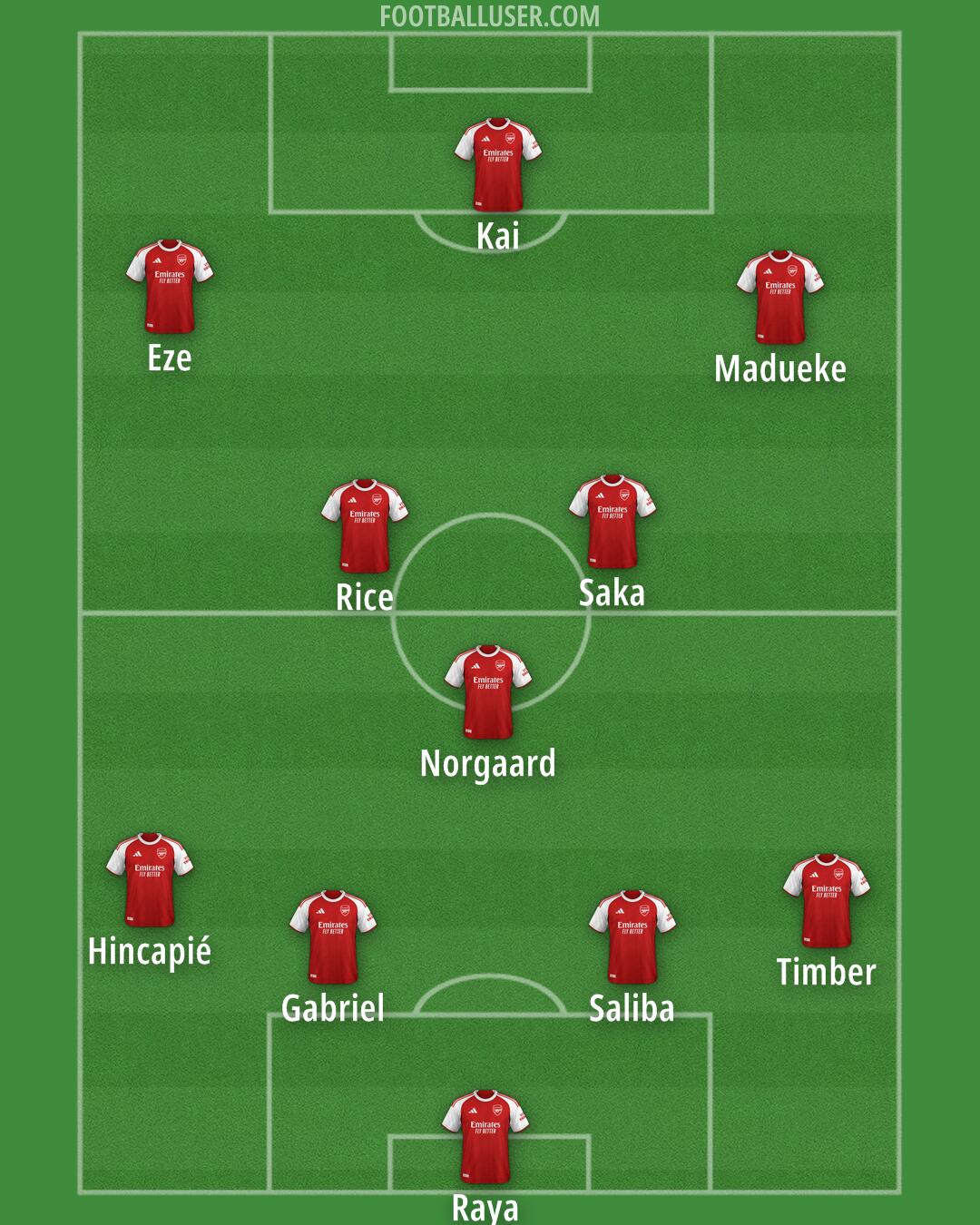
Raya · Hincapié · Gabriel · Saliba · Timber · Norgaard · Rice · Saka · Eze · Kai · MaduekeDominating possession and controlling the tempo defines the Arsenal lineup in this 4-3-3. This formation is built to press high and pin opponents back through sustained pressure in the final third. By maintaining high lines and quick ball movement, the team looks to break lines and create chances through central penetration.
Raya sits between the posts to act as a primary distributor for the back line. A flat back four consists of Timber on the right and Hincapié on the left, both tasked with pushing high to provide width. In the center, Saliba and Gabriel form a central pairing that relies on recovery speed and aerial strength to defend against long balls. These defenders often step up to intercept passes before the opposition can settle into the attacking half.
The midfield operates with a single pivot to control the center of the pitch. Norgaard sits deep to shield the defense and break up play, allowing the more mobile midfielders to push forward. Rice occupies the left central role to drive into space and link the defense to the attack with his high work rate and passing range. Saka moves into the right central role to connect with the wingers and create overloads in the half spaces.
A high pressing front three drives the attacking movement for Arsenal. Madueke stays wide on the right to stretch the opposition defense, while Eze cuts inside from the left to find pockets of space between the lines. Kai leads the line as a lone striker, tasked with holding up the ball and making runs to pull defenders out of position. This front line works together to press the opposing backline, forcing errors and quick turnovers.
One major advantage of this 4-3-3 is the ability to create wide overloads when Timber or Hincapié overlap their respective wingers. The Arsenal midfield also gains numerical superiority in central areas when Saka and Rice push high, making it difficult for opponents to track runners. This combination of width and central density forces the opposition to shift constantly, leaving gaps for quick transitions.
This 4-3-3 formation relies on heavy possession and intense pressing to dictate the rhythm of the match. It is best suited for facing teams that sit deep and defend in a low block, as the constant movement can eventually crack the defensive line.