
Germany National Football Team Formation
 March 16, 2026


Starting Lineup
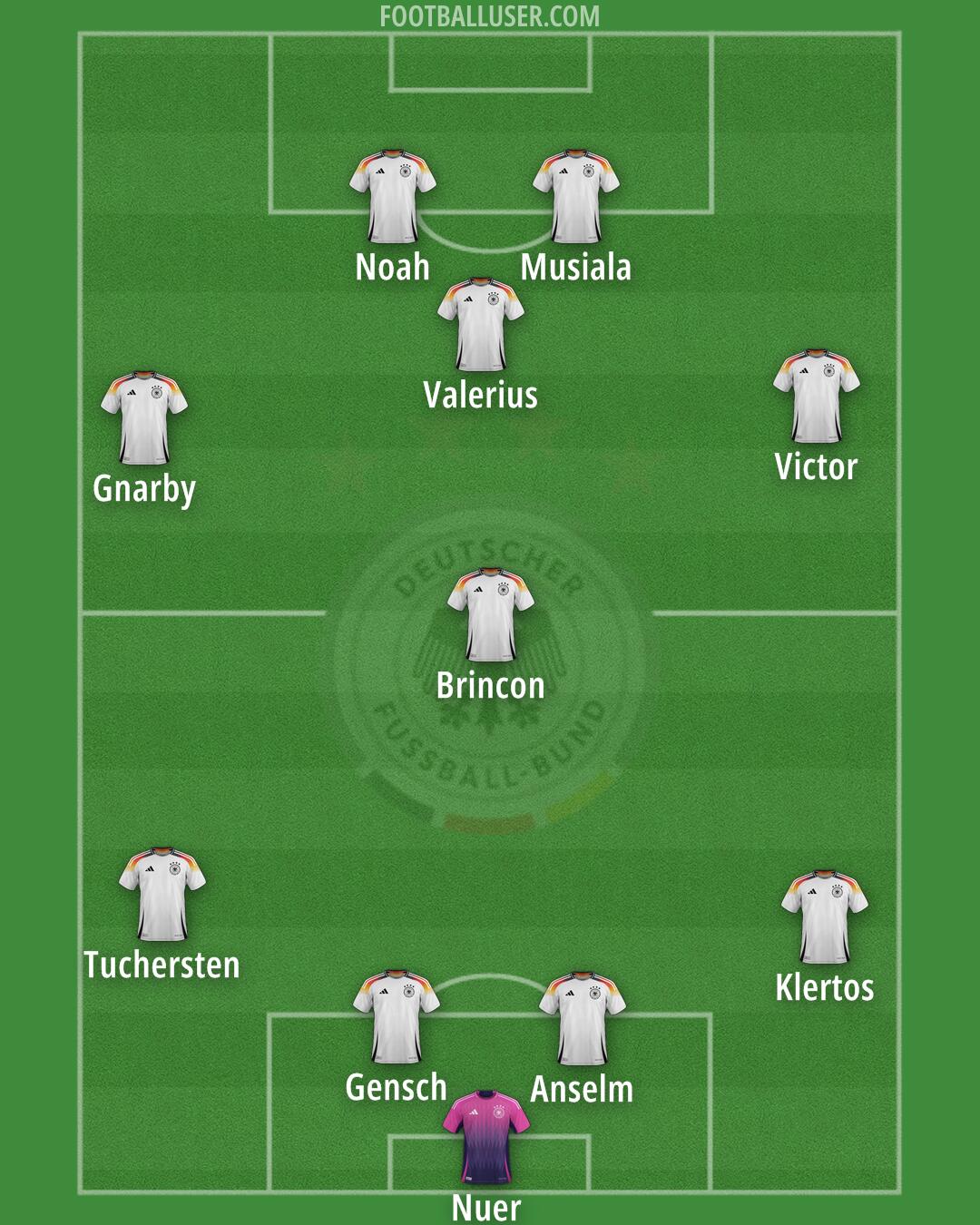
Noah · Musiala · Valerius · Victor · Gnarby · Tuchersten · Nuer · Klertos · Anselm · Gensch · BrinconA high press and rapid verticality define the identity of Germany in this 4-4-2 formation. This lineup aims to win the ball high up the pitch and immediately look to break the lines. By pushing the team forward, the formation creates constant pressure on the opposition defense and seeks to catch them out of position during transitions.
Manuel Neuer acts as the goalkeeper and remains the foundation of the defensive unit. Behind a flat back four, Anselm and Gensch operate as the central defenders, with Anselm covering space and Gensch providing aerial strength. Klertos plays as the right back to provide width, while Tuchersten occupies the left back position to help the team move the ball out from the back. The entire back line must step up together to maintain a high line and keep the pitch compact.
Control of the middle ground relies on a midfield four that can shift between roles. Brincon sits as the single pivot to shield the defense and intercept passes. To his side, Gnarby and Victor work to drive forward and link the back line to the attack. Valerius operates in the attacking midfield role to support the strikers, acting as the main creator who can find pockets of space between the opponent's lines.
The attacking front line consists of two forwards working in tandem. Noah leads the line as the lone striker to hold up the ball, while Musiala plays as a second striker to cut inside and create chances. This duo works to press the opposition defenders heavily, forcing mistakes that allow Germany to launch direct attacks. The movement of these two players is designed to pull central defenders out of position.
Germany offers several tactical advantages through this specific lineup. The presence of Manuel Neuer allows the defenders to play a much higher line with confidence. The team can also create wide overloads when the full backs push forward to support the midfield. This formation is also built to exploit speed of transition, catching opponents while they are still moving from an attacking to a defensive block.
This 4-4-2 formation creates a heavy presence in both the middle and the final third. It is best suited for games against teams that struggle to play out from the back under intense pressure.