
Denmark National Football Team Formation
 March 16, 2026


Starting Lineup
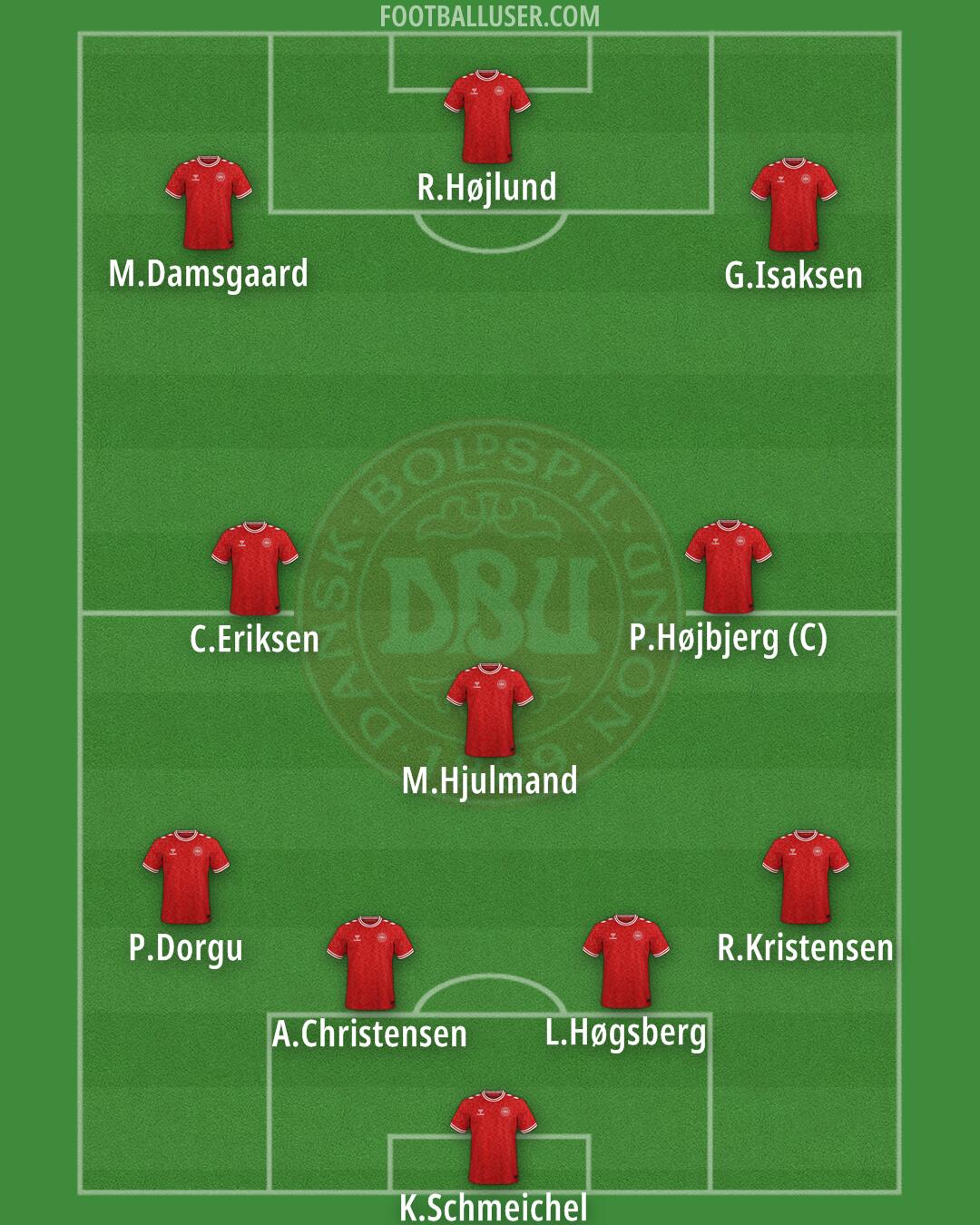
K.Schmeichel · P.Højbjerg (C) · M.Hjulmand · C.Eriksen · R.Højlund · A.Christensen · L.Høgsberg · G.Isaksen · M.Damsgaard · R.Kristensen · P.DorguHigh pressing and verticality define how Denmark operates in a 4-3-3. The Red Devils look to win the ball high up the pitch and quickly transition into attacking moves to catch opponents off guard. This formation is built to control the tempo through central passing while maintaining enough width to stretch the opposing back line.
Kasper Schmeichel acts as the last line of defense in goal, organizing the unit from the back. The back four consists of a flat line where P. Dorgu and R. Kristensen provide width as full backs. In the center, A. Christensen and L. Høgsberg hold the line, with Christensen often stepping up to intercept passes. The defensive unit works together to shift as a block, ensuring they stay compact when the opposition has the ball.
A central midfield three provides the engine for the Denmark lineup. M. Hjulmand sits as a single pivot to shield the defense and break up play. Ahead of him, the midfield connects the lines with Christian Eriksen pulling the strings through his passing range and vision. Captain P. Højbjerg operates in the right central role, driving forward to support the attack and tracking back to cover space when needed.
The attacking front line focuses on directness and movement. Rasmus Højlund leads the line as a lone striker, using his physical presence to hold up the ball and bring others into play. On the flanks, M. Damsgaard and G. Isaksen act as wide attackers who look to cut inside and create chances. They press high when the ball is lost, forcing turnovers in the final third to support the central striker.
One major advantage for this Denmark side is the ability to create numerical superiority in the middle of the pitch. The combination of Hjulmand and the two advanced midfielders allows them to dominate possession and control the rhythm. Another strength is the speed of transition, as the team can move from a defensive block to a vertical attack in seconds. This makes them very dangerous when they can isolate wide players in one on one situations after a turnover.
This 4-3-3 formation focuses on aggressive pressing and rapid central combinations. It is best suited for matches against teams that struggle to play out from the back or leave large spaces between their midfield and defensive lines.