Arsenal Football Formation
 March 17, 2026


Starting Lineup
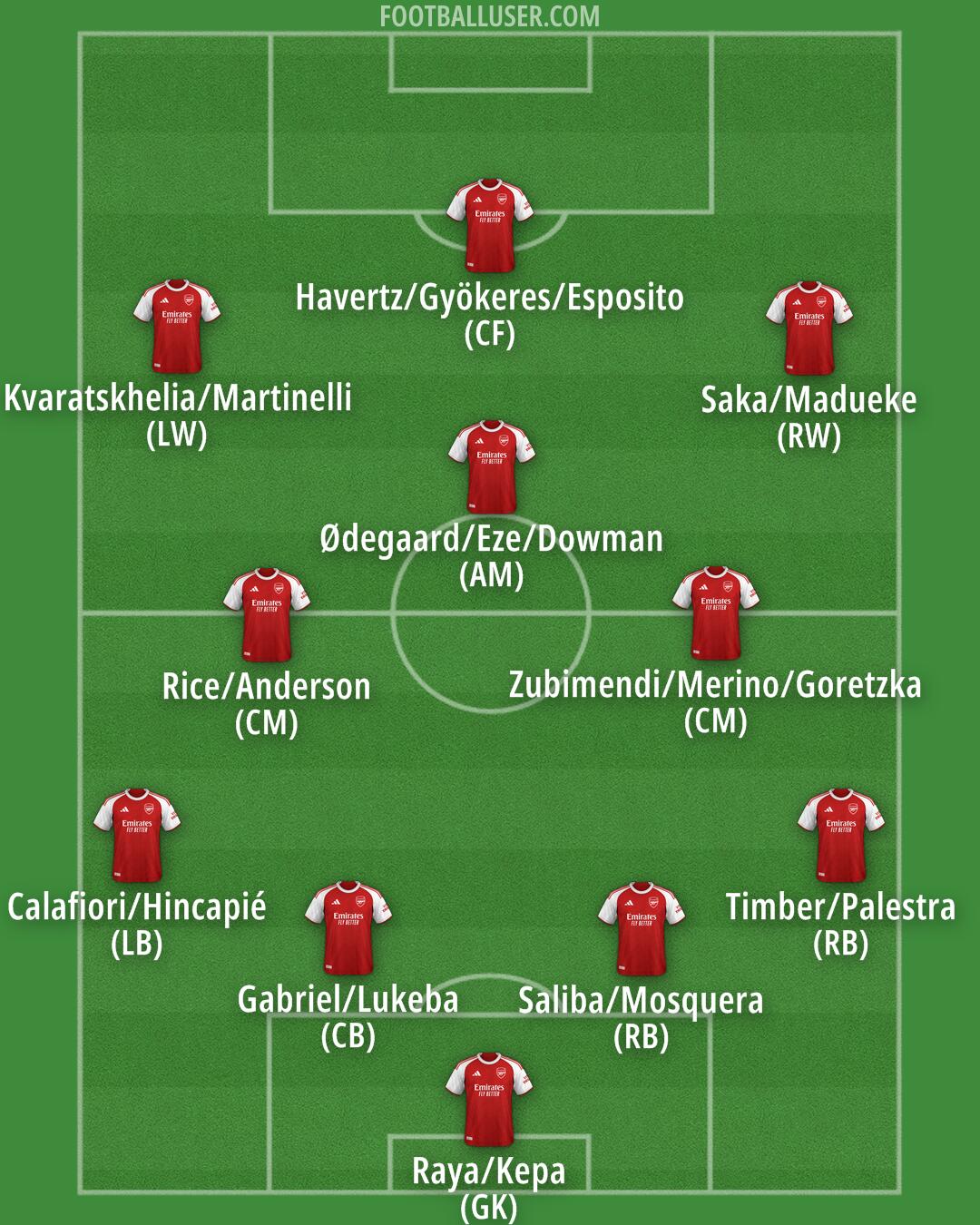
Raya/Kepa (GK) · Calafiori/Hincapié (LB) · Gabriel/Lukeba (CB) · Saliba/Mosquera (RB) · Timber/Palestra (RB) · Zubimendi/Merino/Goretzka (CM) · Rice/Anderson (CM) · Ødegaard/Eze/Dowman (AM) · Kvaratskhelia/Martinelli (LW) · Saka/Madueke (RW) · Havertz/Gyökeres/Esposito (CF)A high press and heavy possession style defines Arsenal in this 4-3-3 formation. The Gunners aim to dominate the ball and control the tempo of the match through ball retention and high positioning. This lineup is built to squeeze opponents into their own half and create chances through constant movement and control.
David Raya acts as the primary goalkeeper to start the buildup from the back. A flat back four serves as the defensive foundation with Saliba and Gabriel forming a central pairing. Saliba provides aerial strength and composure while Gabriel offers physical presence to block runners. Calafiori plays as a left back who can tuck inside to help the midfield, whereas Timber operates on the right to provide balance and cover. The defensive unit works to stay compact and step up to catch attackers offside.
The midfield functions with a single attacking ten supported by two central players to bridge the lines. Ødegaard operates as the captain and the main creative engine, looking to break the line with through balls. Rice covers the left side to shield the defense and tackle opponents, while Zubimendi occupies the right side to maintain control. This three man unit connects the back four to the front three, ensuring the team can switch play quickly to find space.
Arsenal employs three attackers to stretch the opposition defense. Saka plays on the right wing, often looking to cut inside and create goal scoring opportunities. Kvaratskhelia takes the left flank to provide dribbling and directness, while Havertz leads the line as a lone striker. Havertz works to hold up the ball and pull defenders out of position, creating gaps for the wingers to exploit. The front three press hard to force turnovers in the final third.
This formation offers significant tactical advantages by creating numerical superiority in the middle of the pitch. The movement of Calafiori allows the team to overload the central areas during buildup. Additionally, the ability to isolate Saka in one on one situations on the flank forces defenders to commit, which opens space elsewhere. The coordination between Rice and the center backs ensures the team remains solid during transitions.
The 4-3-3 lineup focuses on suffocating opponents through high ball retention and aggressive pressing. This tactical setup is best suited for games against teams that sit deep and struggle to keep possession.