Liverpool Football Formation
 March 18, 2026


Starting Lineup
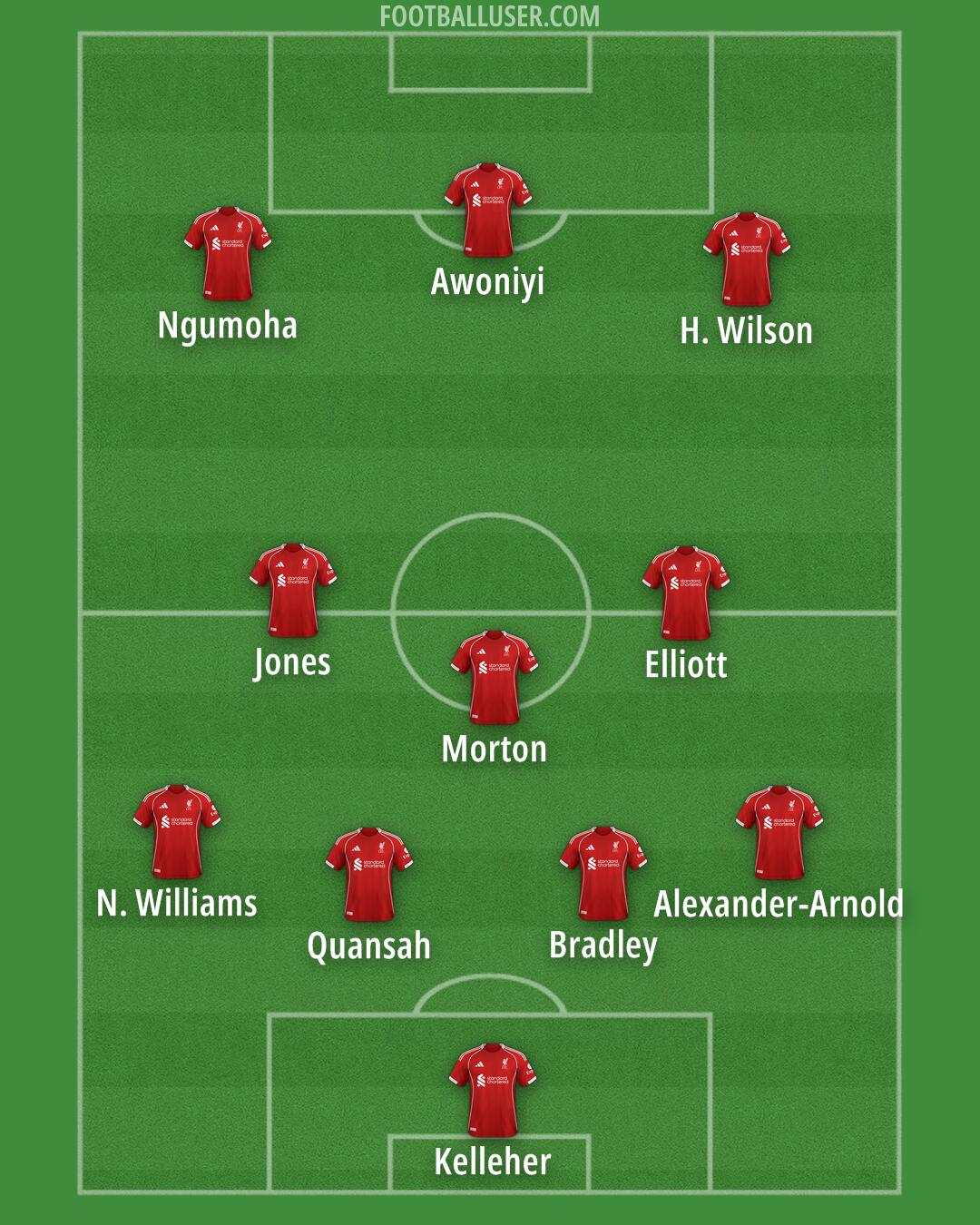
Alexander-Arnold · Bradley · H. Wilson · Ngumoha · Jones · Awoniyi · N. Williams · Elliott · Morton · Kelleher · QuansahHigh intensity pressing and quick transitions define Liverpool as they deploy a 4-3-3. This formation aims to win the ball high up the pitch and strike rapidly before the opponent can regroup. The lineup relies on heavy energy levels to overwhelm the opposition in both halves of the field.
Kelleher starts in goal to command the area and launch attacks. A back four provides the foundation, with Bradley acting as the right center back to sit deep while Alexander-Arnold operates as a right back who pushes high up the pitch to create chances. N. Williams covers the left flank and supports the back line, while Quansah plays as the left center back to provide cover and strength in the middle. The defensive unit must shift together to prevent gaps when the full backs push forward.
The midfield operates with a single pivot system to manage the center of the pitch. Morton sits in the deepest role to shield the defense and intercept passes. Beside him, Elliott and Jones operate as the two central midfielders who drive the team forward. Elliott looks to break the line with forward runs, while Jones connects the defensive unit to the attack by moving the ball through the middle. This trio must work hard to track back and protect the space behind them.
A three man front line focuses on wide play and central penetration. Awoniyi leads the line as a lone striker to hold up the ball and fight for aerial duels. On the wings, H. Wilson and Ngumoha provide width and stretch the opposition defense. Both wingers look to cut inside or cross the ball into the box, creating movement that forces defenders out of position. The forwards lead the press from the front to force mistakes in the opposition half.
Several tactical advantages emerge from this Liverpool lineup. The team can create wide overloads when Alexander-Arnold pushes up to join the attack. There is also a high capacity to press in coordinated waves, using the forwards and midfielders to trap opponents. The speed of transition allows the team to move from a defensive block to an attacking phase in seconds, isolating defenders in one on one situations.
This 4-3-3 focuses on dominating the pitch through physical pressure and rapid verticality. It is a formation best suited for matches where the team needs to overwhelm a low block or exploit a disorganized defense.