
Bolivia National Football Team Formation
 March 27, 2026


Starting Lineup
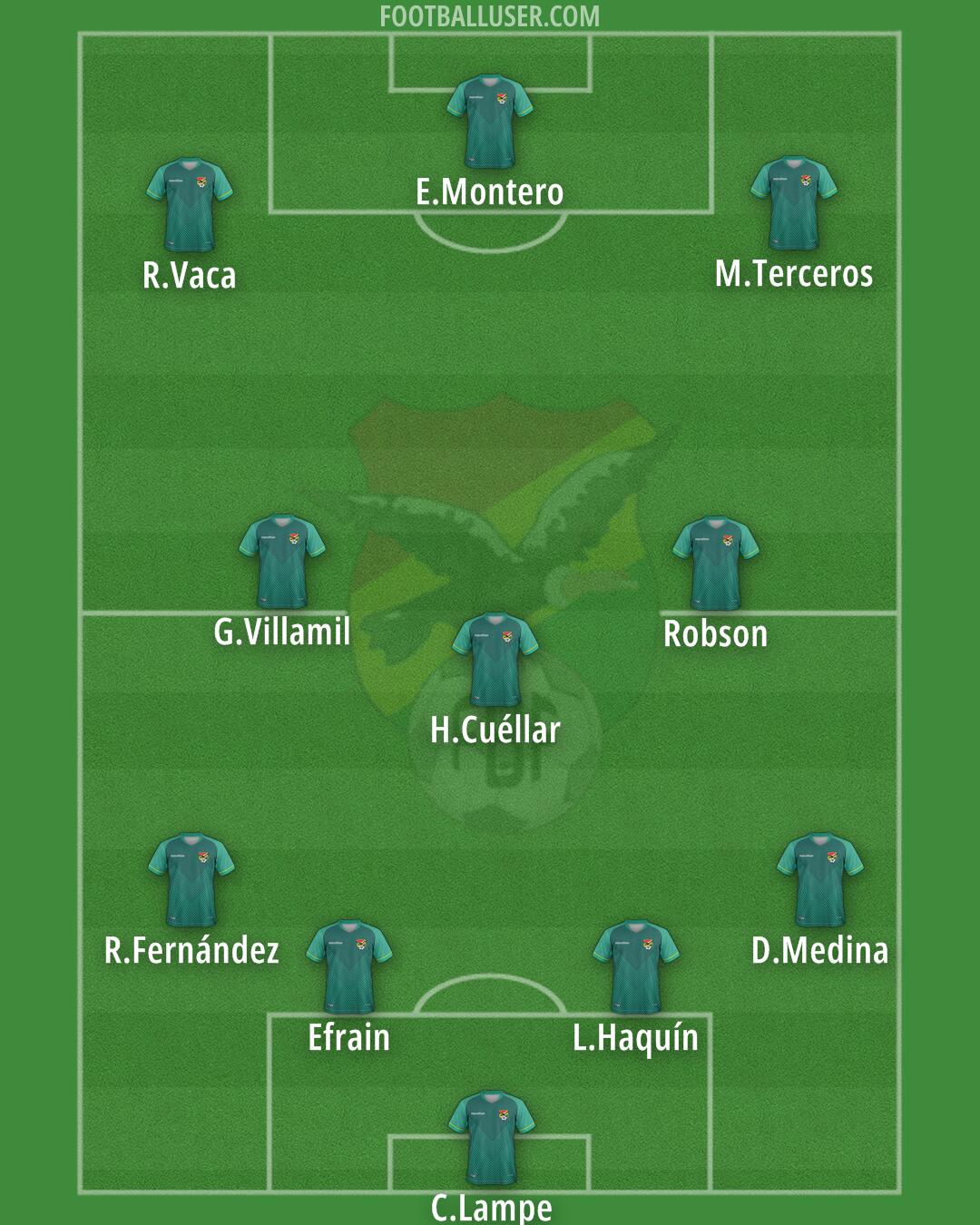
C.Lampe · L.Haquín · Efrain · D.Medina · R.Fernández · H.Cuéllar · G.Villamil · Robson · R.Vaca · M.Terceros · E.MonteroBolivia utilizes a 4-3-3 formation. This lineup is built to play a vertical style of football that relies on quick transitions to catch the opposition off guard. The team looks to use the width of the pitch to stretch defensive blocks and create spaces for runners in the middle.
C.Lampe guards the goal and acts as the last line of defense. The back four operates with a high line to compress the space in the middle of the pitch. L.Haquín and Efrain act as the central defenders, where Efrain provides aerial strength and L.Haquín focuses on covering space. On the flanks, R.Fernández and D.Medina are expected to push forward to provide width, while the central duo must stay compact to prevent being caught on the break.
The midfield works through a single pivot system. H.Cuéllar sits in front of the defense to shield the back line and intercept passes. Robson and G.Villamil act as the two central midfielders who drive the team forward. Robson looks to connect the lines with his passing range, while G.Villamil works to press opponents and win back possession in the middle third. This trio provides the engine that allows the team to shift from a defensive block to an attacking phase.
Bolivia attacks with three forwards. E.Montero leads the line as a lone striker, tasked with holding up the ball and making runs to break the line. M.Terceros and R.Vaca play as wide attackers, looking to cut inside and create scoring chances. This front three is designed to press high and force mistakes from the opposition defenders. The movements of R.Vaca and M.Terceros create space for the midfielders to make late runs into the box.
One major tactical advantage is the ability to create wide overloads when D.Medina and R.Fernández overlap. The team can also use the passing range of Robson to switch play quickly to the wings. This allows the wide players to find themselves in one on one situations against full backs. By keeping the midfield three compact, the team remains difficult to break down through the center.
This 4-3-3 formation provides a balance between defensive stability and rapid attacking movements. It is best suited for matches against teams that play a high line and leave space behind their defenders.