
Netherlands National Football Team Formation
 April 2, 2026


Starting Lineup
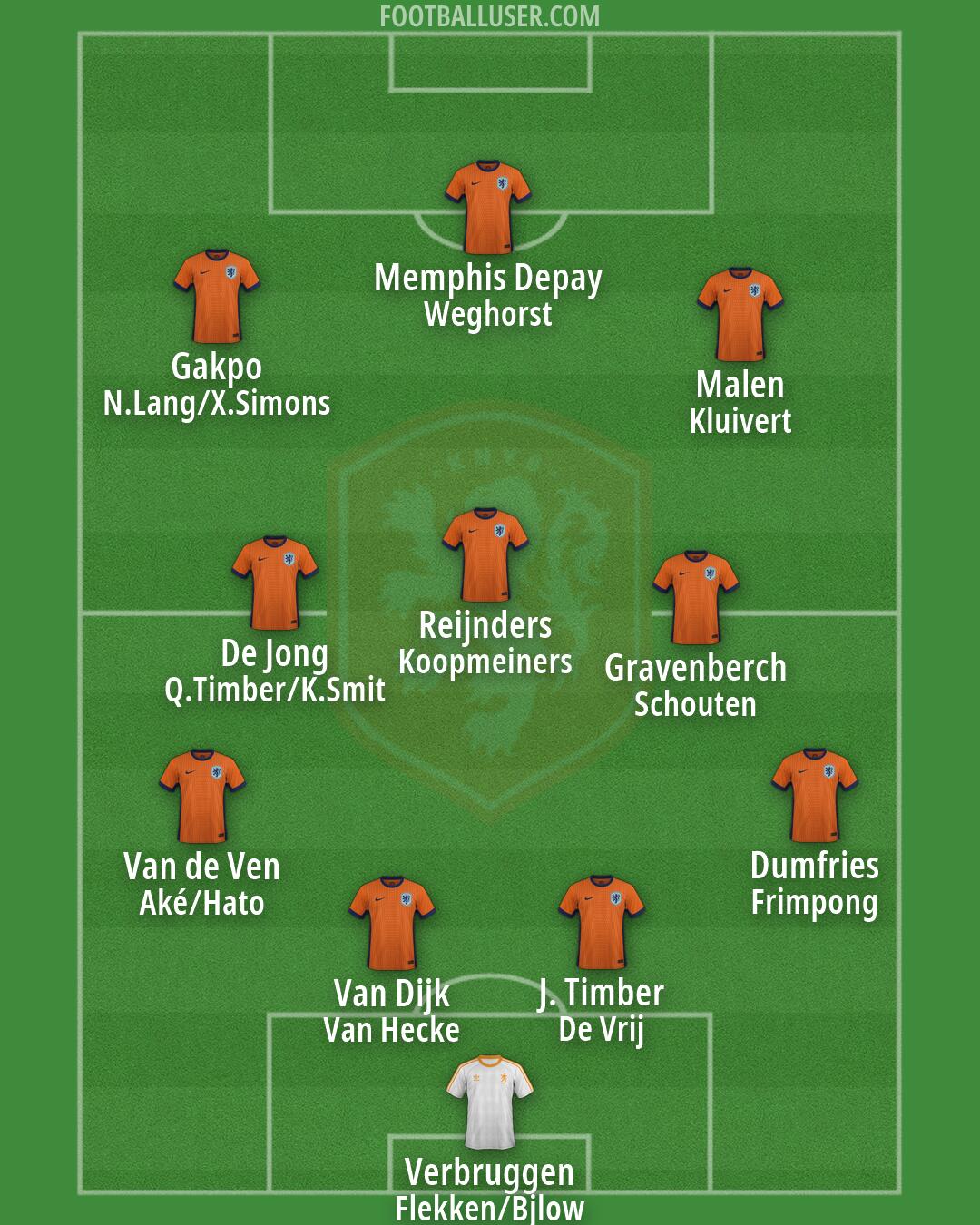
Gakpo (N.Lang/X.Simons) · Memphis Depay (Weghorst) · De Jong (Q.Timber/K.Smit) · Verbruggen (Flekken/Bjlow) · Dumfries (Frimpong) · Malen (Kluivert) · J. Timber (De Vrij) · Van de Ven (Aké/Hato) · Van Dijk (Van Hecke) · Reijnders (Koopmeiners) · Gravenberch (Schouten)Netherlands plays with a 4-3-3 formation that prioritizes a high press and direct attacking play. This lineup is built to control the game through ball retention in the middle third and rapid transitions once the ball is won. The goal for Netherlands is to squeeze opponents high up the pitch and use technical superiority to break lines.
Verbruggen stays between the posts to command the area. The back four operates with a high line to keep the team compact. Van Dijk acts as the primary leader in defense, using his aerial strength and ability to read the game to cover space. J. Timber provides stability on the right side, often stepping up to intercept passes. On the left, Van de Ven uses his recovery pace to drop back when the team is stretched, while Dumfries pushes high up the flank to provide width and crosses.
The midfield works as a three man unit designed to link the defense to the attack. De Jong sits in the deeper role to shield the back four and drive forward with his dribbling style and passing range. Reijnders operates in the central space to connect play and move the ball between the lines. Gravenberch joins the rotation to press and push into advanced positions, ensuring the midfield can maintain control during both possession and defensive phases.
In the attacking third, the team utilizes three attackers to stretch the opposition. Memphis Depay leads the line as a striker who can drop deep to hold up the ball. Gakpo operates from the left wing and often cuts inside to create goal scoring chances. Malen plays on the right and uses his speed to run behind defenders. This front three works together to press the opposing back line and create space in the channels through clever runs.
This formation offers several tactical advantages, especially the ability to press high in coordinated waves to force turnovers. The presence of Dumfries allows for wide overloads when he overlaps the winger. Additionally, the team can achieve numerical superiority in the middle of the pitch because the midfielders can shift to cover gaps quickly. These elements make it hard for opponents to build play from the back.
The 4-3-3 formation relies on technical skill and high intensity to dominate territory. It is best suited for games against opponents who sit deep and struggle to handle quick transitions and wide play.