
Russia National Football Team Formation
 April 7, 2026


Starting Lineup
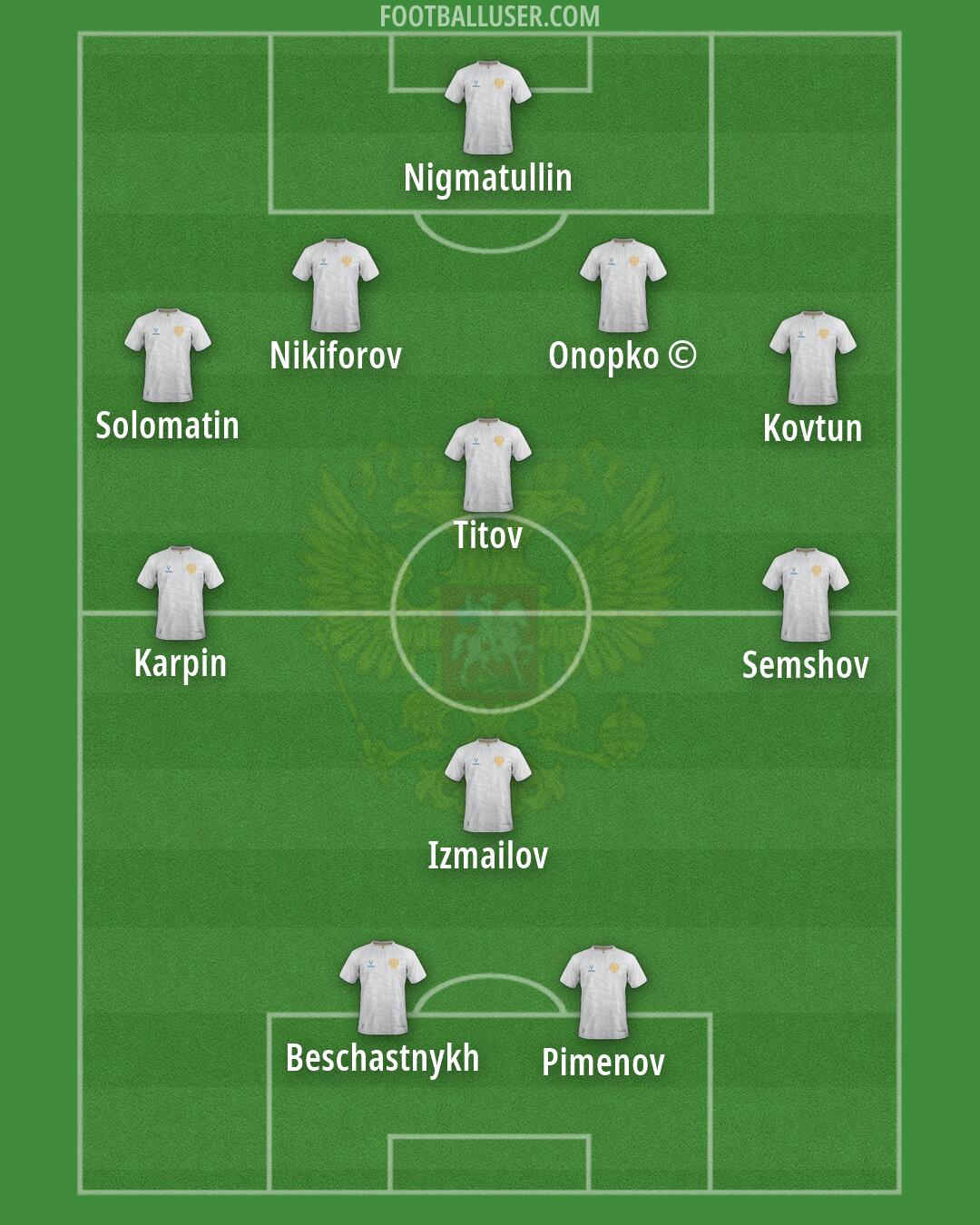
Nigmatullin · Nikiforov · Onopko © · Kovtun · Solomatin · Titov · Izmailov · Semshov · Karpin · Pimenov · BeschastnykhRussia employs a 5-3-2 formation that focuses on a solid defensive base. This lineup is built to play a counter attacking style of football. The main goal is to remain compact and wait for the right moment to strike on the break.
Nigmatullin stays between the posts to organize the back line. The defensive unit works with a back three of Titov, Onopko (C), and Nikiforov. Onopko (C) acts as the leader to command the defense and cover space. Solomatin and Kovtun play as wing backs who provide width. They are expected to push up the flanks to help the attack but must track back quickly to help the three central defenders. This formation allows the team to sit deep and block passing lanes in the final third.
The midfield operates with three players in a central block. Izmailov plays in the attacking ten role to connect the lines and find passes between the opposition ranks. Karpin and Semshov occupy the central spots to control the tempo and protect the defense. Karpin can drive forward to support the attack while Semshov helps to shield the back three. This group works to intercept play and quickly switch play to the wide areas once they win the ball.
The attacking unit uses two forwards to stretch the opposition. Pimenov and Beschastnykh work together to lead the line. They often play as a strike partnership where one can hold up the ball while the other makes runs into the space behind the defenders. They press the opposition back line to force mistakes. The width comes from the wing backs rather than the forwards, which keeps the central area crowded for the attackers to work in.
Russia gains a tactical advantage through its ability to create numerical superiority in the central zones. When defending, the combination of a back three and a central midfield makes it very difficult for opponents to break the lines. The wing backs of Solomatin and Kovtun allow for wide overloads when the team transitions into attack. This setup also provides compactness when defending a lead in the final minutes of a match.
This 5-3-2 formation is designed to be a defensively solid unit that punishes teams on the break. It is best suited for matches against opponents who dominate possession and leave space behind their high defensive line.