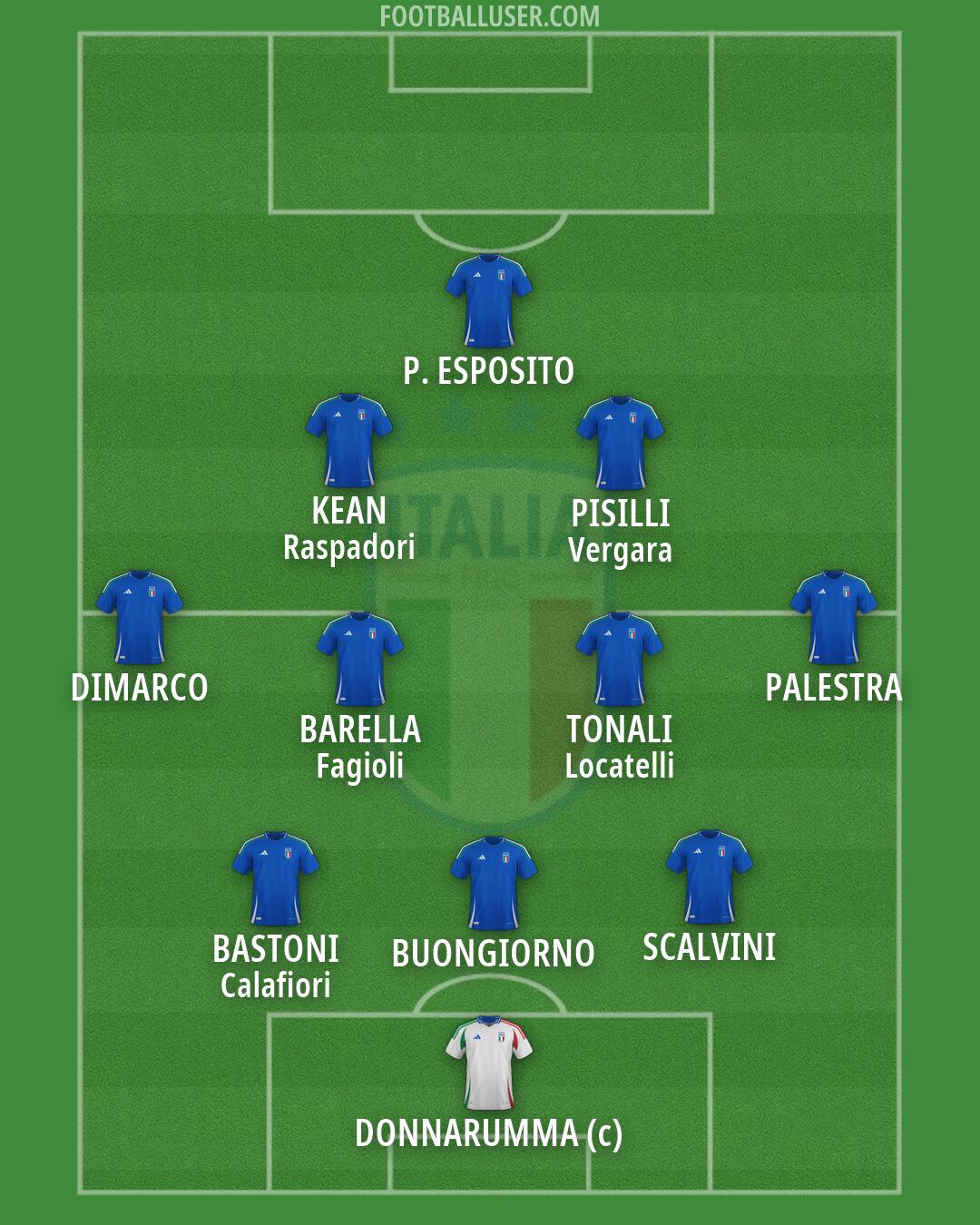

Italy National Football Team Formation
 April 10, 2026
 Spugn
Spugn


Starting Lineup
DONNARUMMA (c) · BASTONI (Calafiori) · BUONGIORNO · SCALVINI · DIMARCO · BARELLA (Fagioli) · TONALI (Locatelli) · PALESTRA · PISILLI (Vergara) · KEAN (Raspadori) · P. ESPOSITOItaly uses a 3-4-3 formation. This lineup relies on a high press and quick verticality to disrupt the opponent. The goal is to control the middle pitch while using wide players to stretch the opposition and create gaps for the attackers to exploit.
DONNARUMMA (c) acts as the foundation in goal, using his massive frame and shot stopping ability to command the box. The back line consists of a back three featuring BUONGIORNO, BASTONI, and SCALVINI. BASTONI acts as a ball playing defender with a wide passing range, while BUONGIORNO and SCALVINI provide aerial strength and cover. This unit can step up to squeeze the space or drop deep to sit deep when under pressure.
The midfield operates with two central players, BARELLA and TONALI, who act as a double pivot to shield the defense. BARELLA uses his pressing intensity to win the ball back, while TONALI drives forward to connect the lines. DIMARCO and PALESTRA provide the width as wing backs, pushing high to overlap and provide crosses. They must track back quickly to prevent being caught out on the break.
In the attacking third, Italy employs three attackers. KEAN and PISILLI occupy the wide channels as inverted wingers, looking to cut inside and shoot. P. ESPOSITO leads the line as a lone striker to hold up the ball and link play. This front three presses high to force turnovers in the final third, creating chaos for the opposing defenders.
This formation offers significant tactical advantages through wide overloads. When DIMARCO and PALESTRA push up, they create two on one situations against opposing full backs. The team also benefits from the ability to press high in coordinated waves, using the front three and the central midfielders to suffocate the opponent.
This 3-4-3 formation is built to dominate through aggressive pressing and wide attacking play. It is best suited for matches against teams that struggle to play out from the back or leave space behind their wide defenders.