
Elche Football Formation
 April 21, 2026
 lucaosantos85


Starting Lineup
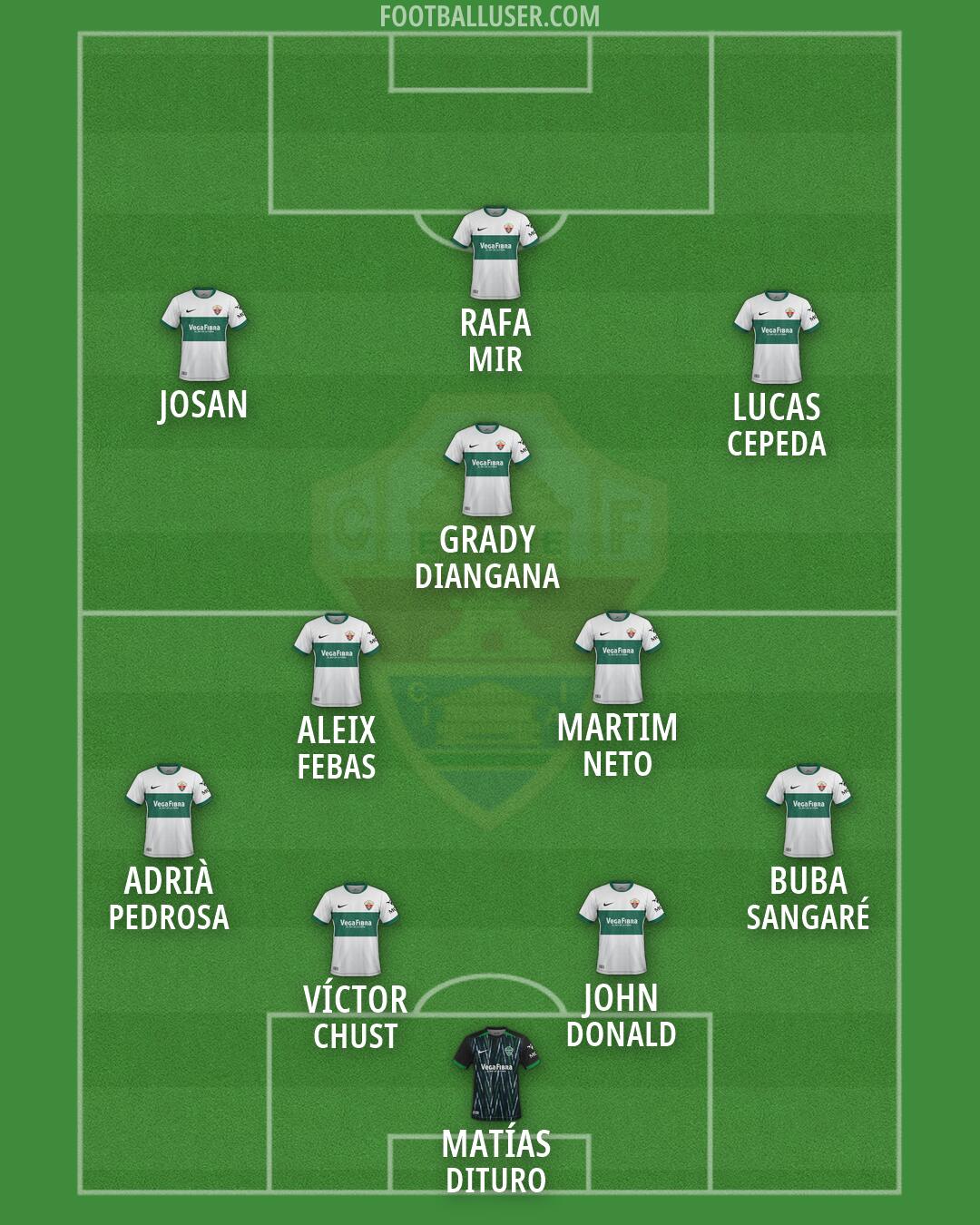
MATÍAS (DITURO) · BUBA (SANGARÉ) · JOHN (DONALD) · VÍCTOR (CHUST) · ADRIÀ (PEDROSA) · ALEIX (FEBAS) · MARTIM (NETO) · GRADY (DIANGANA) · LUCAS (CEPEDA) · JOSAN · RAFA (MIR)Elche plays with a 4-3-3 formation that focuses on a high press and direct vertical play. This lineup aims to win the ball back quickly in the opponent half to catch the opposition before they can settle. The goal is to move the ball from the back to the front through quick passes and aggressive movement in the attacking third.
MATÍAS stays between the posts to organize the defense and manage long balls. The back line consists of a flat back four where BUBA acts as an overlapping full back on the right side to provide width. ADRIÀ plays as the left back to support the attack while VÍCTOR and JOHN operate as the two central defenders. VÍCTOR and JOHN must stay compact to cover space when the full backs push forward, focusing on intercepting passes and winning aerial duels.
The midfield operates with a mix of roles to connect the defense to the front line. ALEIX and MARTIM work to control the center of the pitch, with ALEIX often dropping deeper to shield the defensive line. GRADY plays in the attacking ten role to drive forward and break the line with through balls. This midfield trio works to press high and prevent the opponent from building play through the middle.
In the attacking third, Elche utilizes three attackers to stretch the opposition. RAFA leads the line as a lone striker who works to hold up the ball and bring others into play. LUCAS plays as an inverted winger on the right to cut inside and create chances, while JOSAN stays wide on the left to provide crosses. These movements are designed to pull defenders out of position and create space for runners from the midfield.
One major advantage of this formation is the ability to press high in coordinated waves, making it hard for opponents to pass out from the back. The team can also create wide overloads when BUBA and LUCAS push high up the pitch together. This causes numerical superiority on the flanks, allowing the team to switch play quickly and isolate defenders in one on one situations.
This 4-3-3 formation relies on heavy pressing and rapid vertical transitions to dominate games. It is best suited for facing teams that struggle to play under pressure or those that leave space behind their defensive line.