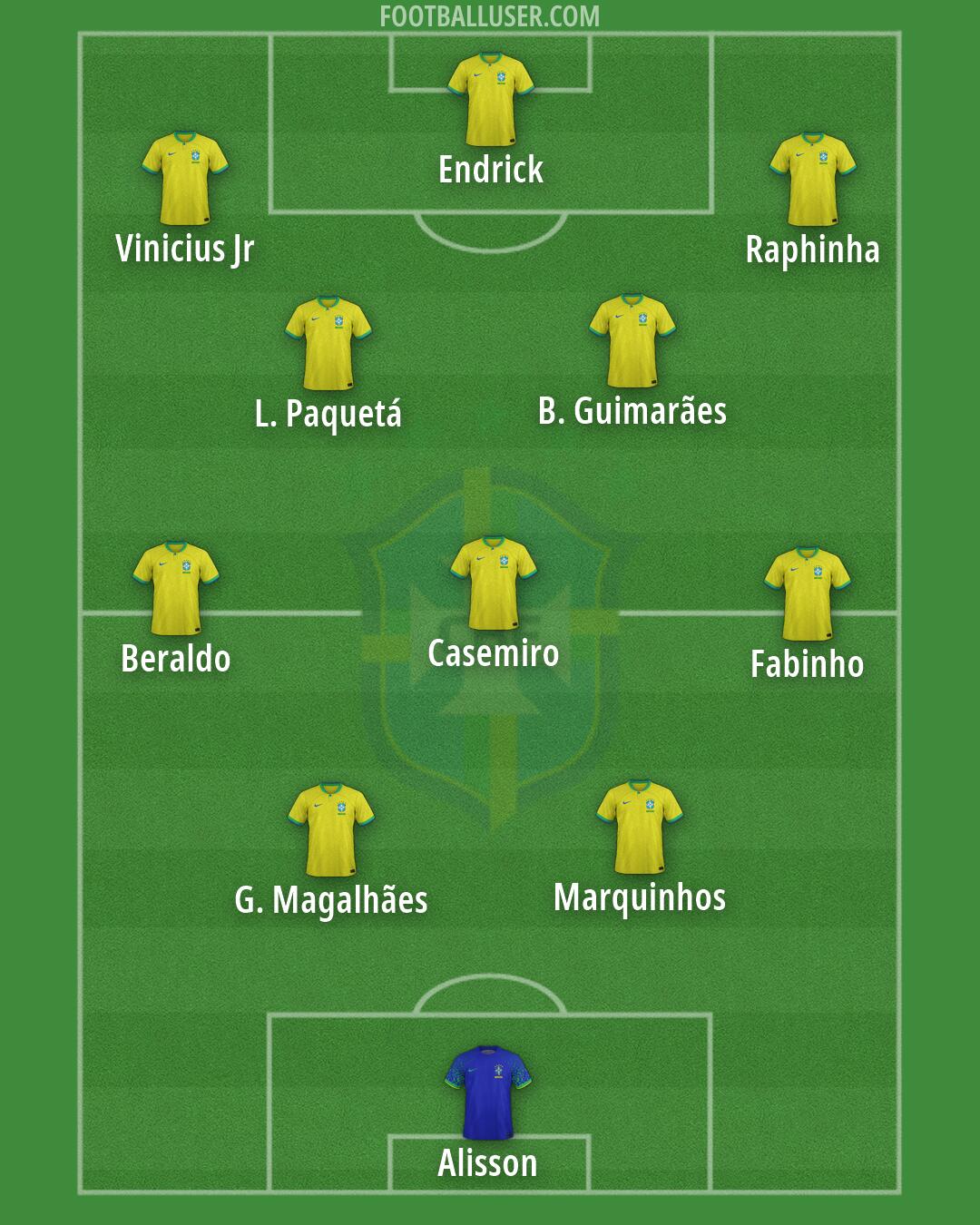

Brazil National Football Team Formation
 April 28, 2026


Starting Lineup
Beraldo · Fabinho · G. Magalhães · Marquinhos · Casemiro · L. Paquetá · B. Guimarães · Endrick · Vinicius Jr · Raphinha · AlissonBrazil uses a 5-2-3 formation. This lineup is built to play with high pressing intensity and rapid transitions. The team looks to control large areas of the pitch through wide players while maintaining a heavy presence in the final third. This formation allows Brazil to stay compact when the ball is lost and strike quickly when they win it back.
Alisson stays between the posts to sweep up long balls and act as the first point of distribution. The defensive unit works as a back five with Casemiro acting as the central anchor, providing aerial strength and physical presence. Marquinhos sits to his right as a ball playing defender, while G. Magalhães covers the left side of the central trio. The wing backs, Fabinho and Beraldo, are tasked with providing the width, pushing high up the pitch to overlap and deliver crosses into the box.
The midfield operates as a double pivot to manage the center of the park. L. Paquetá and B. Guimarães work together to shield the defense and break the line with vertical passes. L. Paquetá often drives forward to connect the midfield to the attack, while B. Guimarães uses his passing range to switch play and maintain control. This duo must track back to support the back five when the opposition breaks forward.
The attack features three dedicated forwards to stretch the opposition defense. Vinicius Jr operates on the left as an inverted winger, looking to cut inside and drive at the defense with his dribbling style. Raphinha occupies the right flank to provide width and cross the ball, while Endrick plays as the lone striker to hold up the ball and occupy central defenders. The front three are expected to press high to force errors in the opposition half.
One major advantage for Brazil is the ability to create wide overloads when Fabinho and Beraldo push forward to join the wingers. The team also finds success through its speed of transition, moving the ball from the defensive block to the attacking trio in just a few passes. This setup allows the team to maintain a strong central core while still being able to attack the flanks effectively.
This formation provides a balance of defensive solidity and explosive attacking potential. It is best suited for matches against teams that play with high lines or rely heavily on wide attacking players.