Arsenal Football Formation
 April 30, 2026


Starting Lineup
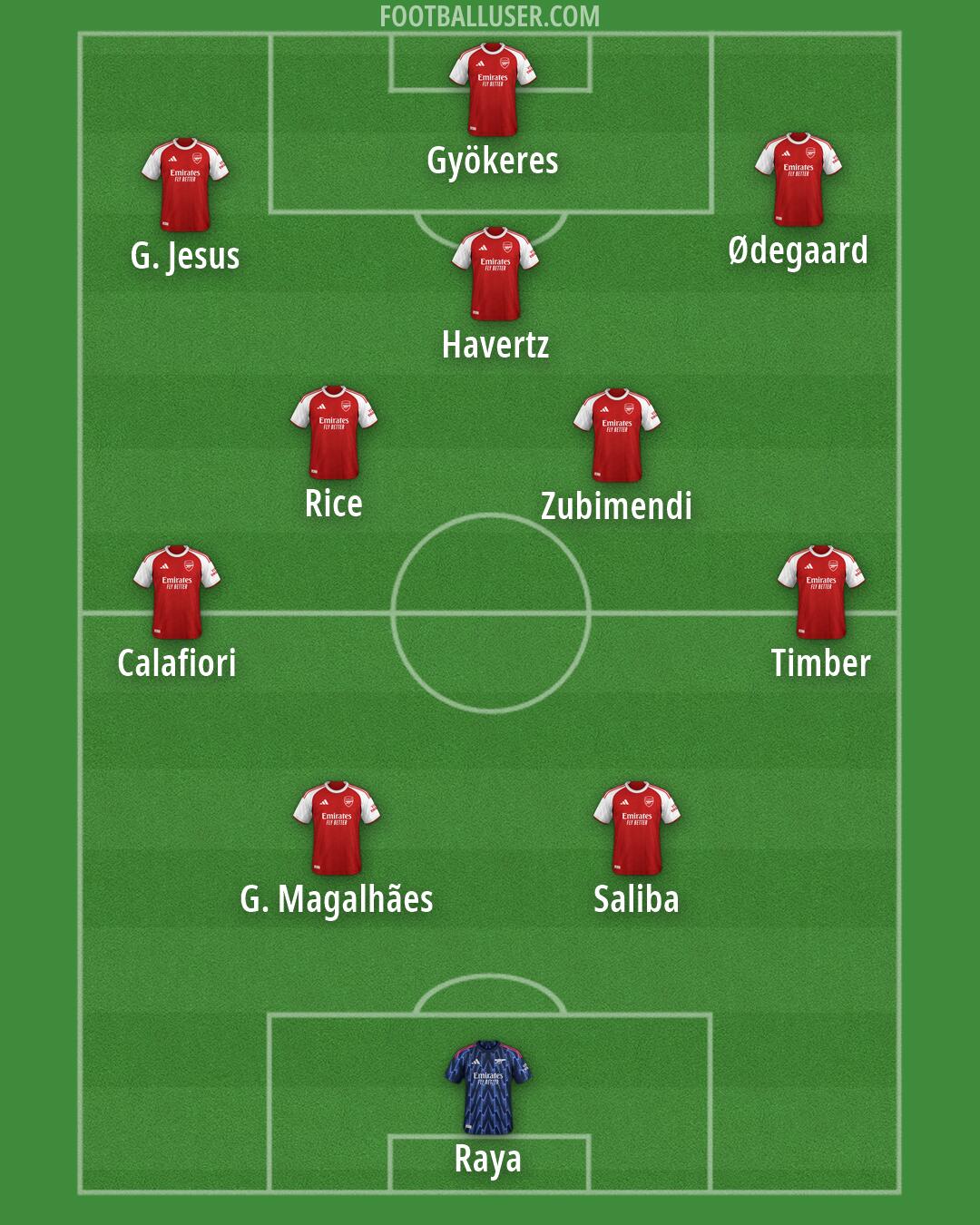
Gyökeres · G. Jesus · Havertz · Ødegaard · Rice · Zubimendi · Calafiori · G. Magalhães · Saliba · Timber · RayaArsenal utilizes a 2-5-3 formation to control the pitch through high ball retention and heavy pressing. This lineup is built to dominate the middle of the park and squeeze the opponent into their own half. By using a narrow defensive base, the team looks to build attacks through a crowded midfield, making it difficult for the opposition to win the ball back.
Raya acts as the lone man in goal, sweeping behind the high line. The defense relies on a central pair consisting of G. Magalhães and Saliba, who must stay composed under pressure. Saliba is known for his recovery speed and intercepting ability, while G. Magalhães provides aerial strength and physical presence. These two central defenders must step up to meet attackers early, leaving significant space behind if they do not coordinate their movements.
The midfield is a dense block designed to control the rhythm of the game. Timber and Calafiori sit as the two deep pivots to shield the back line. Zubimendi works alongside Rice to connect the defense to the attacking players, using his passing range to break the line. Rice provides a high level of pressing intensity to disrupt the opponent, while Havertz operates as the attacking ten, finding pockets of space to link the midfield to the front three.
Arsenal attacks with a front three that stretches the opposition. Gyökeres leads the line as the lone striker, using his strength to hold up the ball and bring others into play. On the flanks, G. Jesus cuts inside from the left to create central overloads, while Ødegaard operates on the right to provide vision and delivery. This front line stays high to keep the opposition defense pushed back, allowing the midfield to push forward and join the attack.
This formation offers massive numerical superiority in the center of the pitch. The five midfielders can easily overwhelm a standard three man unit, creating passing lanes that are hard to close. Another strength is the ability to press high in coordinated waves, with the front three and Havertz hunting the ball immediately after a loss. This forces turnovers in dangerous areas, allowing for rapid attacks.
This 2-5-3 formation creates a heavy central presence to dominate possession. It is best suited for matches where the team wants to pin a low block opponent back through constant pressure.