Custom Team Football Formation
 May 1, 2026


Starting Lineup
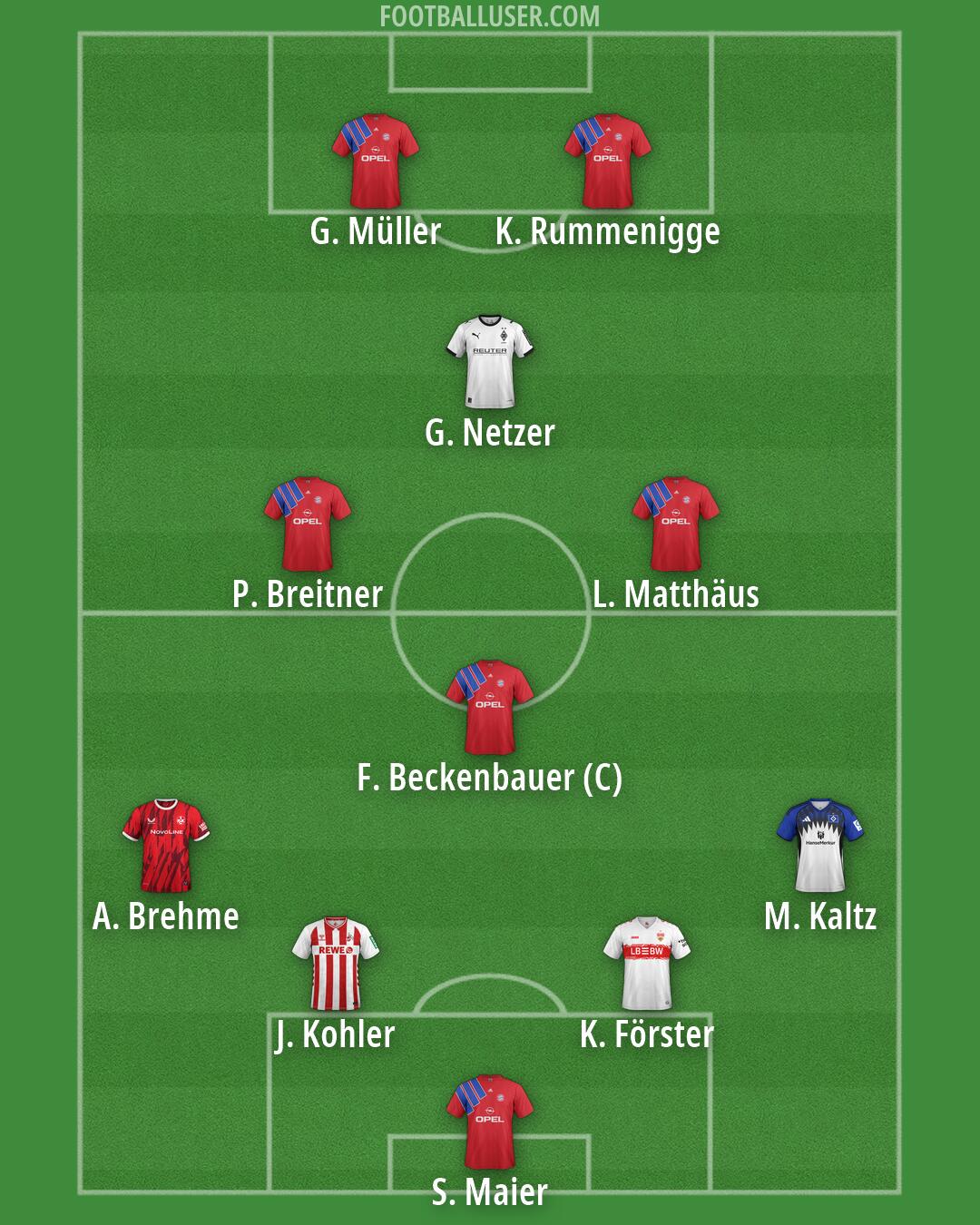
S. Maier (FC Bayern) · K. Förster (Stuttgart) · J. Kohler (Köln) · M. Kaltz (Hamburg) · A. Brehme (Kaiserslautern) · F. Beckenbauer (C) (FC Bayern) · L. Matthäus (FC Bayern) · P. Breitner (FC Bayern) · G. Netzer (Borussia M'gladbach) · G. Müller (FC Bayern) · K. Rummenigge (FC Bayern)A focus on verticality and rapid transitions defines this lineup, which operates within a 5-3-2 formation. This system is built to exploit spaces behind the opposition defense by using powerful runners to hit in behind on the transition. The team relies on a solid foundation to win the ball and immediately move the ball forward to the attacking duo.
S. Maier sits between the posts to organize the defensive unit. The defense uses a back five that provides heavy coverage across the width of the pitch. F. Beckenbauer (C) leads the line as the central defender, acting as a ball playing specialist who can step up to intercept play. He is supported by J. Kohler on the left and K. Förster on the right to maintain a narrow defensive block. The wing backs, A. Brehme and M. Kaltz, are tasked with providing the width. They must track back to defend but are expected to overlap the winger when the team moves into the final third.
In the middle of the pitch, the team utilizes a three-man midfield to control the tempo and connect the lines. G. Netzer plays as the attacking ten, sitting in the hole to find the feet of the strikers and play through the lines. Ahead of him, L. Matthäus and P. Breitner operate as the engines. L. Matthäus brings high pressing intensity and a massive engine to cover ground, while P. Breitner helps to shield the defense and recycle possession. This midfield unit works to compress the midfield and prevent the opposition from playing through the center.
The attacking front line features two forwards in a partnership to stretch the defense. G. Müller works as a predatory presence in the box, looking to arrive late into the box or finish cutbacks. Alongside him, K. Rummenigge uses his pace to make runs in behind the last defender. They press from the front to force a long ball from the opposition. The movement is designed to create combinations in tight spaces, with the forwards often pulling wide to create room for G. Netzer to operate.
This formation offers significant tactical advantages through its defensive stability and wide overloads. By using five defenders, the team can easily drop into a low block to deny the turn of the opposition attackers. The presence of A. Brehme and M. Kaltz allows for wide overloads when they push forward, creating two on one situations against the opponent full backs. This provides the team with multiple ways to switch play and find space.
This 5-3-2 setup is a powerhouse built for clinical counter attacking and defensive solidity. It is best suited for games against possession based teams that leave gaps behind their high line.