
Argentina National Football Team Formation
 May 10, 2026


Starting Lineup
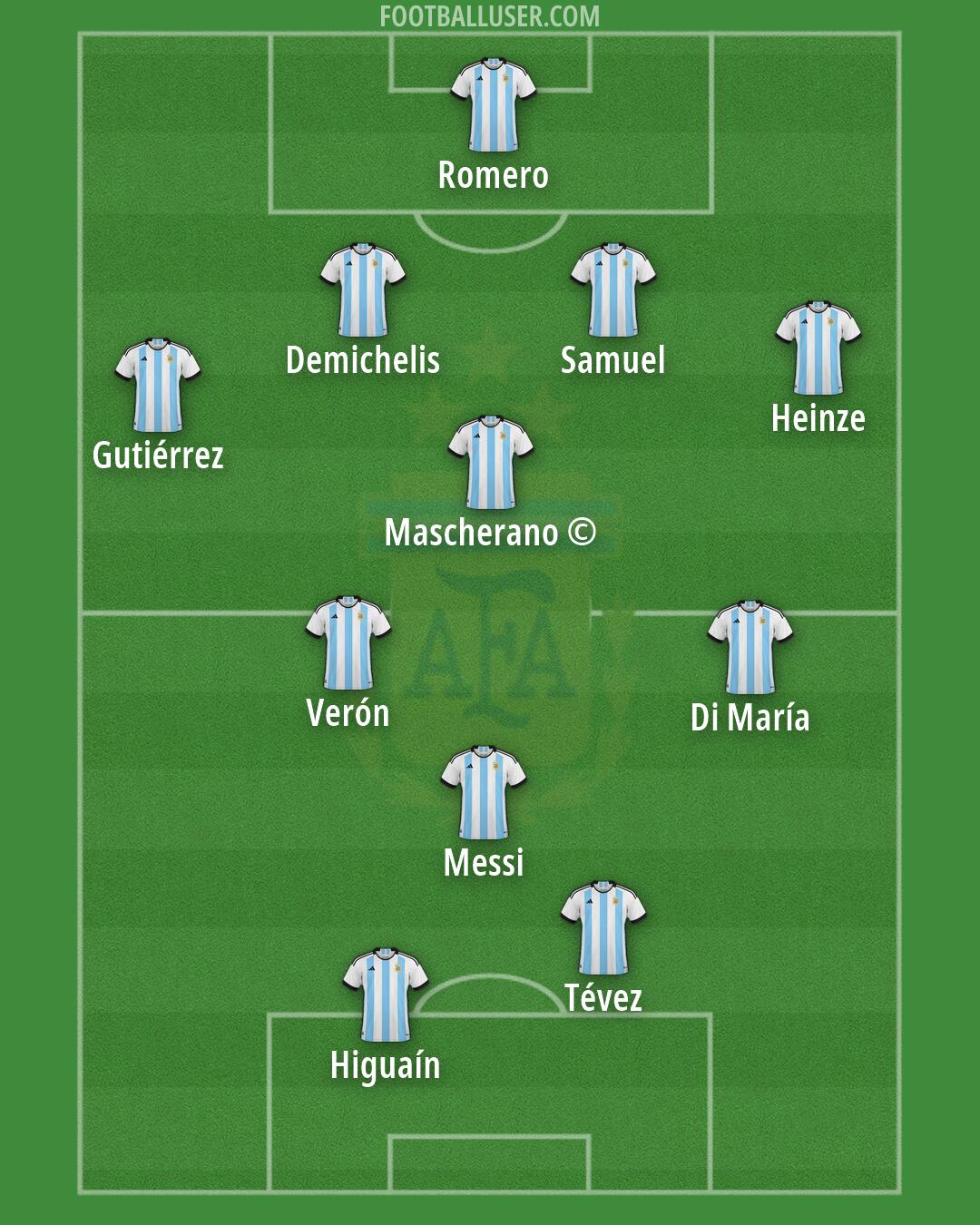
Romero · Demichelis · Samuel · Heinze · Gutiérrez · Mascherano © · Verón · Di María · Messi · Tévez · HiguaínArgentina uses a 5-3-2 formation to create a formation built for direct counter attacking. This lineup allows the team to sit deep and wait for the right moment to spring forward. The intention is to absorb pressure and then use the speed of their forwards to catch the opposition out of position.
Emiliano Romero plays in goal to organize the defensive unit. The back line consists of three central defenders with Mascherano (C) leading the way through his aggressive tackling and defensive positioning. He sits alongside Demichelis and Samuel to form a solid block. To provide width, Heinze operates as the left wing back while Gutiérrez pushes up as the right wing back. These wide players must track back to defend but also step up to join the attack.
The midfield formation functions with three players who connect the defense to the front line. Verón sits in the left central role to dictate play with his passing range. Di María operates in the right central area, often cutting inside to create chances. Messi plays as an attacking ten, roaming between the lines to find space and feed the attackers. This midfield group must work hard to press and intercept passes to prevent the opponent from settling.
Argentina uses two forwards to lead the attack. Tévez and Higuaín work as a pair, with Tévez often dropping deep to hold up the ball and pull defenders out of position. Higuaín stays closer to the goal to finish chances. The wing backs, Heinze and Gutiérrez, provide the necessary width by overlapping to send crosses into the box. This movement creates space in the middle for Messi to exploit.
This system offers several tactical advantages. The three central defenders and the holding midfielders create great compactness when defending in a low block. The team can also create wide overloads by having the wing backs push high up the pitch. When the ball is won, the speed of transition allows them to move the ball quickly from the defensive third to the strikers.
This 5-3-2 formation relies on defensive solidity and clinical finishing on the break. It is best suited for matches against teams that dominate possession and leave space behind their defensive line.