
Dinamo Tbilisi Football Formation
 May 15, 2026


Starting Lineup
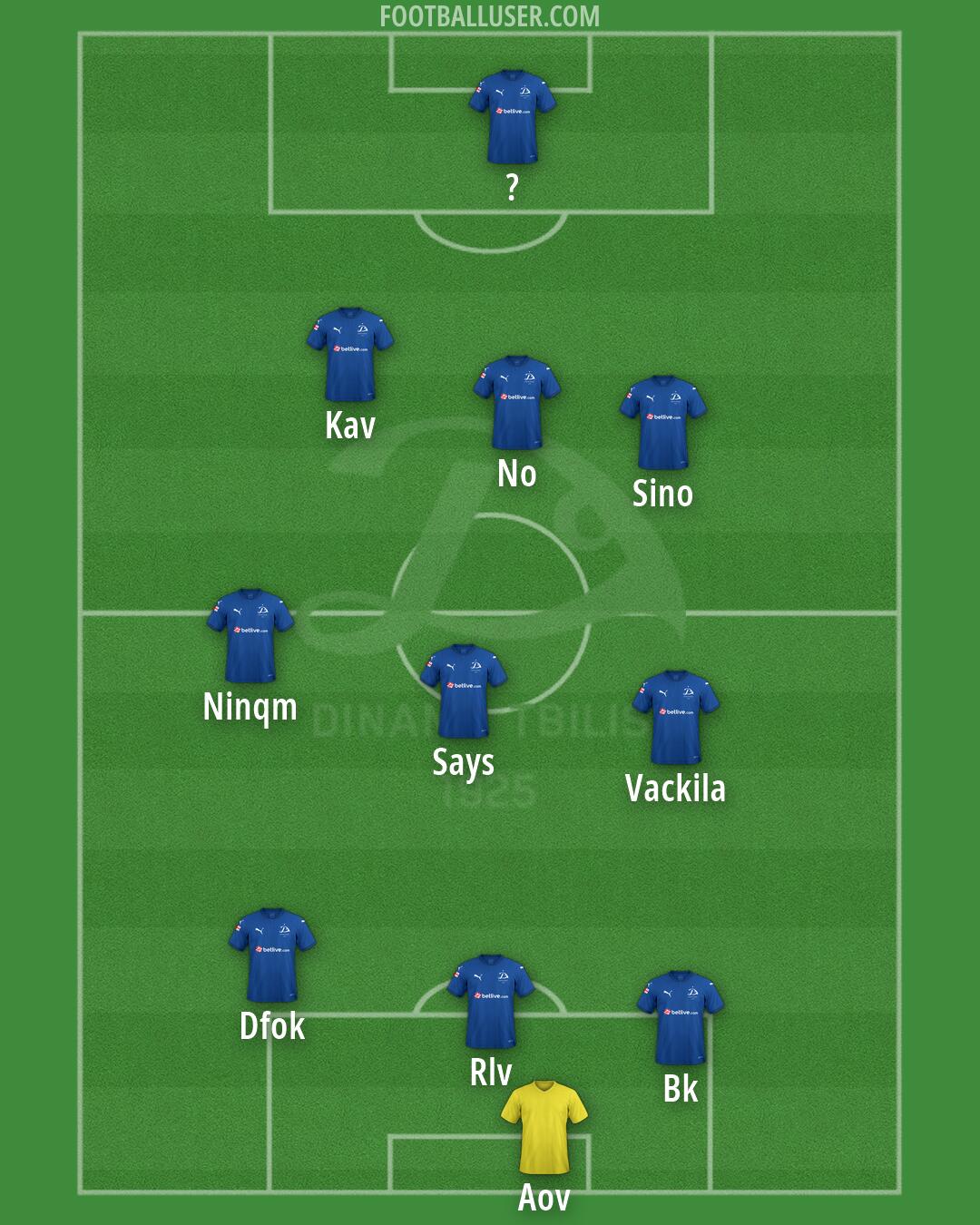
? · Kav · No · Sino · Ninqm · Says · Vackila · Dfok · Rlv · Bk · AovDinamo Tbilisi operates with a 3-3-4 formation that focuses on high pressing and verticality. This lineup is built to overwhelm the opponent in the final third by flooding the attacking zone with bodies. The primary goal is to win the ball high up the pitch and move quickly toward the goal.
The defensive unit begins with the goalkeeper protecting the net behind a back three. Kav occupies the right center back position while Sino covers the left side. No sits in the center to anchor the defense. These three central defenders must remain compact to prevent through balls and cover any space left behind when the team pushes forward. They focus on blocking crosses and winning aerial duels to keep the game under control.
In the middle of the pitch, a midfield trio works to control the center. Says acts as the central link to connect the defense with the heavy front line. Ninqm operates on the left side of the midfield to help transition the ball, while Vackila provides balance on the right. This midfield group must track back quickly to support the back three when the team loses possession. They are responsible for intercepting passes and breaking the lines to start new attacks.
The attacking front line consists of four players meant to pin the opposing defense back. Bk and Dfok provide width as wide attackers on the left and right flanks. In the center, Rlv and Aov act as two central forwards to exploit the space between defenders. This four player attack is designed to press the opponent heavily and create chaos in the box. The movement of these four players creates constant pressure on the opposition back line.
One major strength of this Dinamo Tbilisi lineup is the ability to press high in coordinated waves. By having four attackers and three midfielders near the opponent, they can quickly win the ball back. Another advantage is the ability to create numerical superiority in the attacking zone, which forces defenders to make difficult decisions. The wide players help to stretch the defense, creating gaps in the middle for the two central forwards to run into.
This formation creates a high risk, high reward identity built on aggressive attacking. It is best suited for matches where the team needs to hunt for goals against an opponent that sits deep.