
Marseille Football Formation
 May 18, 2026


Starting Lineup
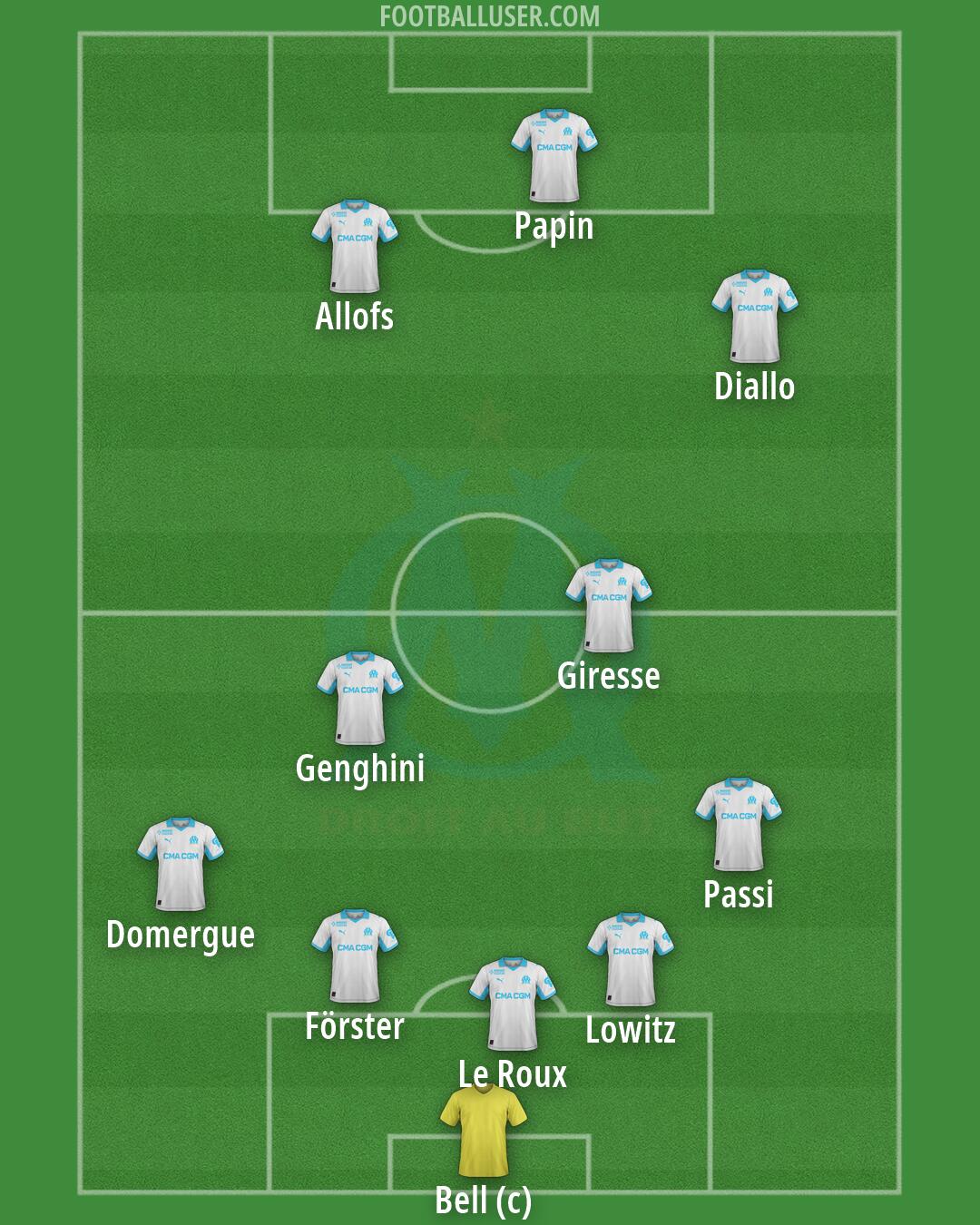
Bell (c) · Passi · Le Roux · Domergue · Förster · Lowitz · Genghini · Giresse · Diallo · Allofs · PapinMarseille operates with a 5-2-3 formation that prioritizes defensive stability and quick transitions. This lineup is built to play a direct style of football where the team sits deep to deny space before hitting opponents on the break. The focus is on controlling the middle zones and using the width of the pitch to stretch the opposing back line.
Bell (C) anchors the team from the goal, acting as the primary organizer for the defensive unit. The back line consists of three central defenders, Le Roux, Lowitz, and Förster, who maintain a compact block to block passing lanes. Lowitz and Förster occupy the sides of the central trio to cover wider areas, while Le Roux holds the center. Domergue and Passi act as wing backs, tasked with providing width and pushing high up the pitch to support the attack, while making sure to track back when the ball is lost.
The midfield relies on a double pivot consisting of Genghini and Giresse to control the central area. These two players must work hard to shield the back three and intercept passes before they reach the final third. Genghini and Giresse act as the link between the defense and the front three, tasked with winning second balls and quickly switching play to the wings. They need to cover a lot of ground to prevent the opposition from finding gaps between the lines.
Marseille utilizes three attackers in a front three, featuring Allofs on the left wing and Diallo on the right wing, with Papin acting as the lone striker. Allofs and Diallo often cut inside to create passing options, while Papin stays central to hold up the ball and provide a target for crosses. This attacking unit is designed to press the opposition high up the pitch to force mistakes. The movement of the wingers creates space for the wing backs to overlap and join the offensive phase.
This formation offers clear tactical advantages, such as the ability to create wide overloads through the movement of Domergue and Passi. The presence of three central defenders provides great compactness when defending in a low block, making it difficult for opponents to break through the middle. Marseille also benefits from the speed of transition, as the team can move from a deep defensive position to an attacking one in just a few passes.
This 5-2-3 formation relies on defensive discipline and rapid counter attacks to catch opponents off guard. It is a setup best suited for facing teams that dominate possession and leave space behind their advancing full backs.