
Pisa Football Formation
 May 20, 2026


Starting Lineup
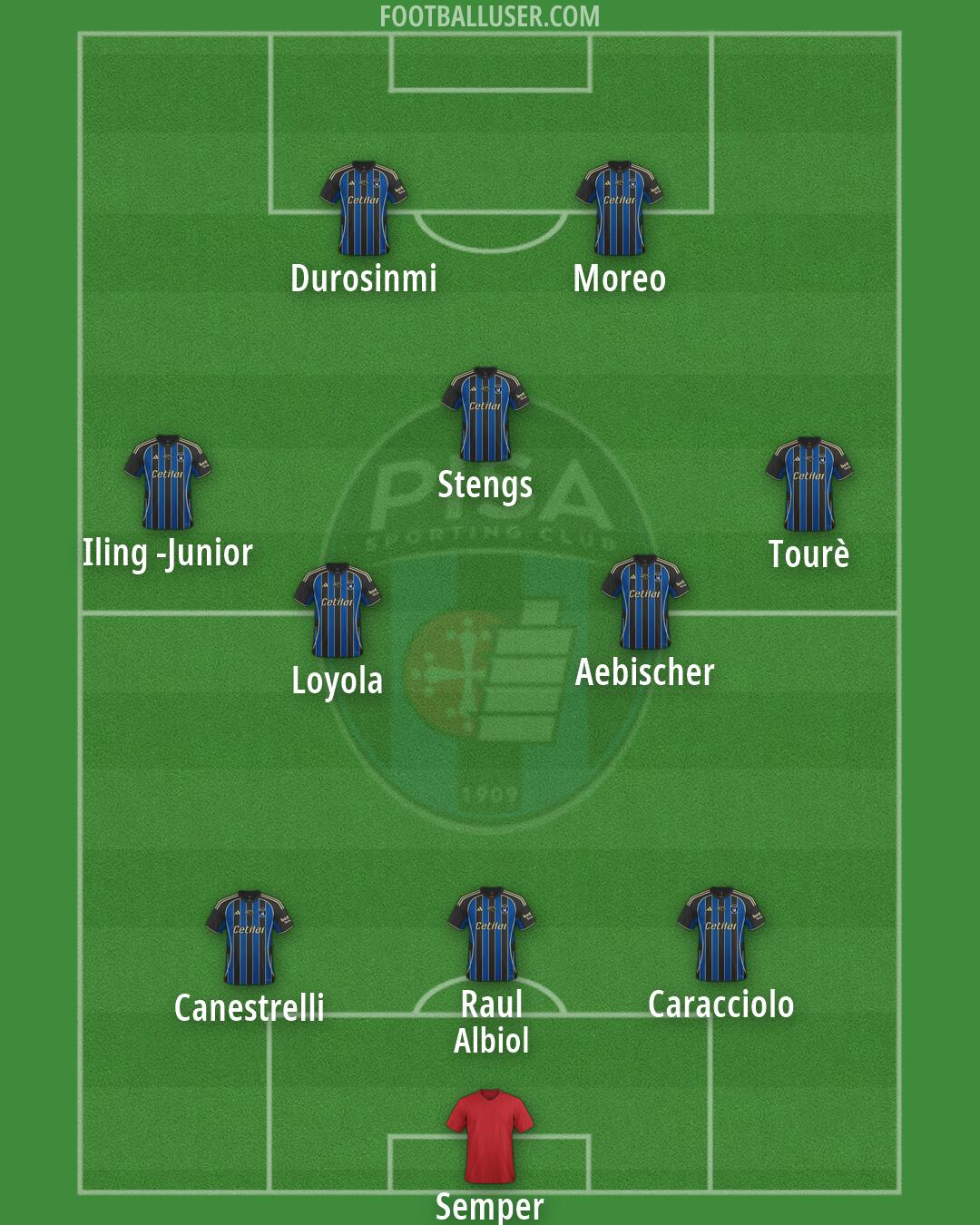
Semper · Raul (Albiol) · Caracciolo · Canestrelli · Aebischer · Loyola · Stengs · Iling -Junior · Tourè · Durosinmi · MoreoA heavy reliance on central control and rapid transitions defines the tactical identity of Pisa in a 3-5-2. This formation works to dominate the middle of the pitch while maintaining enough numbers to punish teams on the break. The lineup is built to press aggressively and win the ball back quickly to feed the front two.
Semper acts as the last line of defense behind a compact back three. Raul sits in the center of the defense to hold the line and command the area, while Canestrelli and Caracciolo operate on either side to cover the wide channels. The defenders must step up together to maintain a high line and intercept long balls before they reach the striker.
The midfield engine room is the core of this Pisa system, featuring a five man unit. Loyola and Aebischer act as the double pivot to shield the defense and break up opposition play. Ahead of them, Stengs, Iling-Junior, and Tourè connect the lines by driving forward into space. Stengs looks to find pockets of space to create chances, while Iling-Junior and Tourè provide the energy to move the ball from deep areas into the final third.
Two forwards lead the line to stretch the opposition defense. Durosinmi and Moreo operate as a strike partnership, often working together to hold up the ball or run in behind. They press the opposition center backs to force mistakes and force the ball wide. This attacking unit relies on the quick passes from the midfield to break the line and get into one on one situations.
One major advantage of this lineup is the numerical superiority in the central areas, which allows the team to control the tempo of the game. Another strength is the ability to create wide overloads when the midfielders push higher, forcing the opposing wingers to track back. The team can also shift quickly from a compact block into a vertical attacking force when they win possession.
This 3-5-2 formation provides a balanced way to control the center of the pitch while remaining dangerous in transition. It is particularly effective against teams that play with a single pivot or struggle to handle two strikers.