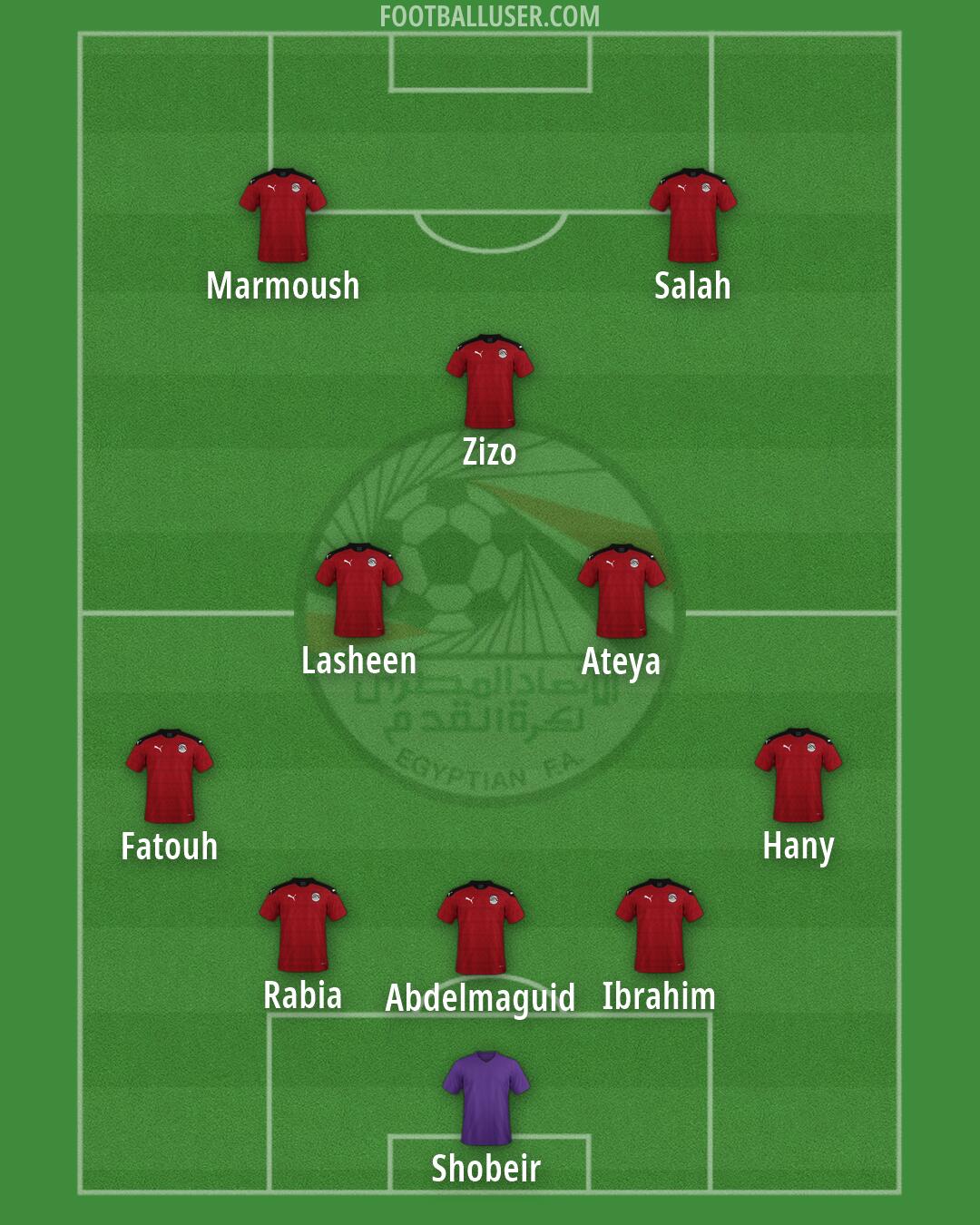

Egypt National Football Team Formation
 May 21, 2026
 tjc****@btinternet.com


Starting Lineup
Shobeir · Rabia · Abdelmaguid · Ibrahim · Hany · Fatouh · Lasheen · Ateya · Zizo · Marmoush · SalahHeavy emphasis on defensive solidity and rapid transitions defines Egypt in this 5-3-2 formation. This lineup aims to sit deep to absorb pressure before launching direct attacks to exploit space behind the opposition defense. By maintaining a compact block, the team looks to frustrate opponents and create chances through quick vertical movements.
Shobeir operates between the posts to command the penalty area. A back three forms the core of the defensive unit with Abdelmaguid, Ibrahim, and Rabia working to block central lanes. Ibrahim and Rabia provide the necessary width in the defensive line to cover the channels, while Abdelmaguid anchors the center to win aerial duels and clear danger. Hany and Fatouh push high as wing backs to provide width, but they must track back quickly to maintain the five man line.
The midfield operates as a trio that connects the defensive block to the forward line. Ateya and Lasheen act as the engines in the middle, sitting deep to shield the back three and intercept passes. Zizo plays as the attacking midfielder, acting as the creative link that carries the ball forward. Zizo looks to find the attackers with clever passes or by driving into the half spaces to break the lines.
Two forwards lead the charge in the attacking third. Salah and Marmoush operate as a dual strike force, using their pace to stretch the opposition. Salah often looks to cut inside from the right to find shooting lanes, while Marmoush works to hold up the ball and bring others into play. They press the opposition back line to force mistakes and prevent the opponent from building play from the back.
Egypt gains a significant advantage through their ability to defend in a low block and transition with extreme speed. The presence of Salah allows the team to isolate defenders in one on one situations during a break. Additionally, the wide positioning of Hany and Fatouh allows for quick switches of play to bypass a crowded central midfield.
This formation provides a resilient foundation for Egypt to absorb pressure and strike on the break. It is most effective against teams that commit many players forward and leave large gaps in their defensive transition.