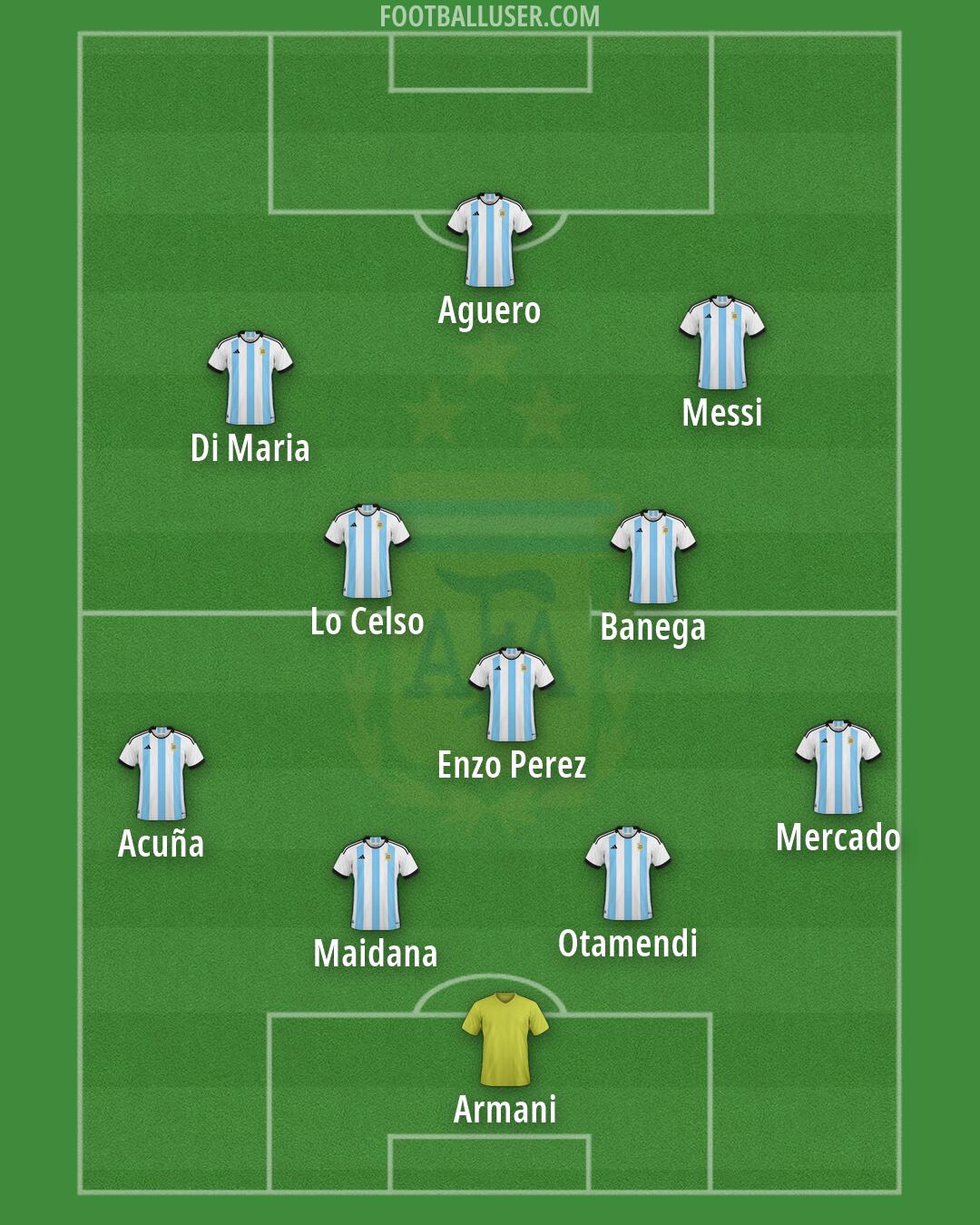

Argentina National Football Team Formation
 May 21, 2026


Starting Lineup
Armani · Mercado · Otamendi · Maidana · Acuña · Enzo Perez · Banega · Lo Celso · Messi · Di Maria · AgueroPrioritizing a rapid transition game, Argentina operates within a 5-2-3 formation. This lineup focuses on being hard to break down while looking to strike quickly once the ball is won. The selection is designed to sit deep and soak up pressure before launching direct balls into the attacking third.
Armani stands between the posts to command the area. A back five provides a solid block of defenders including Otamendi and Enzo Perez who act as central defenders. Otamendi brings aerial strength to the line, while Maidana covers the space to his left. The wide defenders, Acuña as the left wing back and Mercado as the right wing back, are tasked with tracking back to defend against crosses and pushing high to provide width in the attacking phase.
The midfield consists of a two man central unit. Banega and Lo Celso occupy the central roles to connect the defense to the front line. Banega acts to control the tempo with his passing range, while Lo Celso works to drive the ball forward and break the line. This pair must hold their positions to prevent the opponent from playing through the middle, often dropping back to help the back five when the team sits deep.
Three attackers lead the press and the counter attack. Aguero plays as the lone striker to hold up the ball and bring others into play. Di Maria operates on the left wing, often looking to cut inside to create goal scoring chances. Messi occupies the right side, using his dribbling style to pull defenders out of position. These three work together to press high when the ball is lost, attempting to force mistakes near the opponent goal.
Argentina gains a clear advantage through the density of the defensive block. Having five defenders makes it difficult for opponents to find space in the box, often forcing them to play wide. The team also benefits from the ability to create wide overloads when Acuña and Mercado step up to join the attack. This creates a situation where the opposition must choose between marking the wingers or tracking the overlapping runs.
This formation provides a reliable defensive foundation that relies on quick counter attacking movements. It is most effective against teams that hold high lines and leave significant space behind their defense.