
Brazil National Football Team Formation
 May 24, 2026


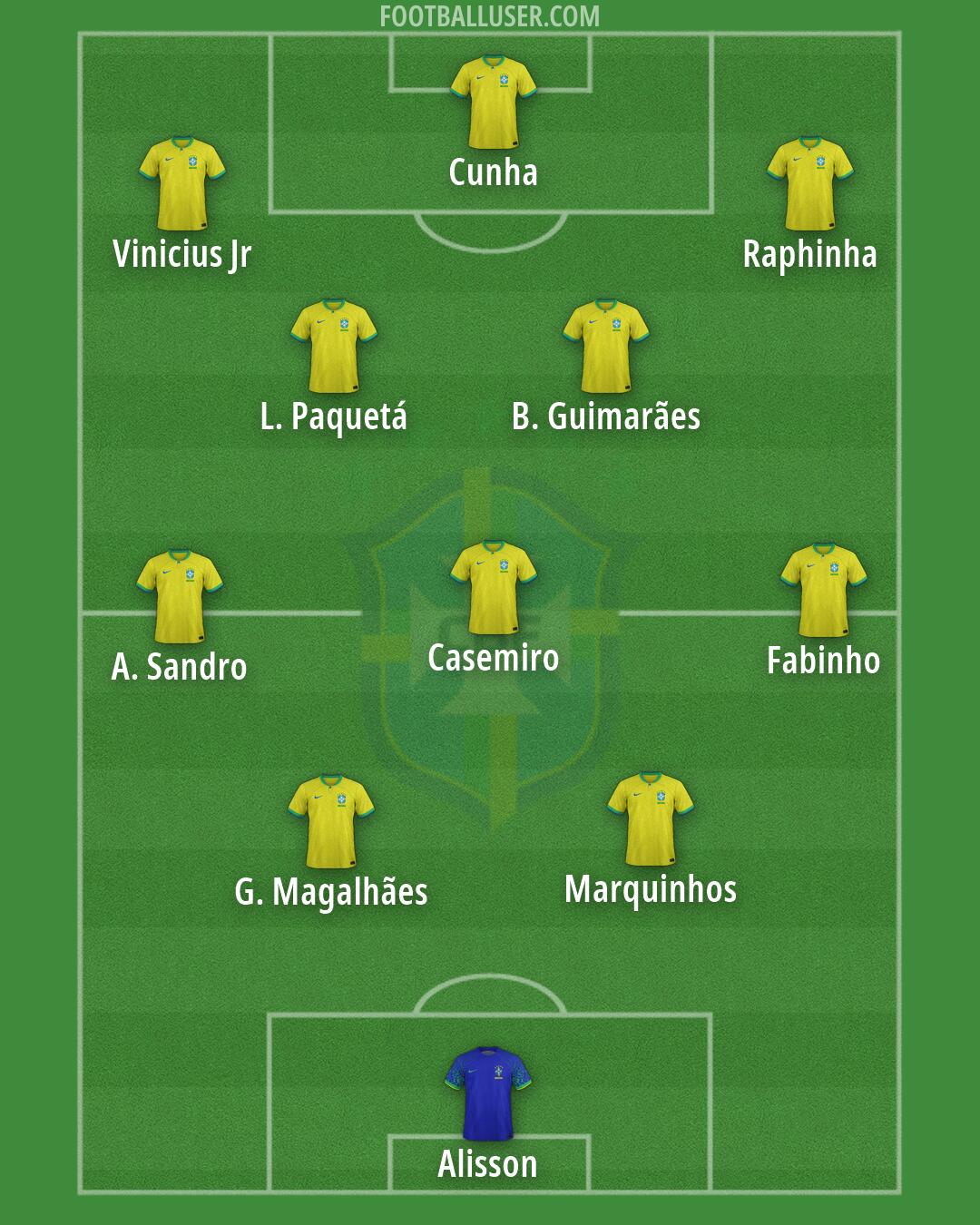
Starting Lineup
A. Sandro · Fabinho · G. Magalhães · Marquinhos · Cunha · Vinicius Jr · Raphinha · L. Paquetá · B. Guimarães · Casemiro · AlissonA high pressing and vertical identity defines this Brazil lineup in a 5-2-3 formation. The Seleção aims to win the ball back quickly in the final third and launch immediate attacks to catch opponents out of position. This system relies on heavy intensity and directness to break down defensive lines.
Alisson sits behind a back five that prioritizes defensive solidity and coverage. Casemiro acts as the central anchor within this unit, using his defensive awareness to intercept passes and organize the line. Marquinhos and G. Magalhães provide the central strength, with Marquinhos often stepping out to engage attackers. The wide defenders must cover significant ground, as Fabinho and A. Sandro act as wing backs who push high to provide width. These players are expected to track back quickly to prevent crosses when the team loses possession.
The midfield works in a double pivot to control the central zone. B. Guimarães and L. Paquetá operate in the middle to link the defense to the attack. B. Guimarães uses his energy to press and drive the ball forward, while L. Paquetá looks to create chances and find pockets of space between the lines. This duo must remain compact to prevent the opposition from playing through the center. They provide the necessary balance to ensure the wing backs can push up without leaving the defense exposed.
In the final third, the three attackers provide constant pressure and width. Vinicius Jr and Raphinha operate as wide wingers who look to cut inside and threaten the goal. Vinicius Jr uses his explosive dribbling to beat defenders on the flank, while Raphinha provides direct runs and crossing ability. Cunha leads the line as a lone striker, tasked to hold up the ball and make runs into the channels. This front three presses in a coordinated way to force mistakes from the opposition back line.
Brazil gains a significant advantage through the width offered by Fabinho and A. Sandro, which allows the wingers to move into central areas. This creates wide overloads that pull defenders out of position. The formation also offers compactness when defending deep, making it very difficult for opponents to find space in the box. The speed of transition from a defensive block to a counter attack is a primary strength of this tactical setup.
This 5-2-3 formation provides a robust platform for quick, direct football. It is best suited for matches where Brazil needs to exploit space behind a high defensive line or secure a result against heavy pressing teams.