Custom Team Football Formation
 May 24, 2026


Starting Lineup
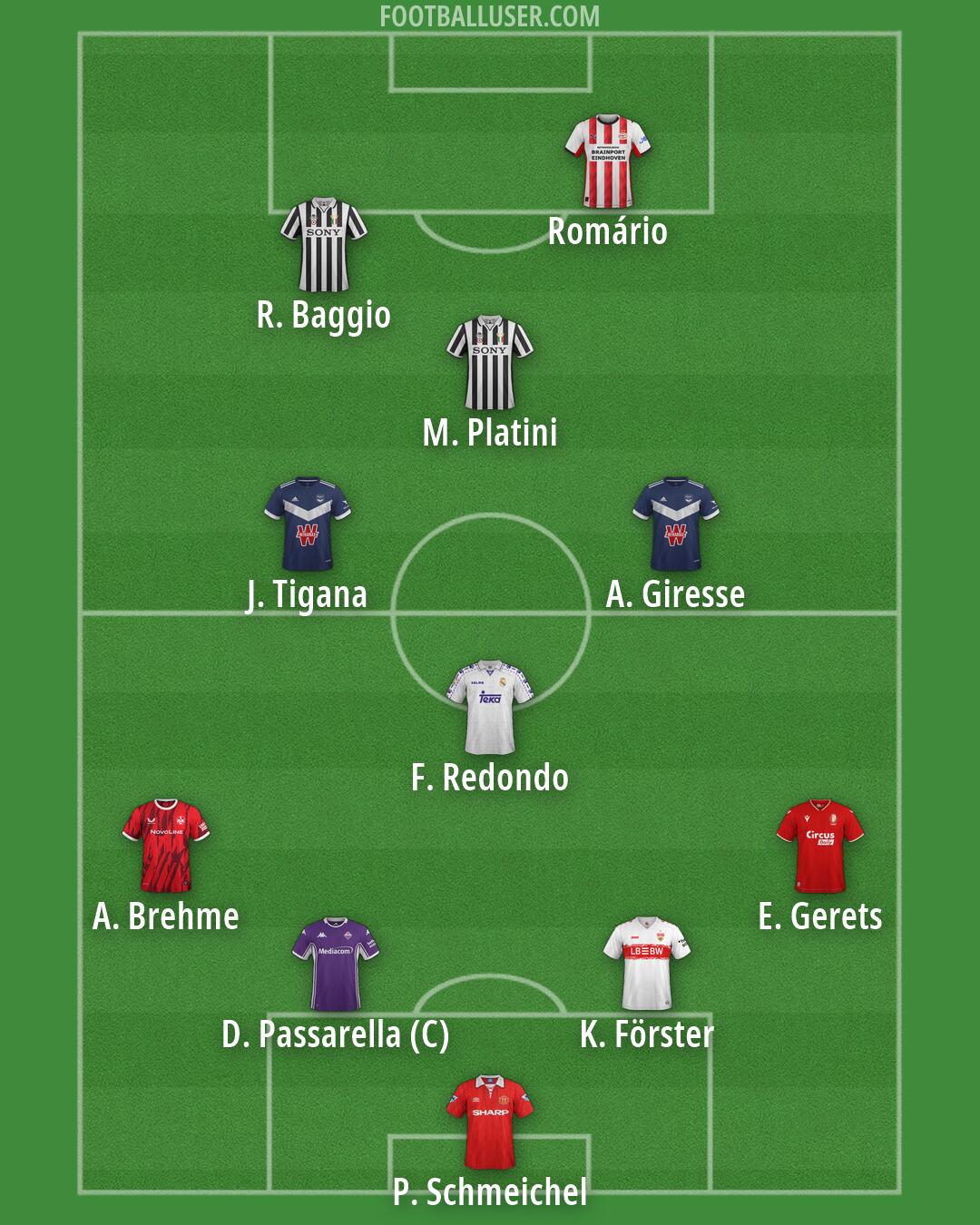
P. Schmeichel (Man Utd) · K. Förster (Stuttgart) · D. Passarella (C) (Fiorentina) · E. Gerets (Standard) · A. Brehme (Kaiserslautern) · F. Redondo (Real Madrid) · A. Giresse (Bordeaux) · J. Tigana (Bordeaux) · M. Platini (Juventus) · R. Baggio (Juventus) · Romário (PSV)Seeking to control matches through a solid defensive base and rapid transitions, this lineup utilizes a 5-4-1 formation. The team aims to stay compact while waiting for the right moment to exploit gaps in the opponent. This setup is built to play a reactive style that relies on defensive discipline and the clinical finishing of the lone attacker.
P. Schmeichel stays between the posts to provide a reliable presence in goal. The back line functions as a back five with F. Redondo acting as the central anchor to sweep behind the line and win headers. D. Passarella (C), the captain, leads the defensive unit from the left side of the central trio with strong tackling and leadership. K. Förster sits on the right to complete the central core, while the wing backs, E. Gerets and A. Brehme, provide the necessary width. E. Gerets pushes up the right flank to support the attack, whereas A. Brehme works the left to provide crosses and cover the wide areas.
The midfield operates as a flat four designed to squeeze the space in front of the defense. A. Giresse and J. Tigana form a double pivot to shield the back line and intercept passes. J. Tigana works to win the second ball and recycle possession, while A. Giresse connects the defensive and attacking lines. In the half spaces, M. Platini and R. Baggio operate as creative forces. M. Platini uses his passing range to thread balls through the lines, and R. Baggio looks to find pockets of space to create chances. This unit works to compress the midfield and prevent the opposition from playing through the center.
A single striker leads the line, with Romário acting as the focal point of the attack. Romário relies on his clinical finishing and movement to stay on the shoulder of the last defender. The team builds the attack by finding the wide players or playing through the feet of the creative midfielders. When the team wins the ball, the wing backs push high to create overloads, allowing Romário to receive the ball in combinations or run in behind. The forwards press from the front to force a long ball and prevent the opposition from building play easily.
This formation offers significant strength through its defensive compactness when defending in a mid-block. The presence of three central defenders ensures the team is hard to break down centrally. Another advantage is the ability to hit in behind on the transition using the speed of the wide players and the clinical nature of Romário. This allows the team to punish opponents who commit too many players forward.
This 5-4-1 formation is built for defensive solidity and lethal counter attacks. It is best suited for matches against dominant teams where the goal is to deny space and strike on the break.