Custom Team Football Formation
 May 26, 2026


Starting Lineup
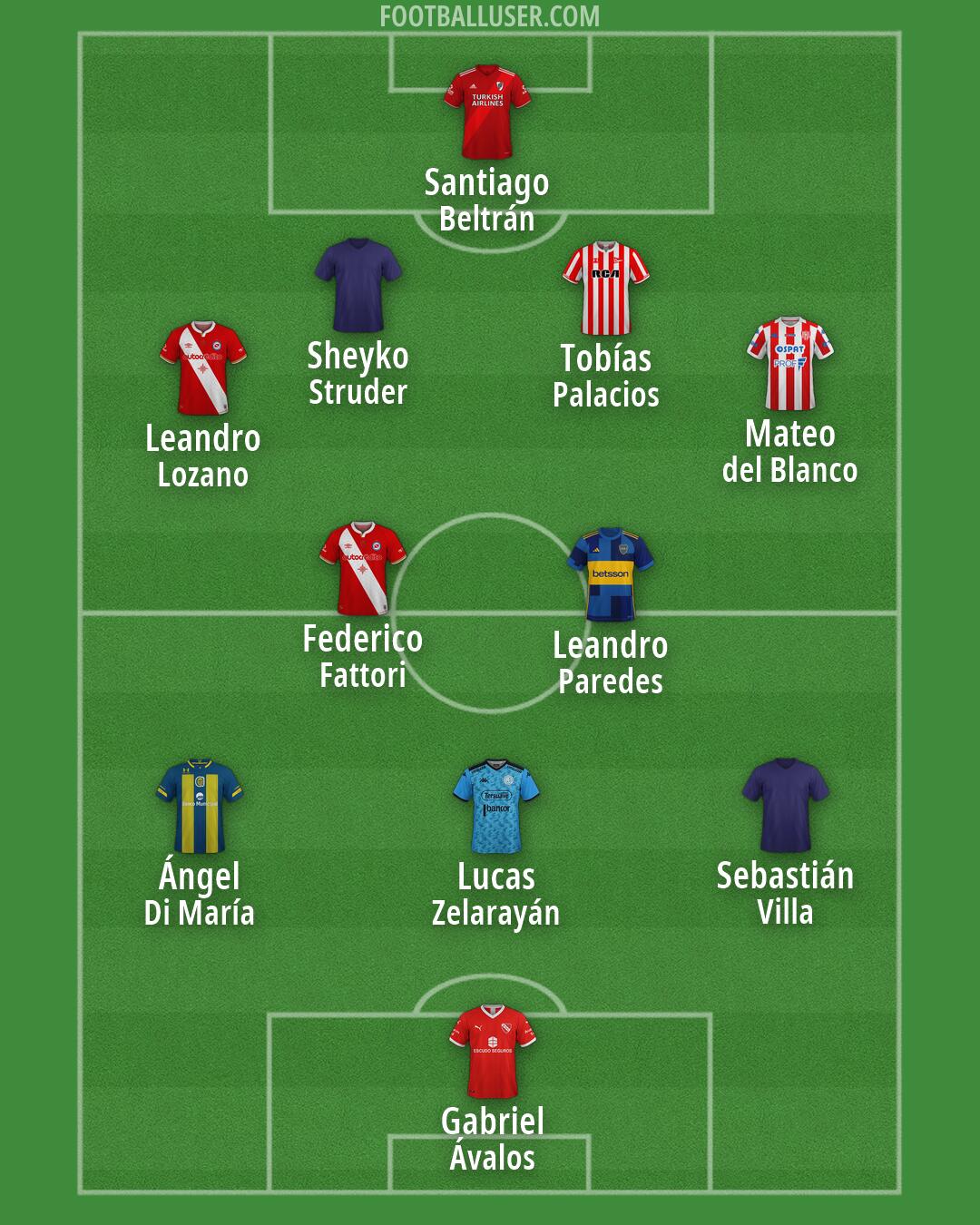
Santiago (Beltrán) (River) · Leandro (Lozano) (Argentinos Jrs.) · Sheyko (Struder) · Mateo (del Blanco) (Unión (SF)) · Tobías (Palacios) (Estudiantes (LP)) · Federico (Fattori) (Argentinos Jrs.) · Leandro (Paredes) (Boca) · Ángel (Di María) (Rosario Central) · Lucas (Zelarayán) (Belgrano) · Gabriel (Ávalos) (Independiente) · Sebastián (Villa)A focus on defensive stability and rapid transitions defines this lineup, which operates in a 4-5-1 formation. The team is built to sit deep, squeeze the space between the lines, and wait for the opposition to overcommit before hitting them on the break. This formation aims to congest the central areas, making it difficult for opponents to play through the middle.
Santiago acts as the last line of defense, staying alert to any long balls played over the top. The back four consists of Leandro on the right and Mateo on the left, working as full backs to provide width when needed but mostly staying compact. In the heart of the defense, Sheyko and Tobías form a central pairing tasked with winning the second ball and clearing the lines when under pressure. They work together to maintain a mid-block, ensuring the distance between the defense and the midfield remains small.
The midfield is a dense block of five players designed to dominate the central zone. Federico and Leandro occupy the defensive pivot roles to shield the back four and deny the pivot of the opposition. Ahead of them, Sebastián and Lucas operate in the central spaces to connect the defense to the attack, with Lucas looking to recycle possession to maintain control. Ángel plays in the left half space to help press from the front and track back when the team loses the ball. This five man unit makes it very hard for opponents to find gaps.
The attacking plan relies on a lone striker, Gabriel, who must work hard to hold up the ball and pin the last defender. Gabriel does not play alone, as he needs the midfielders to drive forward to support him during transitions. The wide players in the midfield will push up to provide options for crosses or cutbacks once the ball reaches the final third. The team looks to move the ball quickly from the midfield to the striker to catch the opposition defense before they can get organized.
One major strength of this formation is the sheer density in the middle of the pitch, which makes it very difficult for opponents to pass through the center. Another advantage is the ability to shift between a compact block and a quick counter at pace. By keeping the players close together, the team can easily win the ball back high up the pitch if they trigger a press in unison.
This 4-5-1 formation is a reliable way to defend a lead or frustrate a dominant side. It is best suited for games against teams that control possession and require a disciplined unit to deny them space.