
Austria National Football Team Formation
 May 27, 2026


Starting Lineup
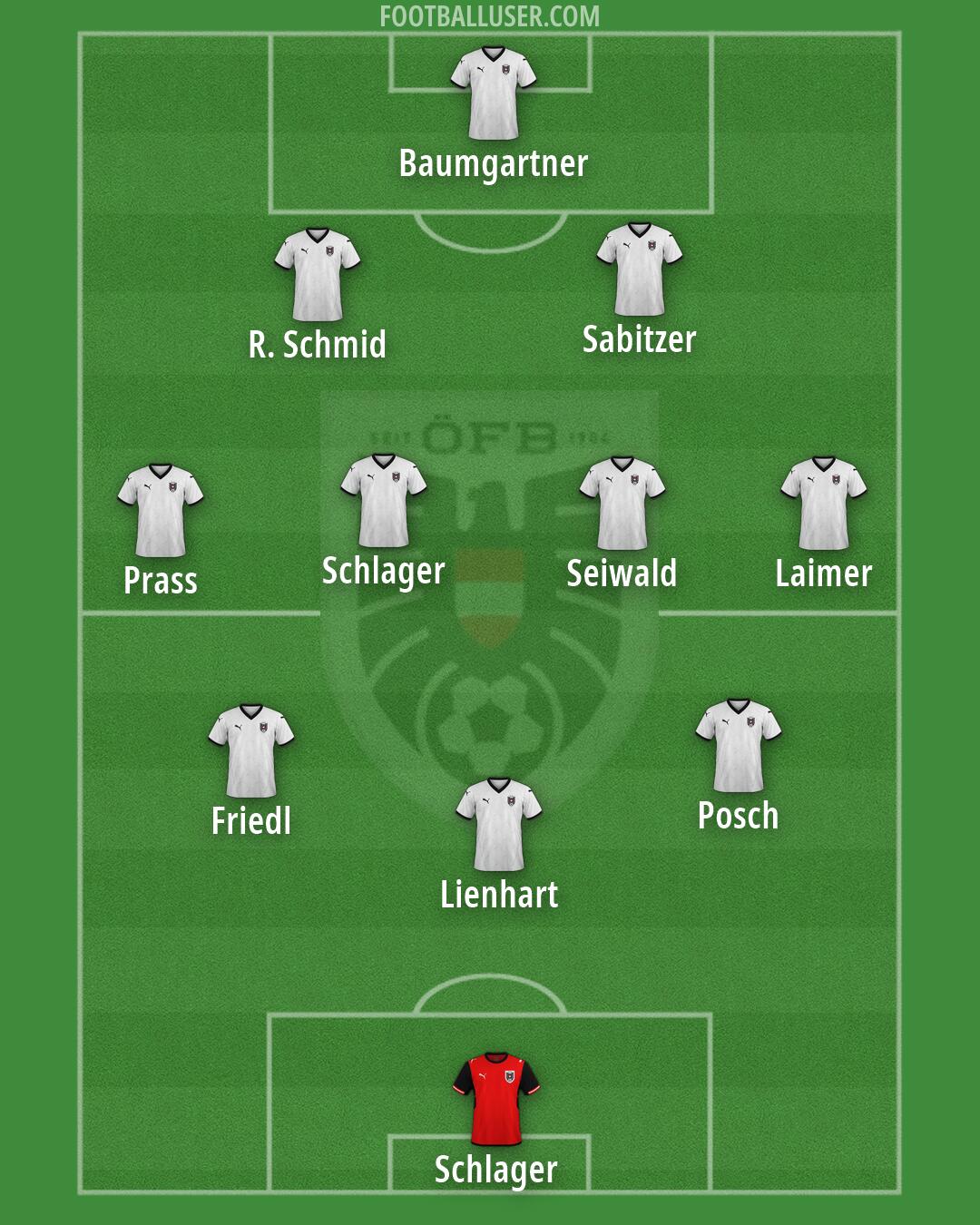
Friedl · Lienhart · Posch · Laimer · Schlager · Seiwald · Baumgartner · R. Schmid · Sabitzer · Prass · SchlagerAustria aims to control the tempo through high intensity pressing and rapid transitions in a 3-4-3 formation. This lineup works to squeeze the pitch and force errors in the opponent half. By using this specific formation, the Austrian national team looks to dominate much of the ball while staying ready to strike quickly when the opposition loses possession.
Schlager operates between the posts to organize the back line. The defense consists of a back three where Lienhart acts as the central anchor to sweep up loose balls. Friedl plays as the left central defender to provide physicality and strength in duels, while Posch covers the right side of the central trio. The defensive unit stays compact to prevent through balls and relies on the wide players to track back and help the defenders when the team sits deep.
The midfield functions with a double pivot system to control the center of the pitch. Seiwald and Schlager work to shield the defense and break the lines with vertical passes. They act as the engine room, helping to win the ball back through heavy pressing. Laimer and Prass occupy the wide roles, playing as wing backs who provide width and support the midfield in the central zone. These players must cover immense ground to link the defense to the attack.
The attack is built around three players looking to stretch the opposition. Baumgartner leads the line as a lone striker to hold up the ball and pin the defenders. On the flanks, R. Schmid and Sabitzer play as wide attackers to cut inside and create chances. Sabitzer uses his passing range to switch play, while R. Schmid looks to run into space behind the full backs. This front three works in unison to press the opposition back line immediately upon loss of possession.
One major advantage of this lineup is the ability to create wide overloads through the movement of Laimer and Prass. By pushing these players high, Austria can overwhelm the opponent flanks and deliver crosses into the box. Another strength is the compact nature of the unit, which allows the team to press high in coordinated waves. This forces opponents into mistakes in dangerous areas, allowing the midfield to intercept the ball and launch immediate attacks.
Austria relies on a heavy pressing identity to disrupt the rhythm of the game. This formation is best suited for facing teams that prefer to build play slowly from the back.