Custom Team Football Formation
 May 28, 2026


Starting Lineup
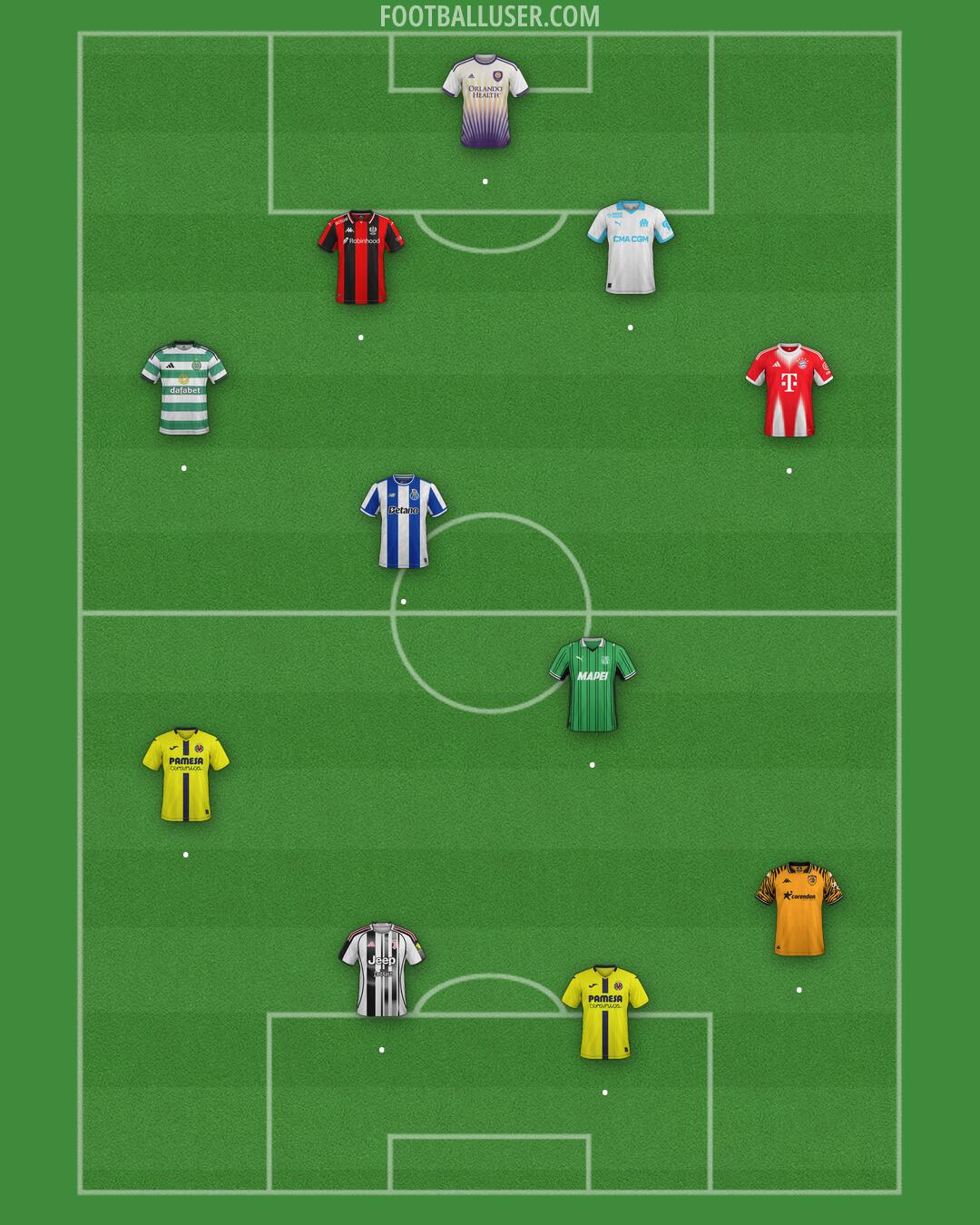
. (Orlando City) · . (Marseille) · . (Nice) · . (FC Bayern) · . (Celtic) · . (FC Porto) · . (Sassuolo) · . (Hull) · . (Juventus) · . (Villarreal) · . (Villarreal)A focus on defensive solidity and quick transitions defines this lineup using a 5-2-3 formation. This team aims to sit deep and compact when out of possession before looking to break quickly once the ball is won. The setup is built to absorb pressure and use wide areas to stretch the opposition during a counter attack.
The goalkeeper acts as the last line of defense behind a five man unit. The defensive line consists of a central CB flanked by a LCB and a RCB to form a narrow defensive block. On the flanks, the LWB and RWB provide the necessary width, often acting as defensive wing backs to track opposition wingers. The central defenders are tasked to win the header and clear the lines during periods of sustained pressure, while the wide center backs must be ready to cover space if a wing back pushes up.
In the middle of the pitch, the team employs a double pivot to control the central zone. The LCM and RCM work to shield the defence and win the second ball in front of the back five. One of these players acts as a carrier to drive forward with the ball, while the other focuses on recycling possession to maintain control. These two midfielders must stay disciplined to prevent the opposition from playing through the lines, ensuring the team remains compact when defending.
The attacking front line uses three attackers to exploit space in transition. A lone ST leads the line as a pressing centre forward, working to pin the last defender and disrupt the opposition build up. On either side, the LW and RW act as wide wingers who hug the touchline to provide width. These forwards look to hit in behind on the transition, making runs to receive the ball in space or to receive a cross from the wing backs.
This formation offers significant tactical advantages, particularly the ability to defend in a very compact block that is difficult to break down centrally. The presence of the LWB and RWB allows for wide overloads when the team moves into an attacking phase, creating situations to cross on the run. Additionally, the team can transition with great speed, moving from a deep defensive position to an attacking one in a matter of seconds.
The 5-2-3 formation provides a reliable way to stay defensively solid while remaining a threat on the break. It is best suited for games against heavy possession teams where sitting deep and hitting in behind is the most effective way to win.