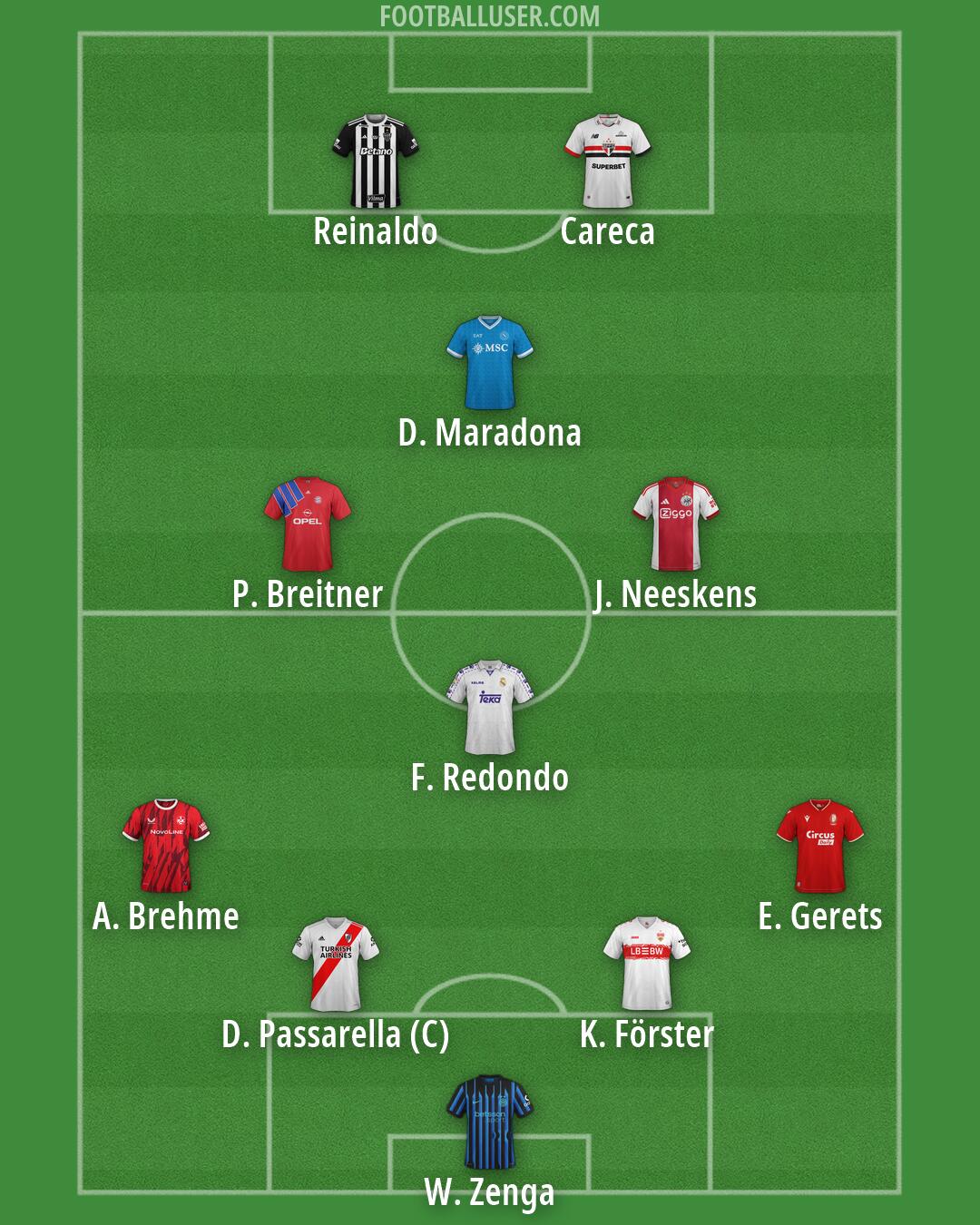
Custom Team Football Formation
 May 29, 2026


Starting Lineup
W. Zenga (Inter) · K. Förster (Stuttgart) · D. Passarella (C) (River) · E. Gerets (Standard) · A. Brehme (Kaiserslautern) · F. Redondo (Real Madrid) · J. Neeskens (Ajax) · P. Breitner (FC Bayern) · D. Maradona (Napoli) · Reinaldo (Atlético Mineiro) · Careca (São Paulo)A focus on defensive solidity and quick vertical attacks defines this team, which operates in a 5-3-2 formation. This lineup is built to absorb pressure and then hit the opposition with pace on the transition. By sitting in a mid-block or dropping into a low block, the team aims to squeeze the space between the lines before releasing the attackers.
W. Zenga guards the goal as the last line of defense. The back line functions as a narrow defensive block with three central defenders. Daniel Passarella, the captain, leads the unit as a dominant presence in the air and a ball playing defender who can step into midfield. Beside him, F. Redondo provides cover and reads the game to intercept passes. K. Förster acts as the right side of this central trio to maintain a compact shape. The wing backs, E. Gerets and A. Brehme, provide width. Brehme is expected to push up the flank to deliver crosses, while Gerets must balance his attacking runs with the need to track back and defend the wide areas.
The midfield uses a three-man midfield with a carrier and an attacking ten. Diego Maradona operates as the advanced tip in the hole, looking to find pockets of space between the opponent's midfield and defense. He acts as the primary creator to play through the lines. Behind him, Johan Neeskens and Paul Breitner form a powerful central unit. Neeskens brings immense pressing intensity and works to win the second ball, while Breitner can carry the ball forward to drive the team out of their own half. These two midfielders are responsible for shielding the defense and connecting the back three to the creative spark of Maradona.
The attacking front line features two forwards in a partnership. Reinaldo and Careca work together to stretch the defence through clever movement. They do not stay static but instead make runs in behind to exploit high lines. When the team wins the ball, the aim is to find the feet of the striker or use the wing backs to create wide overloads. The forwards also press from the front to force a long ball from the opposition. This combination of a central playmaker and two mobile strikers creates many chances for cutbacks from the byline or quick one-two passes in the final third.
One major advantage for this lineup is the compactness when defending. With five defenders and three midfielders, it is very hard for opponents to find space in the middle. Another strength is the ability to create numerical superiority in the middle of the pitch when Maradona drops deep. This makes it difficult for the opposition to mark him without leaving space for the two strikers. The speed of transition from the central defenders to the attackers allows the team to catch opponents off guard.
This formation relies on a strong central spine and effective wing back play to succeed. It is best suited for games against teams that play with high defensive lines or teams that struggle to deal with quick, vertical transitions.