Rangers Football Formation
 May 30, 2026


Starting Lineup
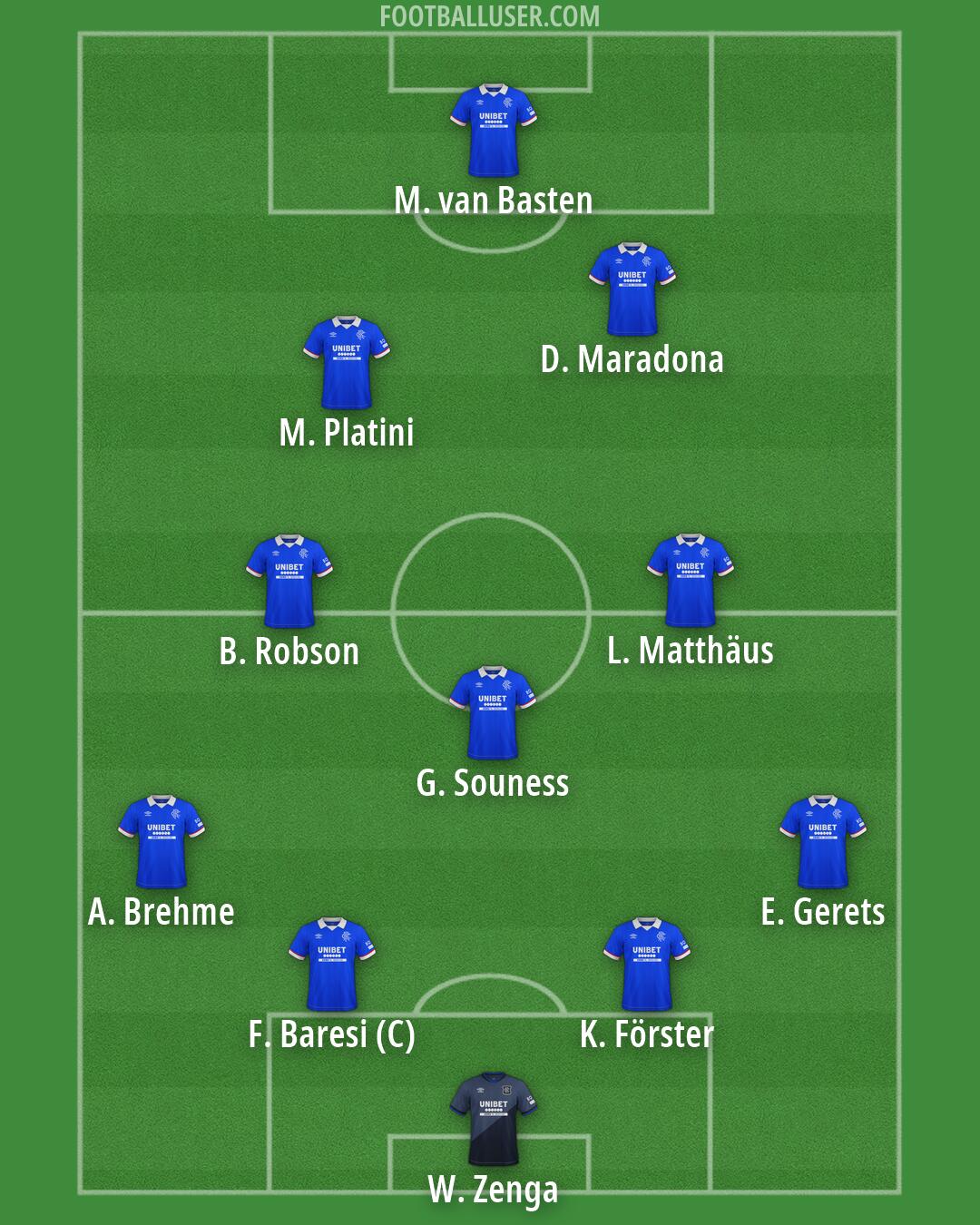
W. Zenga · K. Förster · F. Baresi (C) · E. Gerets · A. Brehme · G. Souness · L. Matthäus · B. Robson · M. Platini · D. Maradona · M. van BastenRangers aim to control games through a high press and rapid transitions using a 5-2-3 formation. This lineup focuses on using wide areas to stretch the opposition while maintaining a heavy presence in the final third. The team relies on direct passing and vertical movements to move the ball quickly from the defensive third into the attacking zone.
W. Zenga sits between the posts to organize the defensive unit. The back line operates with three central defenders, including the captain F. Baresi who uses his reading of the game and tactical intelligence to lead the line. G. Souness provides strength and ability to intercept plays alongside K. Förster. The wing backs, A. Brehme and E. Gerets, are tasked with providing width and must push up high to support the attack while tracking back to cover the flanks.
The midfield uses a double pivot to connect the defense to the forwards. L. Matthäus operates with his trademark driving runs and high work rate to break the line, while B. Robson works to occupy spaces and hold the ball. This pair must sit deep enough to shield the three central defenders but also push forward to support the creative players. They act as the engine room for Rangers, transitioning the team from a defensive block to a heavy attacking presence.
In the attacking third, the team utilizes three forwards to pressure the opponent. M. van Basten plays as the lone striker, using his clinical finishing and aerial strength to hold up the ball and lead the line. M. Platini and D. Maradona operate from wide positions, often cutting inside to create chances or shoot. Their movement forces defenders to shift across the pitch, creating gaps for the midfielders to exploit.
This formation offers significant advantages in wide overloads due to the overlapping runs of A. Brehme and E. Gerets. The team can also achieve numerical superiority in the attacking phase when the midfielders step up to join the front three. By using a back three, the unit remains compact when defending deep and can quickly switch play to exploit isolated wide players in one on one situations.
The 5-2-3 formation provides Rangers with a balanced way to press high and strike on the break. It is a lineup best suited for dominating possession against mid-block teams or exploiting space behind a high defensive line.