Liverpool Football Formation
 May 30, 2026
 Luke
Luke


Starting Lineup
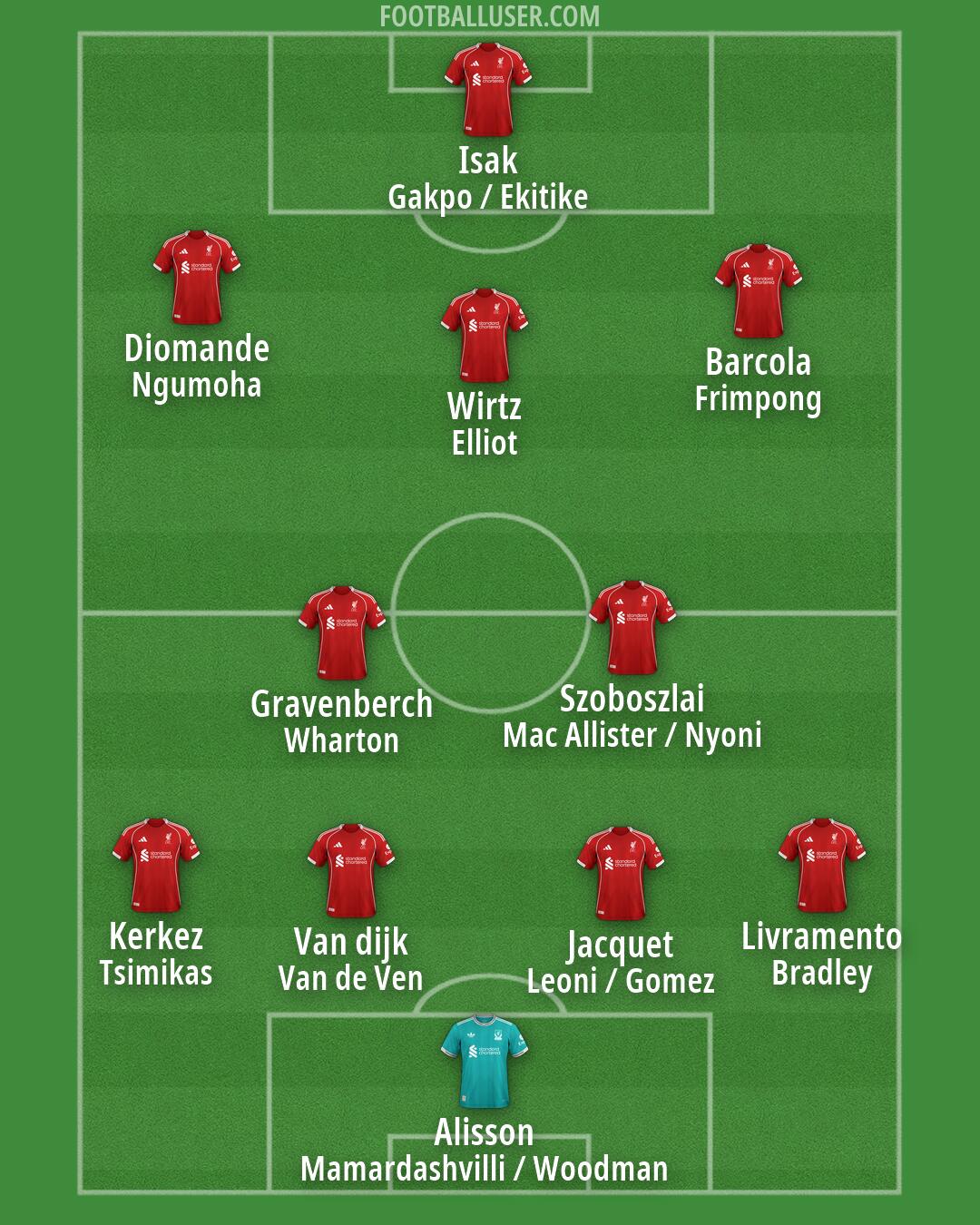
Van dijk (Van de Ven) · Jacquet (Leoni / Gomez) · Kerkez (Tsimikas) · Livramento (Bradley) · Gravenberch (Wharton) · Wirtz (Elliot) · Szoboszlai (Mac Allister / Nyoni) · Diomande (Ngumoha) · Barcola (Frimpong) · Isak (Gakpo / Ekitike) · Alisson (Mamardashvilli / Woodman)Liverpool relies on a high press and fast verticality, utilizing a 4-2-4 formation. This lineup aims to win the ball high up the pitch and quickly transition into attacking phases. By pushing the team forward, they look to overwhelm the opponent in the final third and keep the ball in advanced areas.
Alisson starts between the posts, acting as a sweeper keeper to cover the space behind a high defensive line. In front of him, the back four features Livramento and Kerkez on the flanks. Livramento provides width and can overlap to support the attack, while Kerkez pushes up the left side to create overloads. In the center, Jacquet and Van dijk form the heart of the defense. Van dijk uses his aerial strength and long passing range to break lines, while Jacquet provides cover and tackles to stop central penetrations.
The midfield operates as a double pivot, with Gravenberch and Szoboszlai occupying the central spaces. Gravenberch acts to shield the defense and carry the ball forward through the middle. Szoboszlai works to connect the play, using his high pressing intensity to win the ball back early. This duo must work hard to track back and cover the gaps left by the attacking players, ensuring the team does not get caught out on the break.
Liverpool employs four attackers to maintain constant pressure on the opposition defense. Wirtz and Isak lead the line as two forwards, with Wirtz operating in channels to create chances and Isak using his movement to find space. On the wings, Barcola and Diomande provide width and directness. Barcola looks to cut inside and take on defenders, while Diomande uses pace to stretch the backline. The front four press in coordinated waves to force turnovers.
This formation offers several tactical advantages, such as the ability to create immediate numerical superiority in the attacking third. By pushing four players high, Liverpool can isolate defenders in one on one situations. The team also benefits from a heavy press that can disrupt the buildup of the opponent. When winning the ball, the speed of transition from the midfield duo to the four attackers makes the team very dangerous.
The 4-2-4 formation defines a high risk, high reward identity centered on heavy metal football. It is best suited for games where Liverpool can dominate possession and force the opponent into a low block through relentless pressure.