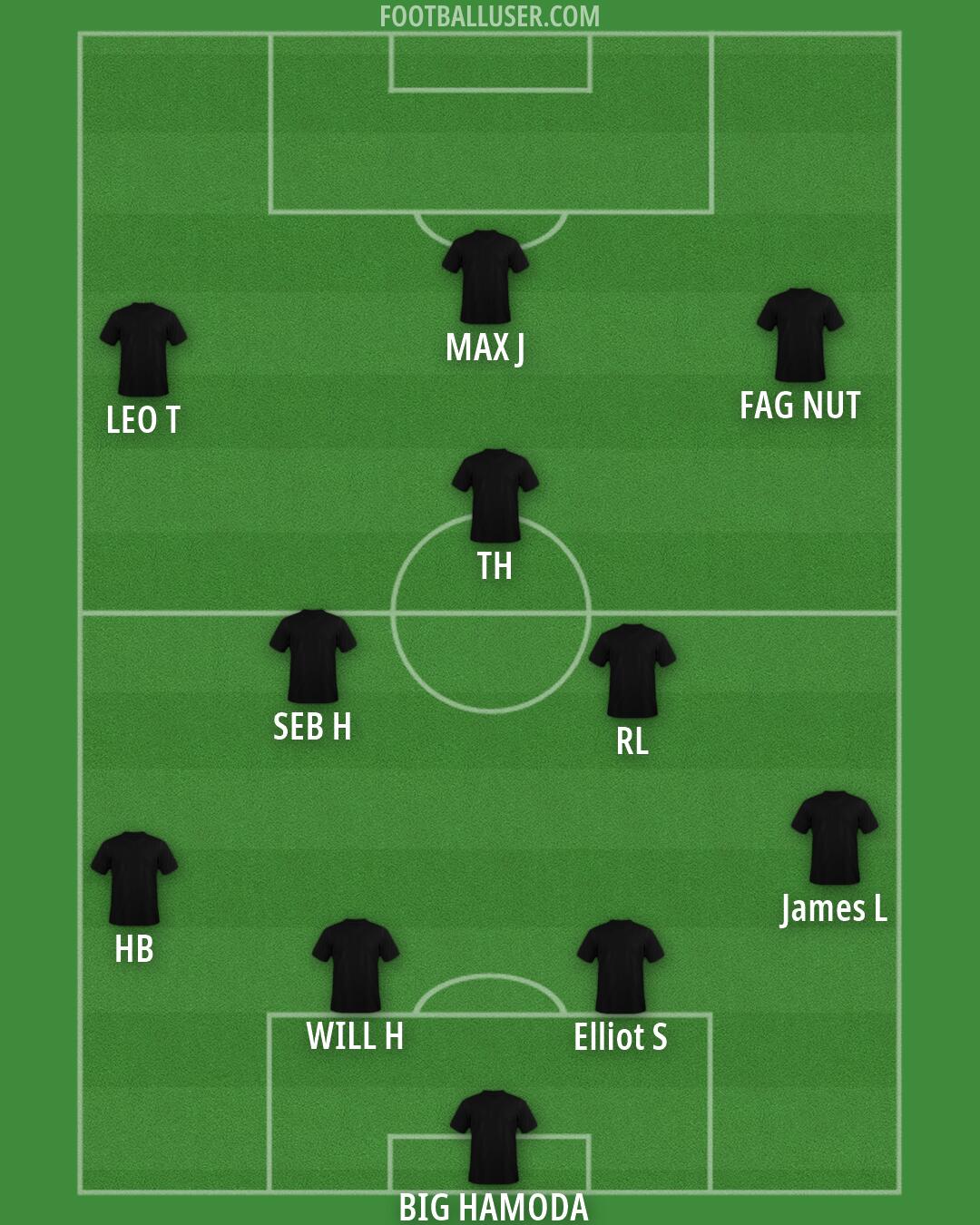
Chelsea Football Formation
 June 11, 2026


Starting Lineup
BIG HAMODA · TH · MAX J · WILL H · Elliot S · James L · SEB H · LEO T · FAG NUT · HB · RLChelsea favors a high press and quick transitions through a 4-3-3 formation. This lineup is built to win it back high up the pitch and use verticality to catch opponents out of position. By squeezing the space in the opposition half, the team looks to create constant pressure and force errors in the buildup.
BIG HAMODA guards the goal within a back four. The defensive line can step up to support the midfield, leaving space behind that requires constant communication. Elliot S and WILL H operate as the central pair, with Elliot S acting as a ball playing defender to start attacks. HB occupies the left side and is tasked to push up and provide width, while James L holds the right flank to maintain balance. The unit works to keep a high line and stay compact to minimize time for the opposition to turn.
The midfield functions with a three man midfield with a carrier and an attacking ten. TH operates as the attacking ten behind the striker, looking to find pockets of space between the lines. SEB H and RL occupy the central roles, with one tasked to shield the defence and the other to carry the ball forward into the final third. This trio connects the back line to the attack by recycling possession and moving the ball quickly through the thirds. They must work hard to intercept passes and ensure the team does not get caught on the break.
Chelsea uses three attackers across the front to stretch the defence. LEO T and FAG NUT act as wide wingers who cut inside to create goal scoring chances, while MAX J operates as a pressing centre-forward. The forwards press the opposition back line to force a long ball. The team looks to play through the lines with quick passes, often looking for runs in behind or cutbacks from the byline. This attacking trio works in combination to isolate defenders in one on one situations.
One major advantage for Chelsea is the ability to press high in coordinated waves, which disrupts the opponent's rhythm. The team also finds success through wide overloads when the full backs move up to support the wingers. This creates numerical superiority in the attacking third and makes it difficult for the opposition to defend the half spaces.
This 4-3-3 formation relies on intense pressing and rapid transitions to dominate matches. It is best suited for facing teams that struggle to play out from the back under pressure.