
Real Madrid Football Formation
 June 12, 2026


Starting Lineup
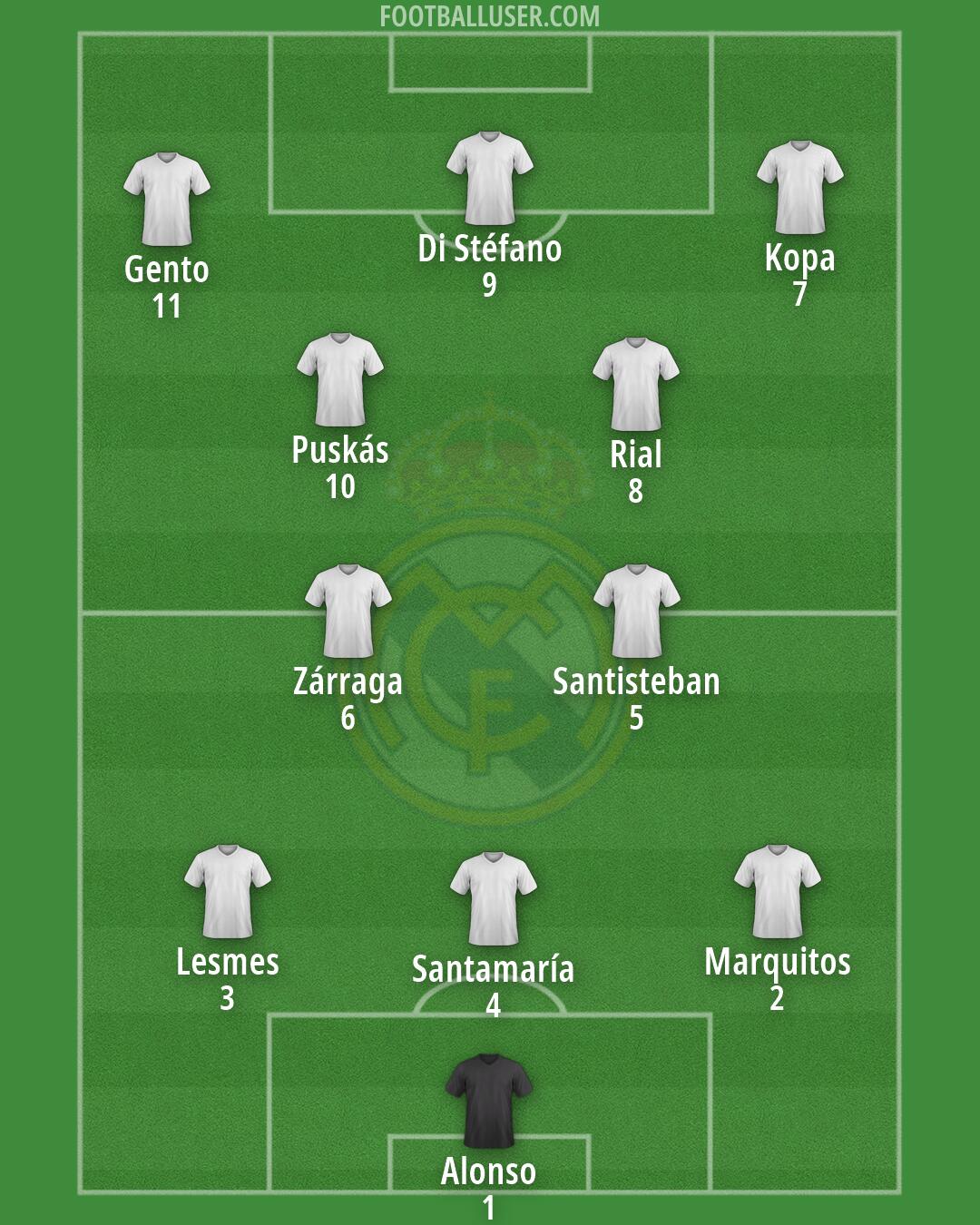
Alonso (1) · Marquitos (2) · Santisteban (5) · Zárraga (6) · Lesmes (3) · Santamaría (4) · Di Stéfano (9) · Gento (11) · Kopa (7) · Puskás (10) · Rial (8)A high tempo and vertical style of play defines the identity of Real Madrid. They utilize a 3-4-3 formation to create constant pressure in the final third. This lineup is built to catch defenses on the break and maintain a heavy presence in the opponent's half through direct movement.
Alonso sits between the posts to organize the back line. The defense operates with a back three consisting of Santamaría, Lesmes, and Marquitos. Santamaría acts as the central defender to hold the line, while Lesmes and Marquitos provide cover on the left and right sides. These defenders must be ready to step up and squeeze the space when the team pushes high. They protect the central area to prevent through balls and ensure the team stays compact when the opposition tries to move forward.
The midfield functions with a double pivot to control the center. Zárraga and Santisteban work to shield the defense and win the second ball. They are responsible for recycling possession and finding the players in more advanced positions. Ahead of them, Rial and Puskás operate in the half spaces. Puskás is known for his clinical finishing and powerful shooting, and he often drives into dangerous areas to create chances. These two connect the defensive unit to the attack by playing through the lines.
In the attacking third, Real Madrid uses three players to stretch the opposition. Gento plays on the left as a wide winger, using his immense pace and dribbling to get to the byline and whip it in. Kopa operates on the right, looking to cut inside and create openings. Di Stéfano leads the line as a striker who can drop deep to link up play. He moves into various positions to find the feet of his teammates and find space between the lines. The front three look to isolate defenders in one on one situations and attack the far post during crosses.
This formation provides several tactical advantages for Real Madrid. The presence of Rial and Puskás behind the strikers creates numerical superiority in the attacking half. The width provided by Gento and Kopa allows the team to spread wide and pull the opposition defenders out of position. Furthermore, the speed of transition with Di Stéfano and Gento means the team can break quickly once they win it back high up the pitch.
This 3-4-3 formation focuses on aggressive attacking and rapid transitions. It is best suited for matches against teams that sit deep and struggle to track runners in the half spaces.