
Brazil National Football Team Formation
 June 14, 2026


Starting Lineup
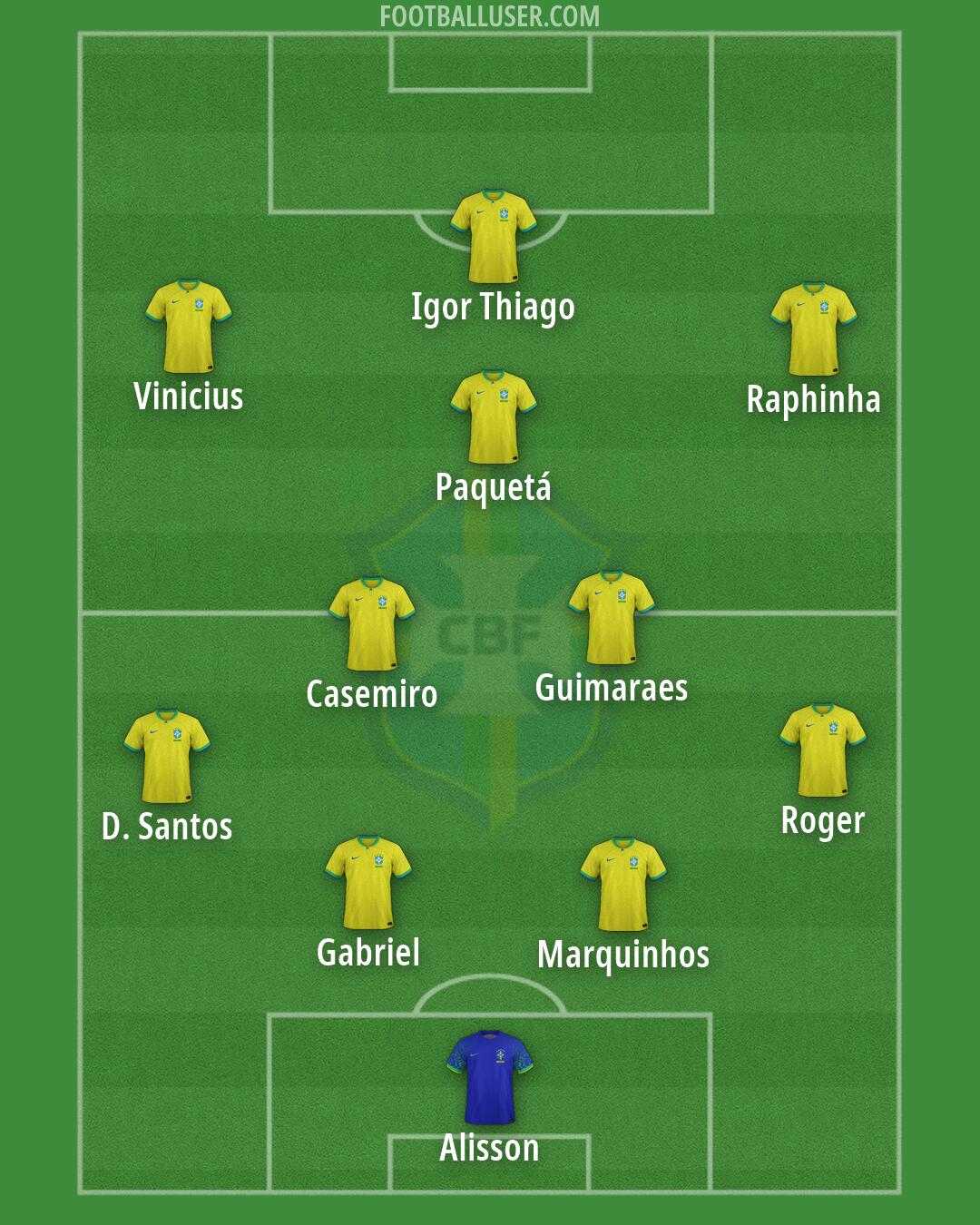
Vinicius · Raphinha · D. Santos · Marquinhos · Gabriel · Casemiro · Alisson · Igor Thiago · Paquetá · Guimaraes · RogerBrazil focuses on a high press and quick transitions using a 4-3-3. This lineup aims to win the ball high up the pitch to catch opponents out of position. The team looks to move the ball forward with speed and directness to exploit spaces behind the opposition defense.
Alisson sits between the posts to command the area and act as a sweeper behind the high line. The back four functions as a flat line where Marquinhos plays as a ball playing defender with great composure. Gabriel stays close to him to provide cover and win headers. D. Santos acts as an attacking full back to provide width on the left, while Roger holds the right side to balance the defense. This unit works to squeeze the space and keep the team compact.
The midfield operates with a three man midfield with a carrier and an attacking ten. Casemiro sits in a single pivot role to shield the defense and intercept passes. Guimaraes connects the defensive and attacking lines by carrying the ball forward into the middle third. Paquetá plays as an attacking ten behind the striker, looking to play through the lines and find pockets of space. This trio helps Brazil recycle possession and control the tempo of the game.
A front three creates constant pressure on the opposition back line. Igor Thiago acts as a pressing centre forward to harass defenders and hold up the ball. On the flanks, Vinicius plays as an inverted winger who cuts inside to attack the box with his explosive dribbling style. Raphinha operates on the opposite side, looking to get to the byline and whip it in or cut it back for runners. These attackers combine in tight spaces to create chances through quick one twos.
This formation offers significant tactical advantages for Brazil. The team can create wide overloads when D. Santos pushes up to overlap the winger. The presence of Casemiro and Guimaraes provides a strong foundation to win the second ball and spring the offside trap of the opponent. Additionally, the speed of transition allows the forwards to hit in behind on the transition before the defense can recover.
The 4-3-3 is built to dominate through aggressive pressing and rapid verticality. This formation is best suited for games against teams that play a high line and leave space behind their defenders.