England National Football Team Formation
 June 18, 2026


Starting Lineup
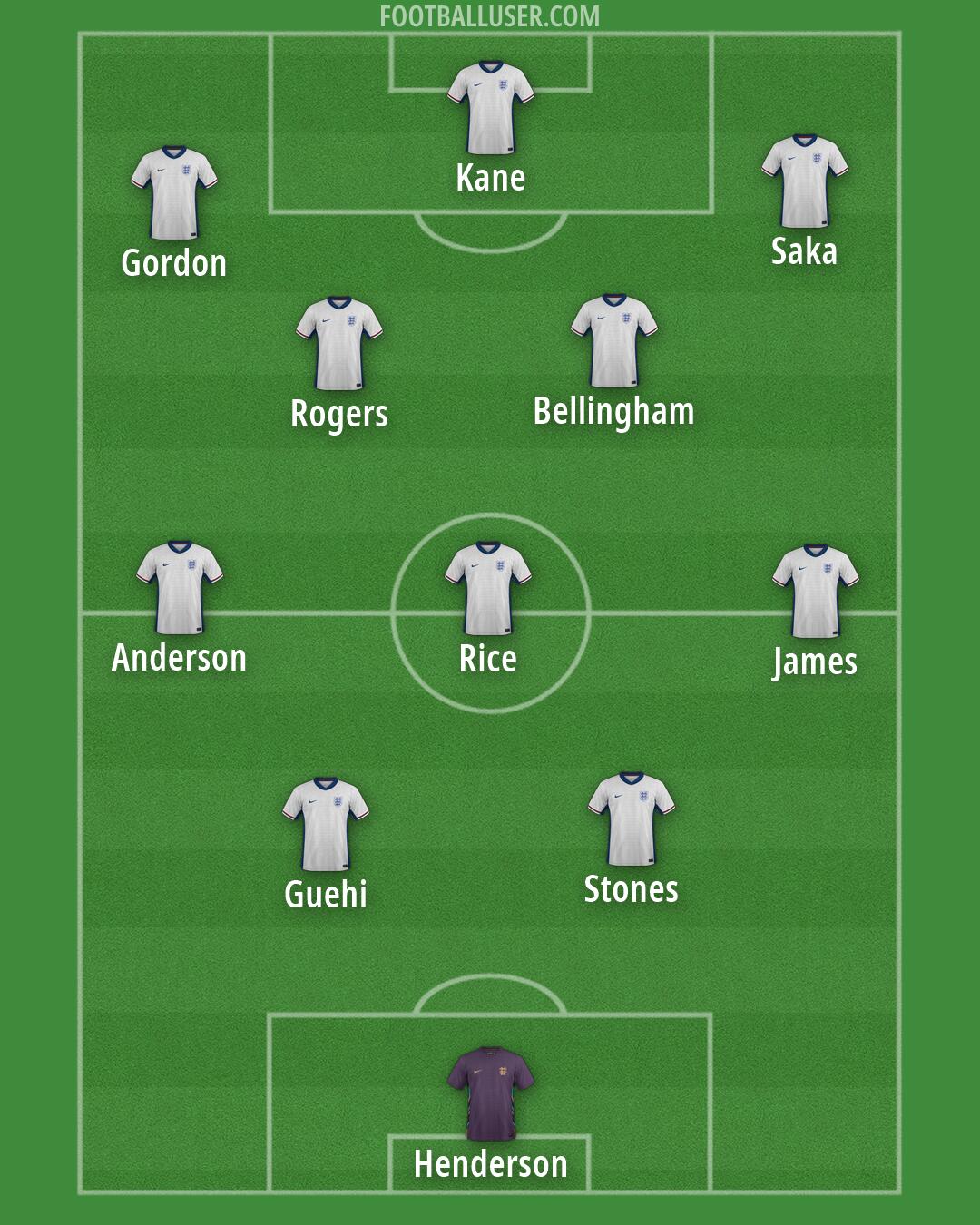
Kane · Gordon · Saka · Rogers · Bellingham · Rice · Anderson · James · Guehi · Stones · HendersonEngland prioritizes a heavy press and rapid transitions using a 5-2-3 formation. This lineup focuses on winning the ball high up the pitch and striking quickly when the opposition is out of position. The three national team players in the forward line stay high to pin the backline, while the rest of the team works to squeeze the space and force errors.
Henderson operates between the posts to organize the defensive line. The back five uses a staggered approach with Rice acting as a central defender to provide aerial strength and cover. Stones sits as a ball playing defender to help play out from the back, while Guehi stays central to mark the striker. On the flanks, James acts as an attacking wing back to provide width, while Anderson plays as a left wing back to cover the defensive flank and push forward when needed.
The midfield utilizes a double pivot to control the center of the pitch. Bellingham acts as a carrier to drive forward with the ball and connects the defensive and attacking lines. Rogers works alongside him to press aggressively and win the ball high up the pitch. These two midfielders must work to intercept passes and ensure they do not get bypassed when the team transitions from a high press into a mid-block.
In the attacking phase, England uses three attackers to stretch the defense. Kane operates as a target man, holding up the ball to allow others to join the move. Gordon stays wide on the left to pull defenders away, while Saka plays as an inverted winger on the right to cut inside and create chances. This front three works to press the opposition back line, looking to make runs in behind or lay it off for late runners.
The tactical advantages of this formation include the ability to press high in coordinated waves and the speed of transition once the ball is won. By using wing backs like James and Anderson, the team can create wide overloads to overwhelm the opposition flanks. The central presence of Kane also allows the team to win the second ball and recycle possession quickly in the final third.
This formation relies on high intensity to disrupt the rhythm of the opponent. It is best suited for games where England needs to dominate the ball in the opposition half or exploit space on the counter.